
Why Security Awareness Training Programs Fail, and What to Do Instead
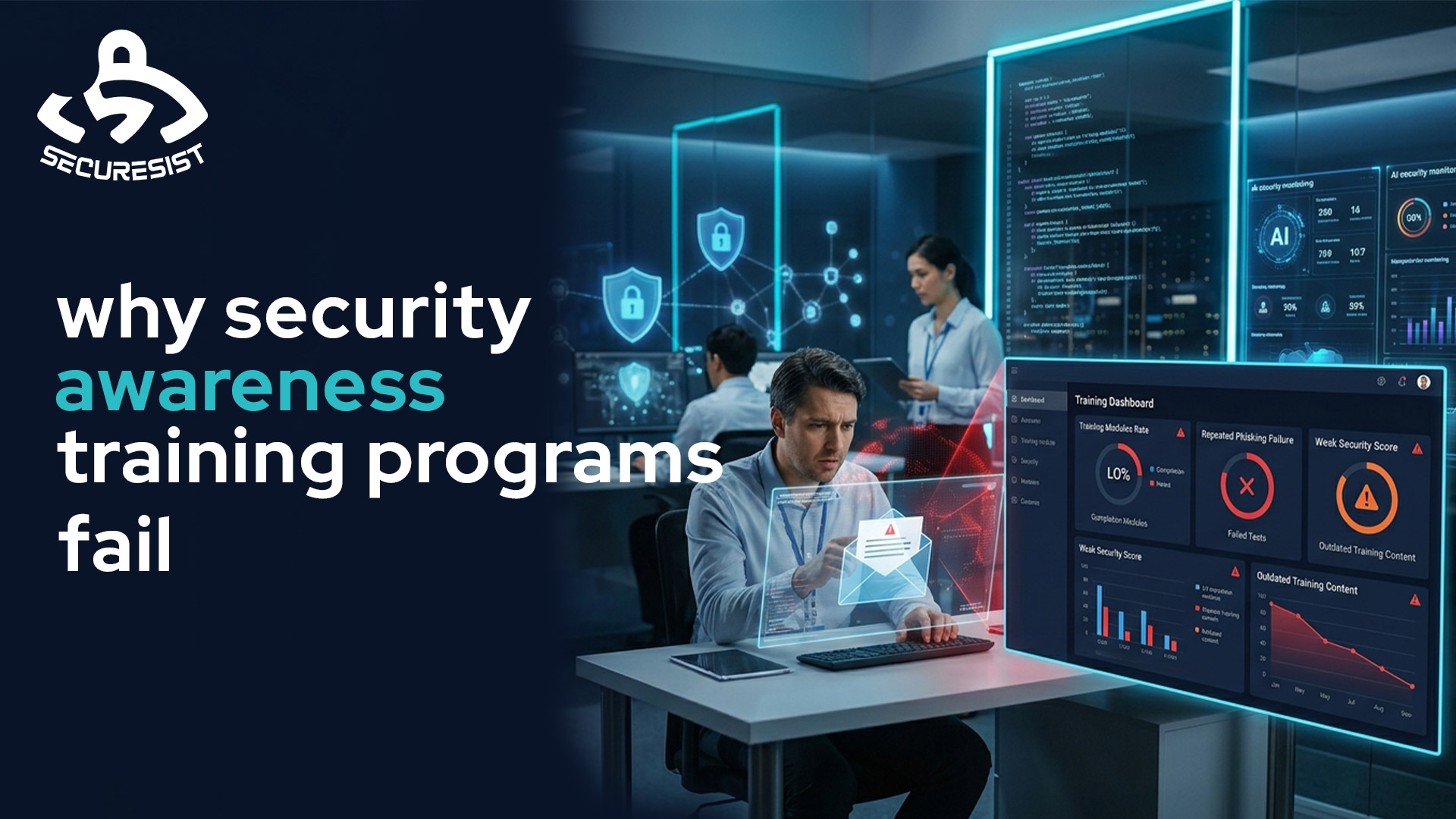
Every year, businesses invest significant time and money in cybersecurity awareness initiatives. Employees complete mandatory courses, watch training videos, answer quizzes, and receive certificates confirming they have finished the program. From a compliance perspective, everything looks like a success.
Yet the headlines tell a different story.
Phishing emails still fool experienced employees. Business email compromise continues to cost companies millions. Credentials are stolen, malicious attachments are opened, and ransomware attacks often begin with a single human mistake. If awareness training has become standard practice across almost every industry, why do these incidents continue to happen?
That question has become increasingly difficult to ignore. Recent research has challenged long-held assumptions about why security awareness training programs fail, suggesting that the issue may not be a lack of training at all. Instead, many programs are designed to prove that training happened, rather than ensuring secure behavior becomes part of everyday work. This is a core challenge explored in human risk management — the discipline that looks beyond technical defenses to address the human decisions that determine whether attacks succeed.
This doesn’t mean employee education has no value. It means the way many businesses approach it needs to change. Understanding why security awareness training programs fail is the first step toward building a program that reduces risk instead of simply checking a compliance box. For UAE businesses operating under increasing regulatory scrutiny, this distinction matters — especially given ISO 27001 employee awareness training requirements that go well beyond completion certificates.
The Gap Between Training Completion and Actual Behavior Change
Most awareness programs measure what is easiest to track.
- How many people completed the course
- How many passed the final quiz
- How many certificates were issued
Those numbers look reassuring on a dashboard, but they reveal very little about how employees behave when a suspicious email lands in their inbox on a busy Monday morning. Understanding the metrics that actually matter in security awareness training reveals a significant gap between what most programs measure and what they should be tracking.
Real attacks rarely happen under ideal conditions. People make security decisions while juggling meetings, responding to customers, managing deadlines, or trying to clear an overflowing inbox. In those moments, habits usually take over. Stress, distractions, and time pressure often outweigh information learned months earlier during a mandatory training session.
That explains why knowledge doesn’t always translate into action. Someone may know the warning signs of phishing and still click a malicious link because they’re rushing to finish a task or responding to what appears to be an urgent request from a senior executive.
Researchers have reached a similar conclusion. Recent studies suggest that while awareness training often improves knowledge and attitudes, those improvements don’t consistently translate into safer behaviour over time. Changing habits requires far more than presenting information once a year.
This is one of the biggest reasons why security awareness training programs fail. Most programs are successful at delivering information, but far less successful at changing the decisions people make during real-world cyber incidents.
What Are the Root Causes of Security Awareness Program Failure
The challenges go well beyond outdated slide decks or lengthy compliance videos. Most security awareness program mistakes stem from the way training is designed, delivered, and measured. Although every workplace is different, several patterns appear repeatedly across academic research, industry reports, and real-world breach investigations.
One-Time Annual Delivery With No Reinforcement
For many employees, cybersecurity training happens once a year and disappears from their routine until the next compliance deadline arrives.
That approach assumes people will remember what they learned months later when they face a sophisticated phishing attempt or social engineering attack. In reality, memory fades without reinforcement. Skills improve through repetition, feedback, and regular practice, not through a single annual session. When learning isn’t reinforced throughout the year, failed cybersecurity training becomes far more likely because employees simply return to familiar habits.
Generic Content That Isn’t Relevant to Employees’ Real Roles
A finance manager, software developer, HR specialist, and remote customer support representative don’t face the same cyber risks during a typical workday. Yet some awareness programs deliver exactly the same content to everyone. Generic lessons often explain common threats but fail to show how those threats relate to an individual’s responsibilities — a major reason why getting employees to take cybersecurity training seriously remains one of the most consistent challenges security teams face.
Traditional vs. Modern Security Awareness
| Traditional Security Awareness | Modern Security Awareness |
| Annual training session | Continuous learning throughout the year |
| Generic content for everyone | Role-based learning tailored to job functions |
| Quiz scores measure success | Real-world behavior and reporting metrics matter |
| Compliance is the primary goal | Reducing cyber risk is the primary goal |
| One-way presentations | Interactive phishing simulations and feedback |
| Employees expected to remember everything | Regular reinforcement builds long-term habits |
| Human error is blamed | Human risk is reduced through training and technical controls |
No Measurement Beyond Quiz Pass Rates
Passing a quiz isn’t difficult. Remember a few warning signs, answer multiple-choice questions correctly, download a completion certificate, and the training is officially complete.
Whether that employee makes the right decision three months later is a different question. This is where awareness initiatives lose sight of their original purpose. They measure participation because it’s simple to report. What they can’t show is whether anyone behaves differently once the course is over. Tracking the right security awareness training metrics — including reporting rates, phishing resilience, and behavioral trends — is what separates programs that reduce risk from those that simply satisfy auditors.
Training Is Treated as Punishment, Not Investment
Security teams rarely intend to create a blame culture. It usually develops without anyone noticing.
An employee clicks a phishing simulation. Another training assignment follows. Click again a few months later, and another course appears. Before long, the lesson isn’t ‘Here’s how to spot suspicious emails.’ It becomes ‘Don’t get caught making mistakes.’
That changes how people respond. Instead of asking for help, they stay quiet. Instead of reporting something that feels suspicious, they hesitate because they’re worried about being blamed. Building the right cybersecurity culture in a company means shifting that dynamic entirely — from fear of blame to confidence in reporting.
No Real-World Simulations to Test Learning
Reading about phishing isn’t the same as recognising it during an ordinary workday. Real attacks don’t arrive with obvious spelling mistakes anymore. Spear phishing attacks are increasingly personalized, AI-assisted, and designed to bypass both technical filters and employee suspicion. A payment request may appear to come from a trusted supplier. A QR code at a conference might redirect someone to a fake Microsoft 365 login page.
That’s why phishing simulations have become an important part of modern awareness programs. They move training beyond theory and into practice. The value isn’t in catching employees out — it’s in showing how people respond under normal working conditions, where deadlines, distractions, and routine all influence decision-making.
Is Your Current Program Measuring the Right Things
Most programs track completion. The programs that reduce breaches track behavioral metrics that reflect real-world risk — reporting rates, repeat failures, phishing resilience, and departmental trends. If your dashboard only shows who finished the course, you may be missing the data that matters most. Talk to Securesist to find out what your program is — and isn’t — measuring.
What a Program That Actually Reduces Risk Looks Like
If the research tells us anything, it’s that awareness training isn’t useless. The bigger issue is how it’s designed. The best security awareness training programs don’t treat learning as a once-a-year event. They build cybersecurity awareness into everyday work through short, regular sessions that are far more likely to stay with employees when a suspicious email appears months later.
Relevance matters just as much as frequency. Someone working in payroll doesn’t encounter the same threats as a software engineer or an executive assistant. Effective role-based cybersecurity training for employees reflects those differences. Employees are far more likely to remember examples that resemble situations they actually deal with than generic advice written for everyone.
Behavioral research also points in the same direction. People are more likely to adopt secure habits when they receive timely reminders, practical feedback, and encouragement instead of criticism. A strong security culture grows when employees feel comfortable reporting suspicious activity without worrying that every mistake will be held against them — which is exactly what a well-run security awareness training program is designed to achieve.
Training alone, however, can’t carry the entire burden. Even well-informed employees make mistakes. That’s why technical safeguards such as multifactor authentication, password managers, secure email filtering, and browser protections remain essential. They reduce the impact of inevitable human error rather than assuming awareness training can prevent every incident.
The strongest programs tend to combine all of these elements. They treat awareness as an ongoing process, adapt learning to different job functions, reinforce positive habits over time, and support employees with technology that makes secure decisions easier. Organizations looking to formalize this approach should also consider data security awareness training as a dedicated layer for employees who handle sensitive information.
From Awareness Training to Lasting Security Habits
By now, one thing should be clear. The answer isn’t to abandon awareness training. It’s to stop expecting a single annual course to solve a problem that’s shaped by daily habits, workplace pressure, and constantly evolving threats.
The most effective programs don’t treat learning as an event that happens once a year. They build cybersecurity awareness into everyday work. Instead of asking employees to sit through a long presentation every twelve months, they introduce short learning sessions throughout the year. Those reminders are easier to absorb and far more likely to stay with people when a suspicious email appears months later.
Good programs also accept an uncomfortable reality. Even experienced employees will make mistakes from time to time. Rather than relying on memory alone, they combine training with technical safeguards. This is why understanding cyber risk — its examples, impact, and how to assess it — matters for security leaders designing programs that go beyond compliance and genuinely reduce organizational exposure.
Leadership matters just as much. When managers participate in training, report suspicious emails themselves, and openly discuss cyber risks, security awareness becomes part of the workplace culture instead of another compliance exercise. Organizations that embed this mindset across departments are the ones building a long-term human risk strategy that can adapt as threats evolve.
How to Audit Your Current Program Against These Failure Points
After reading this far, it’s worth stepping back and asking a simple question.
If an employee received a convincing phishing email tomorrow morning, would your current awareness program genuinely help them make the right decision?
Many security teams assume the answer is yes because everyone completed their annual training. The only way to know for sure is to examine how the program performs outside the classroom. Start by reviewing a few basic questions:
- Does learning continue throughout the year, or does it end after one annual session
- Are phishing simulations realistic enough to reflect today’s attacks, including AI-generated emails and business email compromise attempts
- Is training tailored to different departments instead of delivering identical content to everyone
- Do you measure reporting rates, phishing resilience, and behavior changes instead of only completion statistics
- Can employees report suspicious activity without worrying about blame or embarrassment
- Are technical controls helping employees make safer decisions when mistakes happen? Reviewing your top cybersecurity tools alongside your training program is a good starting point.
If several of those questions raise concerns, the issue probably isn’t employee motivation. More often, it’s the design of the program itself. Working with the right security awareness training provider can help identify those gaps before attackers do.
Awareness initiatives should evolve as quickly as the threat landscape changes. Regular audits help identify weak areas before attackers do, giving security teams an opportunity to improve both training and operational resilience. The Securesist awareness platform is designed to make that process continuous rather than reactive.
Conclusion
For years, businesses have invested heavily in awareness training because people are often described as the weakest link in cybersecurity. Recent research suggests the picture is more complicated than that.
Employees aren’t ignoring training because they don’t care. In most cases, the training doesn’t reflect the way people actually work. It measures completion instead of behavior change, relies on one-size-fits-all content, and assumes knowledge alone is enough to prevent mistakes. That’s a major reason why security awareness training programs fail, even after significant investment. Reviewing your phishing failure rate by industry can provide useful context for understanding where your organization stands relative to these patterns.
The most successful teams are taking a different approach. They combine ongoing learning, realistic phishing simulations, technical safeguards, and a supportive culture that encourages reporting rather than blame. Those changes don’t eliminate human error, but they make it far less likely that one mistake will become a serious security incident.
Frequently Asked Questions
Why do employees still fail phishing tests after completing training
Completing a course doesn’t automatically change behaviour. People make decisions while handling deadlines, meetings, and distractions, not while sitting in a training session. Without regular reinforcement, realistic phishing awareness exercises, and practical experience, much of what employees learn gradually fades, making mistakes more likely during genuine attacks.
How do you know if your security awareness program is working
Completion rates and quiz scores only show that employees attended training. A stronger indicator is whether they recognise suspicious activity and report it quickly. Track phishing reporting rates, repeat click rates, and incident trends over time. These metrics provide a clearer picture of whether the program is reducing real-world risk.
Is annual cybersecurity training enough in 2026
For most businesses, no. Threats now evolve much faster than annual training cycles. AI-generated phishing emails, business email compromise, and other social engineering techniques require continuous cybersecurity awareness, supported by regular updates, realistic simulations, and technical safeguards. A single yearly session is rarely enough to prepare employees for today’s threat landscape.
What is the difference between security awareness training and human risk management
Security awareness training focuses on educating employees. Human risk management is a broader discipline that combines training with behavioral measurement, technical controls, and organizational culture to systematically reduce the likelihood that human decisions will lead to security incidents. Training is one component of a human risk strategy, not the whole solution.
Your Employees Are Not the Problem. Your Program Might Be.
Most security awareness programs fail not because employees don’t care — but because the training isn’t designed to change behavior. Annual sessions, generic content, and completion certificates satisfy auditors. They don’t stop breaches.
Securesist helps organizations move beyond compliance and build awareness programs that produce measurable security improvements. From realistic phishing simulations and role-based training to behavioral reporting and leadership engagement, we help you identify exactly where your human risk lies — and reduce it.
Here is what working with Securesist delivers:
- A baseline assessment of your organization’s real human risk exposure
- Role-based training content tailored to the threats each team actually faces
- Phishing simulations that reflect today’s AI-assisted attacks, not last year’s templates
- Behavioral metrics that show risk reduction, not just training completion
- A clear roadmap to build a security culture employees actually participate in
Security awareness training should do more than satisfy a compliance requirement. It should make your people harder to attack.