AI DLP Solution: How to Stop Sensitive Data Leaking Into AI Tools and Agents
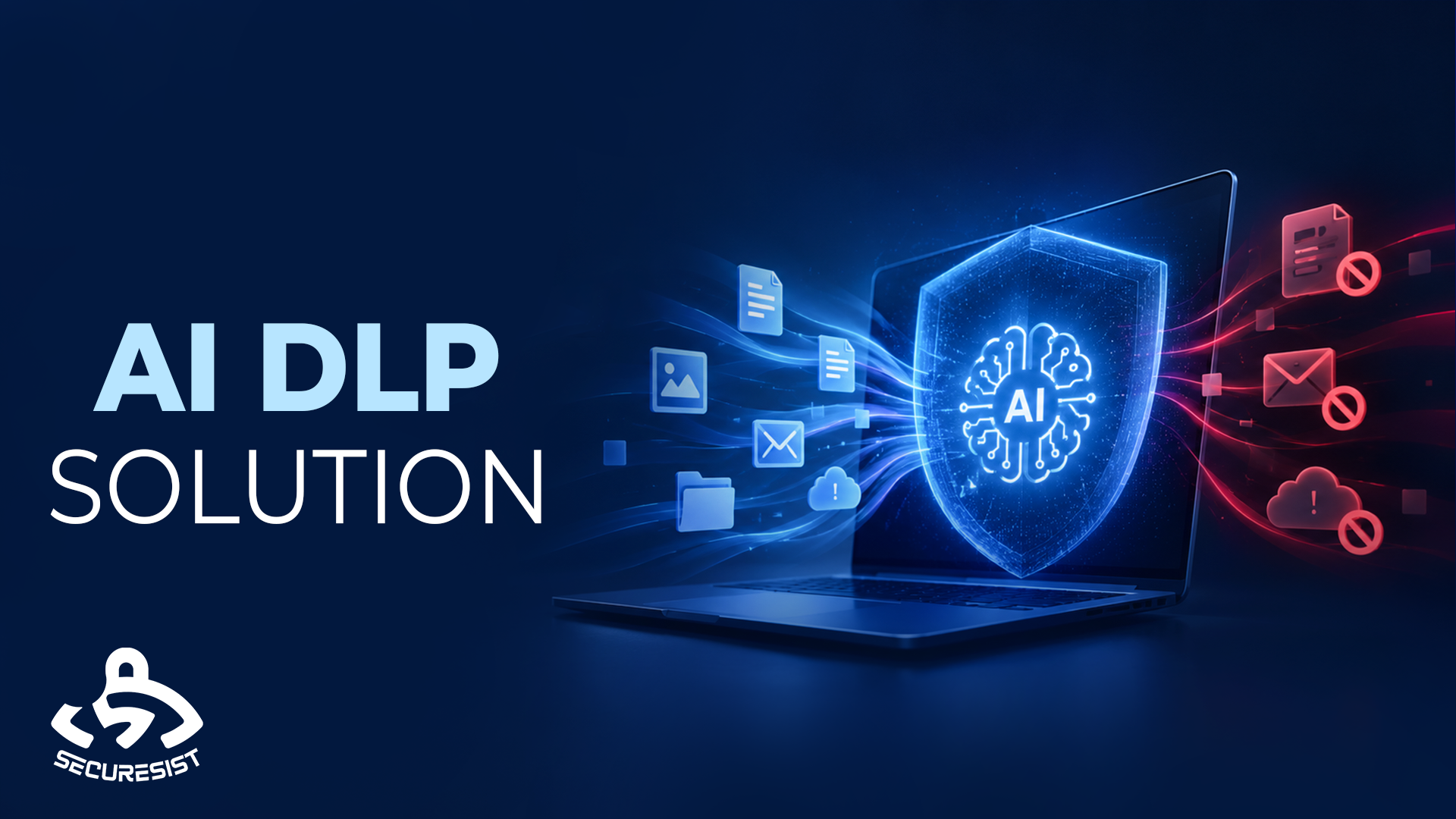
Quick answer: An AI DLP solution is a set of controls that stops sensitive data from being shared with generative AI tools, copilots and AI agents, and from being exposed in their outputs. Effective AI data loss prevention works in three layers:
- Technical controls: discovery, inspection and blocking.
- Governance: a clear AI usage policy, with evidence that it is followed.
- Employee behaviour: which security awareness training shapes before data ever leaves the keyboard.
Most AI data leaks start with a person, not a hacker, so tools alone rarely close the gap.
Key takeaways:
- Traditional DLP was built for email, USB and file transfers, not prompts, browser chats or autonomous agents.
- AI data leaks happen through four channels: prompts, shadow AI, agent permissions and AI outputs.
- The strongest programs pair DLP tooling with policy, visibility and staff training.
- UAE organisations should map AI data handling to their existing compliance obligations.
Why Traditional DLP Struggles With Generative AI
Classic DLP inspects files and messages as they leave the network. Generative AI changes that pattern. Data now leaves as typed text inside a browser session, as a document uploaded to a chatbot, or as a request an AI agent sends on its own to another tool.
| Factor | Traditional DLP | AI DLP solution |
| Main channels | Email, USB, file sharing | Prompts, uploads, copilots, AI agents |
| Data format | Files and attachments | Free text, code snippets, screenshots |
| Who moves data | Employees | Employees and autonomous agents |
| Visibility gap | Known apps | Unapproved “shadow AI” tools |
| Policy focus | Block or allow transfers | Allow AI use safely, with guardrails |
A widely reported case from 2023 shows the risk. Engineers at Samsung reportedly pasted internal source code into ChatGPT, and the company then restricted employee use of generative AI tools. Nothing was “hacked.” The data left through normal, well-meant work.
Where Generative AI Data Leakage Actually Happens
1. Prompts and uploads
Employees paste customer records, contracts or code into public AI tools to save time. Once submitted, that data may be stored or processed under the provider’s terms rather than your own controls.
2. Shadow AI security gaps
Shadow AI means AI tools, browser extensions and plugins that staff use without approval. Security teams cannot protect data flowing into tools they do not know exist.
3. AI agents with too much access
AI agents can read files, query systems and take actions. The OWASP Top 10 for LLM Applications lists both “Sensitive Information Disclosure” and “Excessive Agency” as key risks. An agent connected to email, drives and CRM data can move far more information than any single prompt.
A practical rule we recommend: treat every AI agent like a new hire. Give it a job description, the minimum access it needs and a named owner who reviews what it does.
4. AI outputs
Data can also leak on the way out, when a copilot surfaces confidential content to a user who should not see it because file permissions were too broad.
What to Look for in an AI DLP Solution
When comparing vendors, check for these capabilities:
- AI app discovery: identifies which AI tools, extensions and agents are in use.
- Content inspection for prompts: detects sensitive data in typed text and uploads, not just files.
- Granular actions: warn, redact or block, instead of blocking AI entirely.
- Agent and integration controls: limits what connected AI agents can read and send.
- Data classification support: recognises your own sensitive categories, such as customer IDs and financial records.
- Audit-ready logging: produces evidence for compliance reviews.
- User coaching: explains to the employee why an action was blocked.
A 6-Step Plan for AI Data Loss Prevention
- Discover AI usage. Inventory approved and unapproved AI tools across devices and cloud services.
- Classify sensitive data. A simple test helps: “Would this hurt us if it appeared in a public AI answer?” If yes, it needs protection.
- Write an AI acceptable-use policy. Define approved tools, banned data types and who approves new AI agents.
- Deploy technical controls. Apply DLP rules to browsers, endpoints and AI integrations, starting in monitor mode before blocking.
- Train employees on real scenarios. Show staff exactly what risky prompts look like in their own role.
- Measure and remediate. Track policy violations, close gaps and report progress to leadership.
AI DLP in the UAE: Compliance Considerations
UAE organisations should connect AI data handling to rules they already follow. The UAE Personal Data Protection Law (Federal Decree-Law No. 45 of 2021) governs how personal data is processed. Entities working under frameworks such as ISO 27001 or Dubai’s DESC Information Security Regulation also need evidence that controls are applied consistently. The NIST AI Risk Management Framework is a useful reference for structuring AI governance.
The practical point: auditors increasingly ask how AI use is governed, not only whether it is allowed.
Where SecureSist Fits in Your AI DLP Strategy
SecureSist does not replace a dedicated DLP tool. It strengthens the layers that DLP depends on:
- People: awareness programs and phishing simulations that build safer behaviour, including around everyday tool use.
- Technology visibility: security systems visibility across networks, devices, cloud and assets, which helps reveal where controls are missing.
- Remediation: prioritised workflows that move findings to closure.
- Governance: a governance, risk and compliance platform that connects policy and evidence to live cyber operations.
Together, these help an AI DLP solution work as part of a measurable security program rather than as an isolated tool.
Frequently Asked Questions
What is an AI DLP solution?
It is a set of tools and policies that prevents sensitive data from being shared with, or exposed by, generative AI tools and AI agents.
Is banning ChatGPT enough to stop AI data leaks?
Usually not. Bans often push staff toward unapproved tools, which increases shadow AI risk. Controlled, monitored use is generally more effective.
Do AI agents need separate DLP controls?
Yes. Agents can access and move data automatically, so their permissions, connections and actions need their own limits and reviews.
How does employee training support AI data loss prevention?
Training reduces risky behaviour before technical controls are needed and helps staff understand why certain data must never enter AI tools.
Where should UAE businesses start?
Start by discovering which AI tools are in use, then classify sensitive data and set a clear AI usage policy.
Build Your AI DLP Program on Strong Foundations
Generative AI is now part of daily work, and data protection has to keep pace. Start with visibility, set clear rules and prepare your people. If you want to see how SecureSist supports awareness, visibility and governance across your organisation, request a demo.