DESC Compliance in Dubai: Security Awareness Requirements for Government-Linked Entities
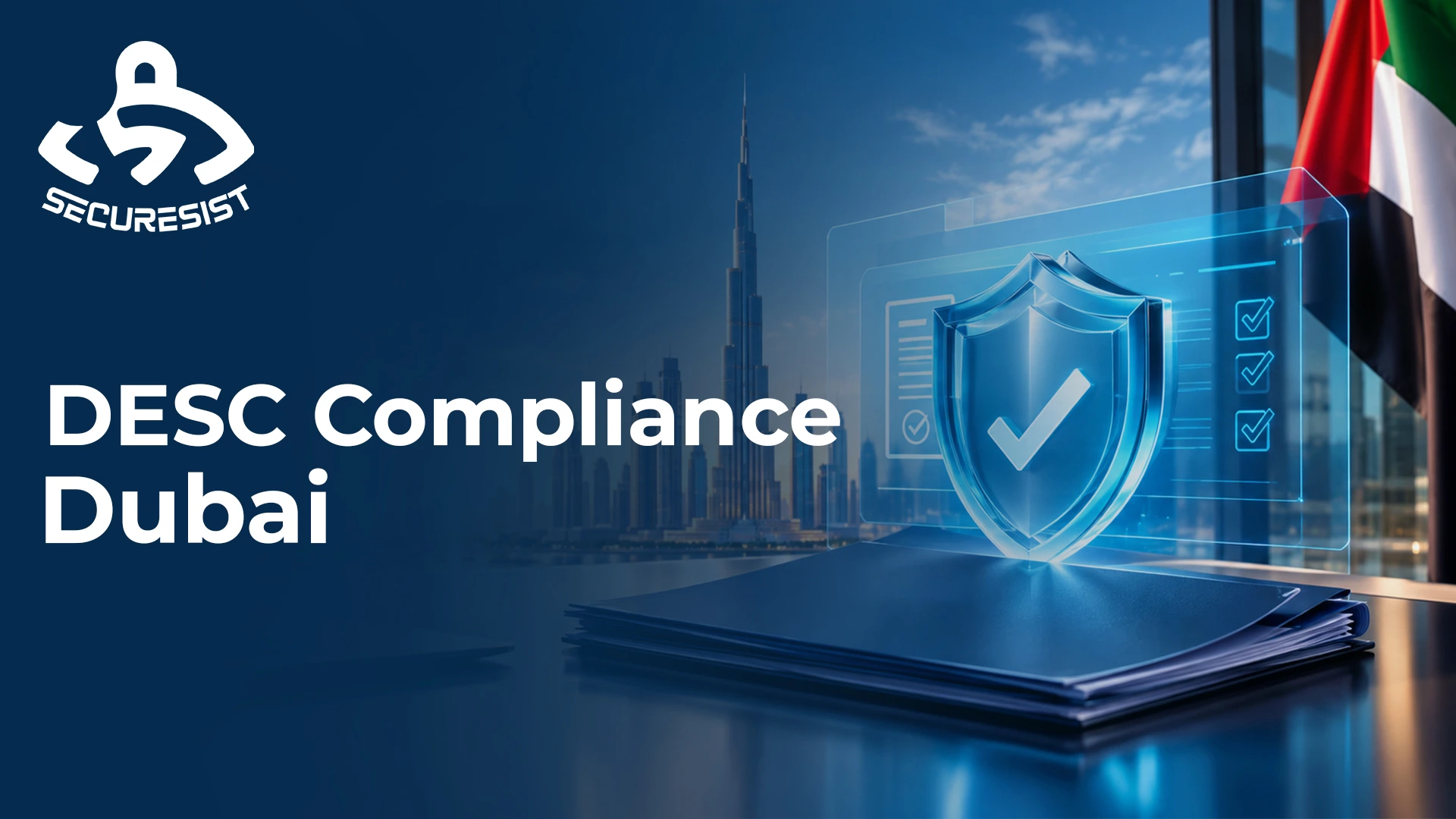
DESC compliance in Dubai applies most directly to Dubai Government Entities and to the private organizations that support them, cloud providers, IT vendors, and other service providers with contracts tied to Dubai’s public sector. If your organization falls into that second group, a completed security awareness training course is not, by itself, proof of compliance. You need to show that employees received role-relevant guidance, understood their responsibilities, and were part of an ongoing process, not a once-a-year exercise.
This article explains what DESC compliance covers for government-linked entities specifically, what counts as compliance evidence, and what to look for in a training programme built to produce that evidence.
What DESC Compliance Covers and Who It Applies To
The Dubai Electronic Security Center (DESC) sets information security requirements for Dubai Government Entities through its Information Security Regulation (ISR), covering governance, risk management, asset protection, access control, operational security, incident management, business continuity, monitoring, and employee awareness.
DESC compliance is not one universal checklist. What applies to your organization depends on your relationship with Dubai government, the services you provide, your contracts, and any specific DESC standard tied to your operations. DESC publishes standards for particular categories of service provider, including cloud service providers supporting Dubai government and semi-government entities, which means a company with a government contract can carry obligations a private business with no such relationship never encounters.
The first step for any government-linked entity is identifying exactly which regulation, standard, or contractual clause applies, rather than treating “DESC compliance” as a single label to check off.
Where CBUAE Requirements Apply Separately
If your organization is a bank or another entity regulated by the Central Bank of the UAE, a separate set of cybersecurity requirements applies alongside anything DESC requires through your government relationships. The two frameworks overlap in places, security awareness training among them, but meeting one does not automatically satisfy the other. We’ve covered that overlap in detail, including a side-by-side comparison and a shared audit checklist, in DESC Compliance in Dubai and CBUAE Cybersecurity Requirements. This article stays focused on the government-linked entity side of DESC.
What Counts as DESC Compliance Evidence for a Government-Linked Entity
Compliance evidence is the documentation that shows a requirement has actually been addressed, not just assigned. For a service provider or contractor working with Dubai government, that typically includes an approved awareness policy, a documented training plan mapped to the relevant DESC standard, course assignments by role, completion records, policy acknowledgements, phishing simulation reports, remedial training records, and management reviews.
A training completion report on its own has limits. It shows someone finished a course. It does not show the content matched their role, that they understood your organization’s policies around handling government data or systems, or that they know how to report a suspected incident. A centralized compliance evidence vault that ties training activity to policies, risk registers, and corrective actions gives auditors a far more complete picture than a certificate alone, and makes retrieving that evidence at review time far less painful.
Building a Security Awareness Programme for DESC-Regulated Organizations
Start by identifying which DESC requirements apply to your contracts, which employee groups are in scope, and which roles carry extra risk. For a government-linked entity, that usually means staff with direct access to government systems or data, IT administrators, procurement teams handling government contracts, and anyone in a role where a mistake could expose government-linked information.
Role-based training matters more here than in a typical commercial awareness programme, because the consequences of a lapse extend beyond your own organization to the government entity you serve. Employees also need a clear, well-communicated path for reporting suspicious activity: phishing attempts, fraudulent payment requests, lost devices, unusual login prompts, or possible credential compromise involving government-linked systems.
Track more than completion rates. Policy acknowledgement, phishing simulation results, reporting rates, repeat failures, and remedial training by department give you the trend data that shows a programme is actually working, not just running.
What to Look for in a DESC-Ready Training Programme
For a government-linked entity, three things matter more than course-library size: role-based content that reflects the government systems or data you actually handle, phishing simulations that generate reportable trend data rather than a single score, and evidence retrieval that doesn’t require weeks of manual collection before a review. If a platform can’t produce assignment records, completion data, and simulation history in a format your auditor can use quickly, it’s adding work instead of removing it.
Preparing for a DESC Compliance Review
Start evidence collection well before a review is scheduled, not the week before. Confirm which DESC regulation, standard, or contract clause applies to your organization, then map that requirement to your policies, training assignments, simulations, and reporting. Assign clear ownership: someone should know who manages training, maintains evidence, reviews performance, and reports results up the chain. Check for gaps before your auditor does, missing assignments, overdue training, or acknowledgements that were never collected are the kind of avoidable problem that turns a routine review into a longer one.
FAQs
Does DESC compliance apply to my company if we’re not a Dubai government entity ourselves?
It can. DESC publishes standards for specific categories of service provider, including cloud providers supporting Dubai government and semi-government entities. If your organization has a contract or service relationship with Dubai government, check which standard applies to you specifically rather than assuming it doesn’t.
Is DESC compliance the same as CBUAE compliance?
No. They’re separate frameworks that can overlap, particularly for financial institutions with government relationships. See our full DESC and CBUAE comparison if that applies to your organization.
What’s the minimum evidence DESC auditors expect for security awareness training?
At minimum: an approved policy, training assignments by role, completion records, policy acknowledgements, and evidence that follow-up happened when employees missed training or failed a phishing simulation. A course certificate alone is not considered sufficient.
How often should a government-linked entity review its awareness programme?
Continuously, not just before an audit. Regular reviews keep training aligned as your contracts, systems, and workforce change, and they mean evidence is already organized when a review is scheduled instead of assembled under time pressure.
Get in touch if you want help mapping your organization’s specific DESC obligations to a security awareness programme: contact our team.