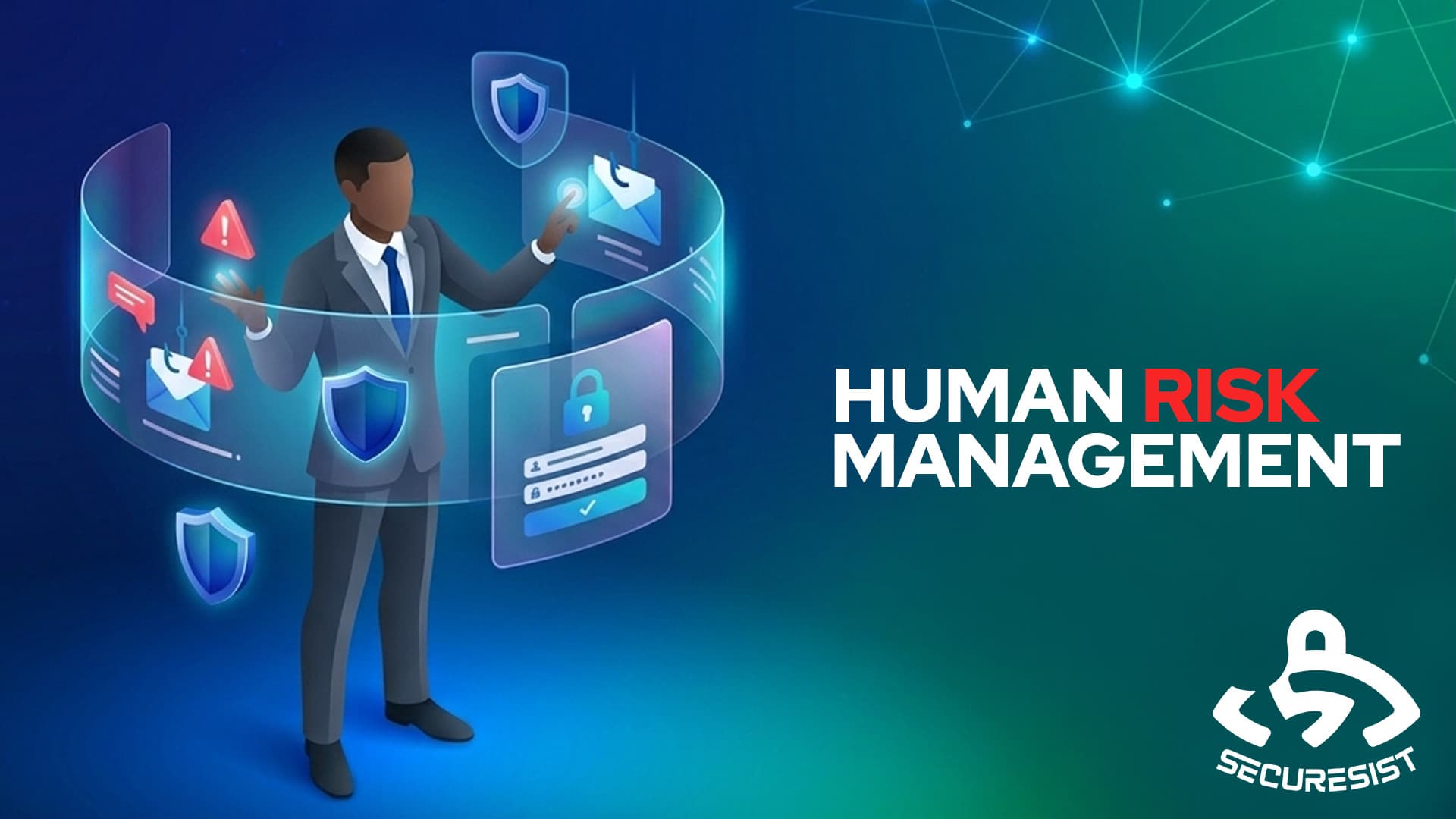
Most cyberattacks do not start with advanced hacking tools. They start with ordinary workplace moments. Someone clicks a fake login link while rushing through emails. A payment request gets approved without proper verification. A shared file looks genuine, so nobody questions it.
This is why many security incidents today are tied more to human behavior than missing security software.
Companies spend heavily on firewalls, endpoint protection, cloud security, and monitoring systems. Still, phishing scams, credential theft, and accidental data exposure continue happening because the human side of cybersecurity is often overlooked.
That gap is exactly where Human Risk Management comes in.
Instead of blaming people for mistakes, this approach focuses on understanding risky behavior before it turns into a real incident. The goal is not to create fear inside the workplace. It is to reduce avoidable risks during normal daily work.
What Is Human Risk Management?
Human Risk Management is a cybersecurity approach focused on how people interact with systems, emails, data, and everyday digital tasks.
Traditional awareness programs usually depend on yearly training sessions or compliance checklists. The problem is that completing training does not always change real behavior.
Someone may finish a security course in the morning and still click a fake Microsoft 365 login page later that afternoon.
Human Risk Management looks at real situations instead of only training completion rates.
This may involve:
-clicking suspicious email links
-sharing files too quickly
-reusing passwords across platforms
-responding to fake payment requests
-ignoring unusual account activity
Most of these mistakes are not caused by carelessness. They usually happen during stressful workdays, busy approval cycles, or fast-moving communication where people react quickly without slowing down to verify details.
That is why Human Risk Management focuses more on patterns and behavior than blame.
Why Companies Are Adopting This Framework
Many companies are starting to realize that security tools alone cannot solve every cyber risk.
Phishing emails have become harder to detect. Some messages now look almost identical to normal business communication. Fake supplier invoices, cloud login alerts, shared document requests, and payment approval emails can easily blend into a crowded inbox.
That is where problems start.
A single rushed decision can expose customer data, financial records, or internal accounts within minutes.
This is one reason more businesses are shifting toward Human Risk Management instead of relying only on awareness presentations and yearly training videos.
The focus is becoming more practical:
-real workplace behavior
-risky habits
-how people react under pressure
-which teams face higher exposure
-how small mistakes turn into larger incidents
In many cases, the issue is not lack of technology. It is the gap between security tools and everyday human behavior.

Why do organizations have to manage human risk?
Most cyberattacks today are designed around human behavior, not technical weaknesses.
Attackers know people get distracted, work under pressure, and deal with dozens of emails, approvals, and login requests every day. That is why phishing scams no longer look obviously fake. Many now appear routine enough to pass through normal workplace communication without raising suspicion immediately.
A fake invoice might arrive during a busy finance cycle. A login alert may appear while someone is switching between meetings. Small moments like these create opportunities attackers look for constantly.
Ignoring human risk creates problems that security software alone cannot always prevent.
This becomes even more important in workplaces using
-cloud platforms
-remote access systems
-mobile devices
-shared collaboration tools
-digital payment workflows
The faster communication becomes, the easier it is for people to react quickly without verifying details carefully.
That is why Human Risk Management is now being treated as part of overall cybersecurity strategy instead of just employee awareness training.
Why is human risk management important for cybersecurity?
Many security incidents involve normal workplace behavior rather than deliberate negligence.
Someone downloads the wrong attachment. A password gets reused across multiple accounts. An urgent request looks genuine, so it gets approved without double-checking.
These situations happen more often than many companies expect.
Human Risk Management helps reduce these risks by identifying patterns early instead of waiting for a major incident to expose weaknesses later.
It also helps teams:
-recognize phishing attempts faster
-report suspicious activity earlier
-handle sensitive information more carefully
-build safer digital habits over time
The biggest advantage is visibility.
Without Human Risk Management, many risky behaviors remain unnoticed until something serious happens. A phishing email may compromise credentials quietly. Sensitive files may be shared incorrectly for months before anyone realizes there is a problem.
Understanding these patterns early gives companies more time to respond before small mistakes grow into larger security incidents.
Benefits of Human Risk Management
One major benefit is stronger phishing resistance. People become more careful with suspicious login pages, payment requests, and unexpected attachments after repeated exposure to realistic security situations.
Another benefit is faster reporting. Teams are more likely to flag unusual emails or account activity when security conversations become part of everyday work instead of yearly compliance exercises.
Human Risk Management can also help reduce:
-account compromise
-credential theft
-payment fraud
-unsafe file sharing
-accidental data exposure
Over time, this creates a more security-aware environment without making daily work feel restricted or overly complicated.
For businesses handling customer data, financial transactions, or cloud-based operations, reducing human-driven risk has become just as important as maintaining technical defenses.
Key components of an effective human risk management strategy
Human Risk Management works best when it becomes part of daily operations instead of a once-a-year security activity.
One important part is visibility. Companies need a clear understanding of where risky behavior is happening and which patterns appear repeatedly over time.
This may involve:
-behavior analysis
-security reporting trends
-login activity monitoring
-targeted awareness sessions
Another key factor is relevance.
People usually ignore generic security advice because it feels disconnected from real work. Training becomes more effective when it reflects situations teams actually deal with during normal tasks.
For example:
-finance teams may face fake invoice scams
-HR staff may receive malicious CV attachments
-remote workers may see fake Microsoft login pages
-customer support teams may deal with suspicious file-sharing links
Good Human Risk Management focuses on these realistic situations instead of generic awareness presentations.
Communication also matters.
People are more likely to report suspicious activity when the environment feels supportive rather than blame-focused. Fear usually hides problems. Open reporting helps identify risks faster.
How Securesist can help you with human risk management
Securesist helps businesses reduce human-driven cyber risks through practical cybersecurity awareness and risk-focused protection strategies.
Instead of relying only on technical defenses, the approach focuses on how people interact with emails, cloud platforms, files, and daily digital workflows.
This includes support with:
-phishing simulations
-security awareness programs
-risk identification
-email security practices
-behavior-focused training
The goal is to help teams recognize threats earlier, respond more carefully, and reduce risky habits before they lead to serious incidents.
As phishing attacks and social engineering scams continue becoming more convincing, managing the human layer has become an important part of modern cybersecurity planning.
Reduce human-driven cyber risks with practical Human Risk Management strategies built for modern workplaces.
FAQs
What is the definition of human risk?
Human risk refers to cybersecurity risks connected to human behavior, decisions, or mistakes that may expose systems, accounts, or sensitive information to threats.
What are the 7 types of risk management?
Common types include financial risk management, operational risk management, compliance risk management, strategic risk management, reputational risk management, cybersecurity risk management, and human risk management.
What is an example of human risk?
A common example is someone clicking a fake login page or approving a suspicious payment request without verifying the source properly.
Conclusion
Cybersecurity is no longer only about protecting systems and networks. The human side of risk has become just as important.
Most attacks today are designed around distraction, urgency, routine behavior, and trust. That is why expensive security tools alone cannot fully prevent phishing scams, credential theft, or social engineering attacks.
Human Risk Management helps close that gap by focusing on real workplace behavior instead of only technical defenses or compliance training.
The companies adapting fastest are not treating people as the weakest link anymore. They are treating human behavior as part of the overall security strategy.