
What NESA Compliance Really Requires From Third-Party Risk and Security Awareness Programs
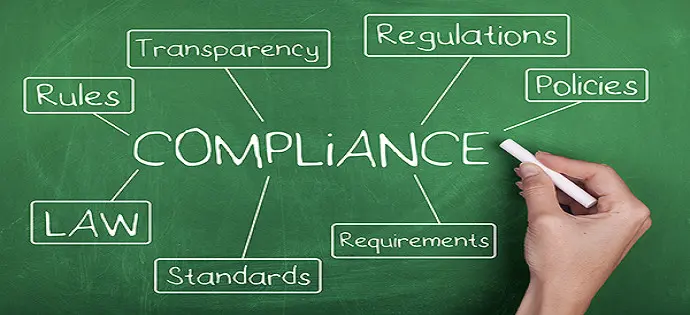
Quick answer: NESA compliance UAE is built around the Information Assurance (IA) Standard, and two control areas decide most audit outcomes: third-party risk management and staff security awareness, including phishing resilience. An organization can have strong firewalls and still fail an audit if it cannot show vendor due diligence records or a working phishing simulation program with tracked results. This guide breaks down what auditors check, how third-party risk management fits in, and a practical roadmap for teams in the UAE, Dubai, and Egypt.
What Is NESA Compliance in the UAE?
NESA compliance refers to alignment with the UAE Information Assurance (IA) Standard, first published by the National Electronic Security Authority in 2014. The regulatory body’s functions have since been absorbed into the UAE’s wider cybersecurity governance structure, but the IA Standard and the term “NESA compliance” are still the working vocabulary across UAE government, banking, telecom, energy, healthcare, and aviation, and among the vendors that serve them.
The standard classifies entities into priority tiers, from P1 (lowest criticality) to P5 (highest criticality, typically national infrastructure), and scales control depth to that tier. Control families cover asset management, access control, cryptography, physical security, incident management, business continuity, and two areas most organizations underestimate: third-party security and personnel security (which includes security awareness training).
| Priority tier | Typical entity type | Control depth expected |
| P1 to P2 | Small government-adjacent vendors, low-impact systems | Baseline controls, documented policies |
| P3 | Mid-size regulated entities, standard enterprise IT | Formal risk assessments, vendor due diligence, annual audits |
| P4 to P5 | Banks, telecom, energy, national infrastructure | Continuous monitoring, penetration testing, board-level reporting |
Why Third-Party Risk Management Sits at the Center of NESA Compliance
Most NESA audit findings do not come from an organization’s own network. They come from a vendor, contractor, or software supplier that had access to systems or data and was never properly assessed. Third-party risk management (TPRM) is how a regulated entity proves that access was controlled, monitored, and reversible.
A defensible TPRM program under the IA Standard generally includes:
- Vendor inventory and tiering. Every third party with system, network, or data access is logged and ranked by the risk it introduces, not just by contract value.
- Pre-onboarding due diligence. Security questionnaires, evidence of the vendor’s own controls, and a documented risk decision before access is granted.
- Contractual security clauses. Data handling terms, breach notification timelines, right-to-audit language, and minimum control requirements written into the contract, not left as a verbal understanding.
- Continuous monitoring. Periodic reassessment and, for higher-tier vendors, ongoing visibility into their security posture rather than a one-time checkbox.
- Incident coordination. A defined process for how a vendor reports a security event and how quickly the regulated entity is notified.
- Offboarding. Access revocation and evidence of it, closed out the same day a vendor relationship ends.
Auditors ask for the paper trail behind each of these steps, not a description of intent. Centralizing that evidence, rather than chasing spreadsheets across departments, is exactly what a GRC and compliance orchestration platform is built to do, mapping vendor risk data straight to the control it satisfies.
How Security Awareness Training Fits Into the Same Audit
Personnel security is a named control family in the IA Standard, and it is judged on evidence, not intent. Auditors typically want to see a training completion log by role, a policy acknowledgment record, and results from simulated phishing exercises over time, including click rates and report rates, not just a single pass or fail.
This is also where third-party risk and awareness overlap in practice. Staff who manage vendor relationships, approve access requests, or handle vendor invoices are a common target for social engineering, so their training needs to cover vendor impersonation and invoice fraud specifically, not just generic phishing awareness. A structured security awareness training program that tracks completion and behavior change by department gives compliance teams that role-based evidence without building it manually.
Phishing Protection as a Compliance Control, Not Just Good Practice
Phishing is consistently cited by information security bodies as one of the most common initial access methods behind breaches, which is why regulators treat it as a control to test, not a topic to lecture about. Under NESA-aligned audits, “phishing protection” usually means three things working together: technical email filtering, recurring simulated phishing campaigns, and a fast, visible reporting path for employees who spot something suspicious.
The simulation piece is where most programs fall short. A single annual test does not produce a trend, and auditors specifically look for a trend, improving click rates and rising report rates over multiple campaigns. Details on running that kind of program correctly, including cadence and what a good simulation tool should measure, are covered in how phishing simulation works in the UAE.
NESA Compliance for Dubai, the Wider UAE, and Egypt
Dubai entities often carry an extra layer. Government-linked organizations in Dubai answer to DESC (Dubai Electronic Security Center) on top of federal expectations, and financial institutions anywhere in the UAE answer to CBUAE cybersecurity requirements as well. A bank headquartered in Dubai can realistically be judged against NESA’s IA Standard, DESC’s regulation, and CBUAE guidance at the same time, and awareness training evidence is a common thread across all three. A closer look at how that overlap plays out is in DESC and CBUAE cybersecurity requirements for security awareness training.
Wider UAE entities outside Dubai government follow the federal IA Standard directly, tiered by the P1 to P5 classification described above.
Egypt-based teams are not directly regulated by NESA, since it is a UAE framework. What changes the picture is the growing number of Egyptian software houses, development agencies, and outsourced IT teams serving UAE clients. When a UAE bank or government entity contracts an Egyptian vendor, that vendor is pulled into the client’s third-party risk management program and is typically asked to meet the same due diligence, awareness training, and phishing protection expectations, contractually, even without being a UAE-regulated entity itself.
| Region | Governing framework | Who it applies to |
| UAE (federal) | NESA IA Standard | Government, critical infrastructure, and their vendors |
| Dubai | DESC regulation, layered on federal rules | Dubai government entities and linked private companies |
| UAE financial sector | CBUAE cybersecurity requirements | Banks and financial institutions UAE-wide |
| Egypt | No direct NESA obligation | Applies contractually when serving UAE-regulated clients |
A 90-Day NESA Compliance Readiness Roadmap
- Days 1 to 15: Baseline. Inventory every system, vendor, and data flow in scope. Identify which priority tier (P1 to P5) applies.
- Days 16 to 30: Gap assessment. Compare current controls against IA Standard requirements, with third-party risk and personnel security as dedicated line items, not folded into “general IT.”
- Days 31 to 50: Vendor risk cleanup. Tier every third party, collect missing due diligence evidence, and add security clauses to contracts that lack them.
- Days 51 to 70: Awareness and phishing program launch. Roll out role-based training, run the first simulated phishing campaign, and set a recurring cadence.
- Days 71 to 85: Evidence consolidation. Centralize policy acknowledgments, training logs, vendor assessments, and simulation results in one auditable system.
- Days 86 to 90: Internal readiness review. Run a mock audit against the same checklist an external assessor would use, and close any remaining gaps before the real one.
Frequently Asked Questions
Is NESA still the correct name for UAE’s information assurance regulator?
NESA (National Electronic Security Authority) was the body that published the UAE Information Assurance Standard. Its regulatory functions have since moved under the UAE’s broader cybersecurity governance structure, but NESA compliance and the NESA IA Standard remain the terms most UAE entities, auditors, and vendors use day to day, so this guide uses them the way the market actually uses them.
Who needs NESA compliance in the UAE?
Government entities and critical infrastructure sectors such as banking, telecom, energy, healthcare, aviation, and utilities are the primary scope. Private companies that supply, host, or process data for these sectors, including IT vendors, are pulled in indirectly through third-party risk management clauses in their contracts.
How does NESA compliance connect to third-party risk management?
The IA Standard includes control families for supplier and third-party relationships. A regulated entity has to show it assesses, monitors, and contractually controls the vendors that touch its systems or data, which means the entity’s third-party risk management program is tested as part of its own compliance evidence.
Do Egypt-based companies need NESA compliance?
NESA compliance itself is a UAE framework and does not directly apply inside Egypt. In practice, Egyptian companies that sell software, development, or outsourced services to UAE government or regulated clients are asked to meet the same third-party risk and awareness training expectations through their contracts, so the requirements reach them indirectly.
How often should phishing simulations run for compliance evidence?
Most UAE regulators and auditors expect phishing simulations on a recurring schedule, commonly monthly or quarterly, rather than a single annual test. What matters for compliance evidence is a documented trend in click rates and reporting rates over time, not one clean result.
What is the difference between NESA and DESC or CBUAE requirements?
NESA’s IA Standard applies broadly to UAE government and critical infrastructure. DESC (Dubai Electronic Security Center) adds a Dubai-specific layer for Dubai government entities, and CBUAE sets cybersecurity expectations for banks and financial institutions. A regulated organization in Dubai’s financial sector can be answerable to more than one of these frameworks at the same time.
Get a NESA Compliance Readiness Assessment
SecureSist works with banking, telecom, energy, and government-linked organizations across the UAE and Egypt to bring third-party risk management, security awareness training, and phishing protection into one auditable program instead of three disconnected efforts. If a NESA audit, DESC review, or CBUAE assessment is on your calendar, book a discovery call before the gap assessment stage, not after.
Reach the team at info@securesist.com, or call +971 56 896 6556 (UAE) to schedule a consultation.