What Is Security Awareness Training? A Complete Overview for 2026
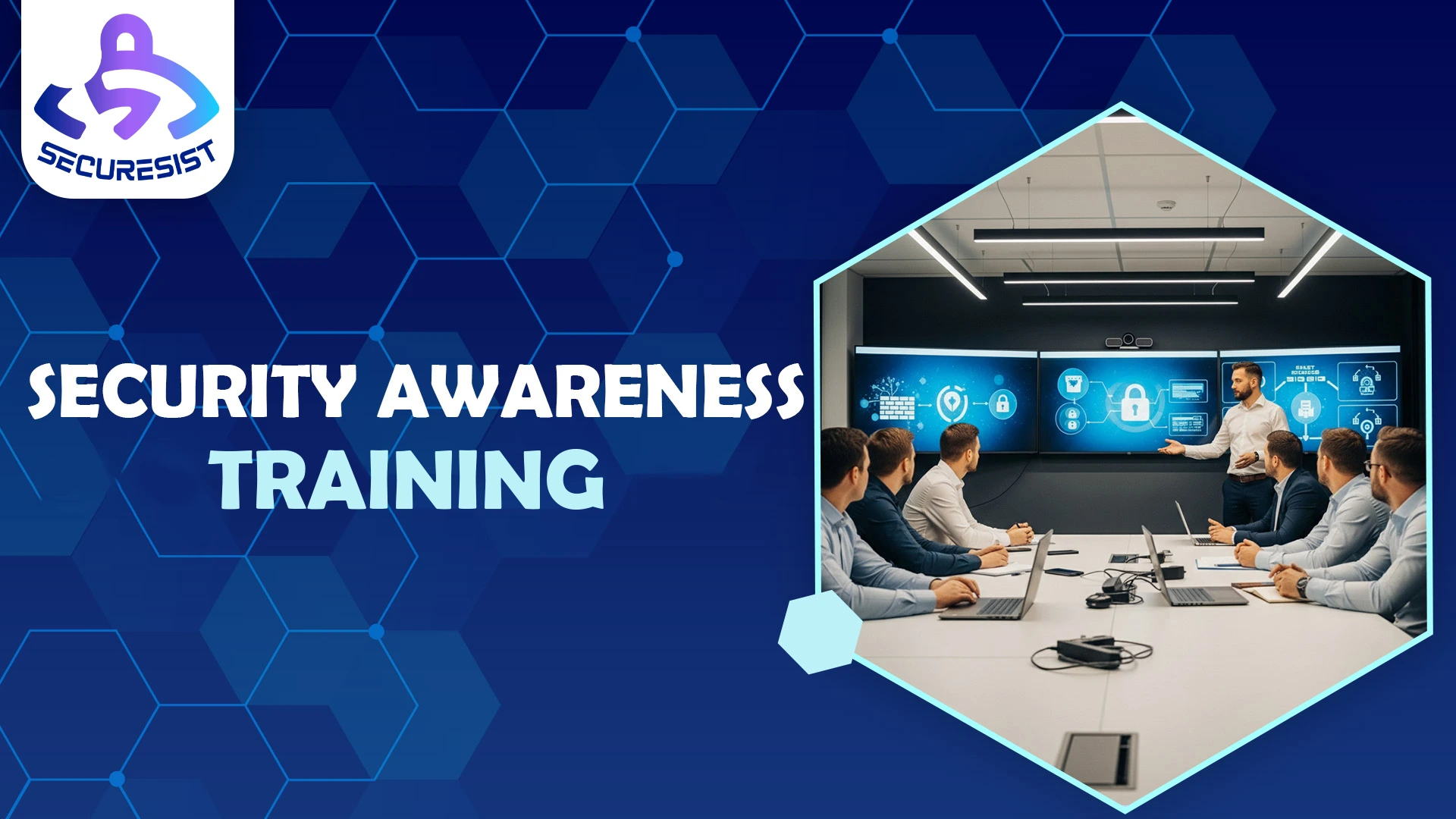
Security awareness training teaches employees how to recognize cybersecurity risks, follow security policies, and respond appropriately when something suspicious happens. It commonly covers phishing, social engineering, password security, data protection, safe use of business systems, and incident reporting.
For businesses, the purpose is not simply to make employees complete a course. A useful programme helps people make safer decisions during everyday work, whether they are reviewing an invoice, opening an email attachment, sharing a document, approving a payment, or accessing company systems remotely.
Modern security awareness training goes beyond a single annual session. It combines learning, practical exercises, policy reinforcement, reporting, and measurement to help organizations understand and reduce human-related cyber risk.
What Security Awareness Training Actually Includes
The content of a security awareness programme should reflect the organization’s industry, systems, workforce, and risk profile. A financial services company may need to focus heavily on payment fraud and business email compromise, while a healthcare organization may place greater emphasis on patient information and privacy.
Most programmes cover a core set of topics:
- Phishing and social engineering
- Passwords and multi-factor authentication
- Data protection and privacy
- Safe email and internet use
- Malware and malicious links
- Remote and mobile working
- Physical security
- Incident and suspicious activity reporting
- Acceptable-use policies
- Safe use of collaboration and cloud tools
The training should explain what employees need to do, not just describe the threat. For example, a phishing module should tell employees how to verify an unusual request, where to report a suspicious email, and what to do if they have already clicked a link or shared information.
The programme may also include additional training for employees with higher-risk responsibilities, such as finance teams, IT administrators, executives, developers, HR staff, and employees who handle sensitive information.
Why Cybersecurity Awareness Training Matters More in 2026
Employees now work across cloud applications, messaging platforms, remote-access tools, payment systems, and shared documents. This creates more opportunities for attackers to target everyday decisions.
A suspicious message may appear to come from a supplier. A payment request may seem to be from a senior executive. A fake login page may imitate a familiar business application. Attackers can also use artificial intelligence to produce more convincing messages, making traditional warning signs less reliable.
Technical security controls remain essential, but they cannot eliminate every risk involving human decisions. Employees still need to know how to recognize suspicious activity and what action to take.
Security awareness training is particularly valuable when it helps employees:
- Pause before responding to urgent or unusual requests
- Verify payment and account-change instructions
- Protect credentials and sensitive information
- Report suspicious messages quickly
- Recognize social engineering attempts
- Use business systems and AI tools responsibly
- Understand their role in the organization’s security process
NIST’s current guidance treats cybersecurity learning as a continuous programme that should support behaviour change, risk management, and an organization-wide security culture rather than relying only on isolated training events.
What a Modern Programme Includes Beyond a One-Year Course
An annual course can establish basic knowledge, but it should not be the entire awareness strategy. Employees are exposed to new tools, threats, policies, and working conditions throughout the year.
A modern security awareness programme may combine several activities.
Recurring learning
Short learning modules, reminders, and targeted campaigns can reinforce specific behaviours without taking employees away from their work for long periods.
Phishing simulations
Simulated phishing campaigns allow organizations to observe how employees respond to realistic messages in a controlled environment. The goal should be education and improvement, not embarrassment or punishment.
Role-based training
Different teams face different risks. Finance employees may need training on payment fraud, while developers may need guidance on secrets management, secure code handling, and suspicious repository activity.
Policy acknowledgement
Employees may need to confirm that they have read and understood important policies covering acceptable use, data handling, remote access, or incident reporting.
Remedial learning
Employees who miss required training or demonstrate knowledge gaps may need additional guidance. Follow-up should focus on helping them improve rather than creating a culture of blame.
Management reporting
Security teams and managers should be able to see whether training is being completed, which groups need support, and whether recurring risks are improving over time.
The objective is to create a cycle:
Train → Test → Measure → Improve
This is more useful than repeating the same annual course without reviewing its impact.
How Much Does Security Awareness Training Typically Cost?
Security awareness training pricing depends on the number of users, features, contract length, content, support model, and level of reporting required.
Most providers use one of three pricing models:
| Pricing model | What it usually includes | Suitable for |
| Training-only package | Courses, assignments, completion tracking, and basic reporting | Organizations seeking a basic awareness programme |
| Platform-based programme | Training, phishing simulations, policy acknowledgement, analytics, and reporting | Businesses seeking ongoing measurement and programme management |
| Managed or enterprise programme | Programme planning, customization, administration, reporting, and consultation | Larger or regulated organizations with complex requirements |
Public pricing can vary significantly. For example, KnowBe4 publishes per-seat pricing that changes according to plan and user volume, while larger organizations may need a custom quote. Its published pricing also separates basic training content from more advanced options.
SecureSist’s own security awareness training pricing guide explains the main factors that affect cost, including headcount, phishing simulation frequency, compliance reporting, language support, integrations, and managed services.
When comparing quotes, organizations should compare the actual scope rather than the headline price. A low-cost course may not include phishing simulations, behavioural reporting, remediation, or audit-ready evidence.
Which Metrics Actually Show Whether a Programme Is Working?
Completion rates are useful, but they only show whether employees finished assigned training. They do not prove that employees can recognize threats or respond correctly in real situations.
A more complete measurement approach can include:
| Metric | What it helps measure |
| Training completion rate | Whether employees completed assigned learning |
| Knowledge assessment scores | Whether employees understood the material |
| Phishing click rate | How many employees interacted with simulated phishing messages |
| Phishing reporting rate | How often employees reported suspicious messages |
| Time to report | How quickly employees alerted the security team |
| Repeat failure rate | Whether the same users continue to make similar mistakes |
| Remedial training completion | Whether employees completed follow-up learning |
| Real-threat reporting | Whether employees report suspicious activity during normal work |
Phishing click rates should be interpreted carefully. NIST’s Phish Scale was developed because the difficulty of a simulated phishing message can affect results. A difficult simulation and an easy simulation should not necessarily be treated as equivalent measurements.
NIST research also highlights that organizations often rely too heavily on compliance metrics such as completion rates instead of measuring actual programme impact.
For a deeper explanation of useful indicators, see SecureSist’s guide to security awareness training metrics that matter .
The strongest programmes combine participation, knowledge, behaviour, and operational trends. No single metric can prove that training has eliminated human risk.
How to Get Started With Building or Buying a Programme
Organizations do not need to launch every possible feature at once. A practical programme can begin with a clear assessment of current risks and gradually become more advanced.
1. Identify the main risks
Review the threats most relevant to the organization, such as phishing, business email compromise, data exposure, unsafe remote access, or payment fraud.
2. Segment employees by role
Identify which teams need general awareness and which require additional training based on their access, responsibilities, and exposure.
3. Define the required content
Choose topics that connect directly to organizational policies, systems, business processes, and common employee decisions.
4. Select the delivery model
Decide whether a training-only package, self-managed platform, or managed programme is appropriate for the organization’s size, resources, and reporting needs.
5. Establish measurement
Track completion, reporting, simulation results, repeat failures, and remedial activity. Set a baseline so progress can be evaluated over time.
6. Review and improve
Use the results to update training content, change campaign frequency, support high-risk groups, and address recurring weaknesses.
Organizations evaluating a provider can also review SecureSist’s security awareness training in the UAE to understand how training, phishing simulations, and human-risk reporting can work together.
FAQs
What is security awareness training and why do companies need it?
Security awareness training teaches employees how to recognize and respond to cybersecurity risks, including phishing, social engineering, unsafe data handling, and suspicious requests. Companies need it because employees interact with business systems, sensitive information, payment processes, and communication tools every day.
How is cybersecurity awareness training different from general IT training?
General IT training teaches employees how to use software, systems, or technical tools. Cybersecurity awareness training focuses on using those tools safely, protecting information, recognizing threats, following security policies, and reporting suspicious activity.
Technical cybersecurity training for IT professionals is more specialized and may cover network security, monitoring, system administration, or incident response.
How much does security awareness training typically cost?
The cost depends on employee numbers, content, phishing simulations, reporting features, integrations, support, and contract terms. Training-only packages generally cost less than managed programmes that include simulations, behavioural analytics, remediation, and compliance reporting.
Organizations should compare the features and services included in each quote rather than comparing price alone.
What metrics actually show whether training is working?
Useful metrics include completion rates, knowledge scores, phishing click rates, reporting rates, time to report, repeat failures, remedial training completion, and real-threat reporting. These indicators should be reviewed together because no single metric provides a complete view of employee security behaviour.
How often should employees go through security awareness training?
Many organizations use a combination of onboarding training, periodic refresher sessions, short awareness campaigns, and targeted training after incidents or major system changes. The right frequency depends on the organization’s risk profile, employee roles, internal policies, and applicable requirements.
Build a More Measurable Security Awareness Programme
Security awareness training should do more than produce completion certificates. A well-managed programme helps employees recognize threats, respond appropriately, and build safer habits over time.
SecureSist combines awareness training, phishing simulations, policy-related activity, behavioural reporting, and human-risk insights to help organizations understand where employee risk exists and where further action is needed.
Request a SecureSist demo to discuss your organization’s security awareness and human-risk requirements.