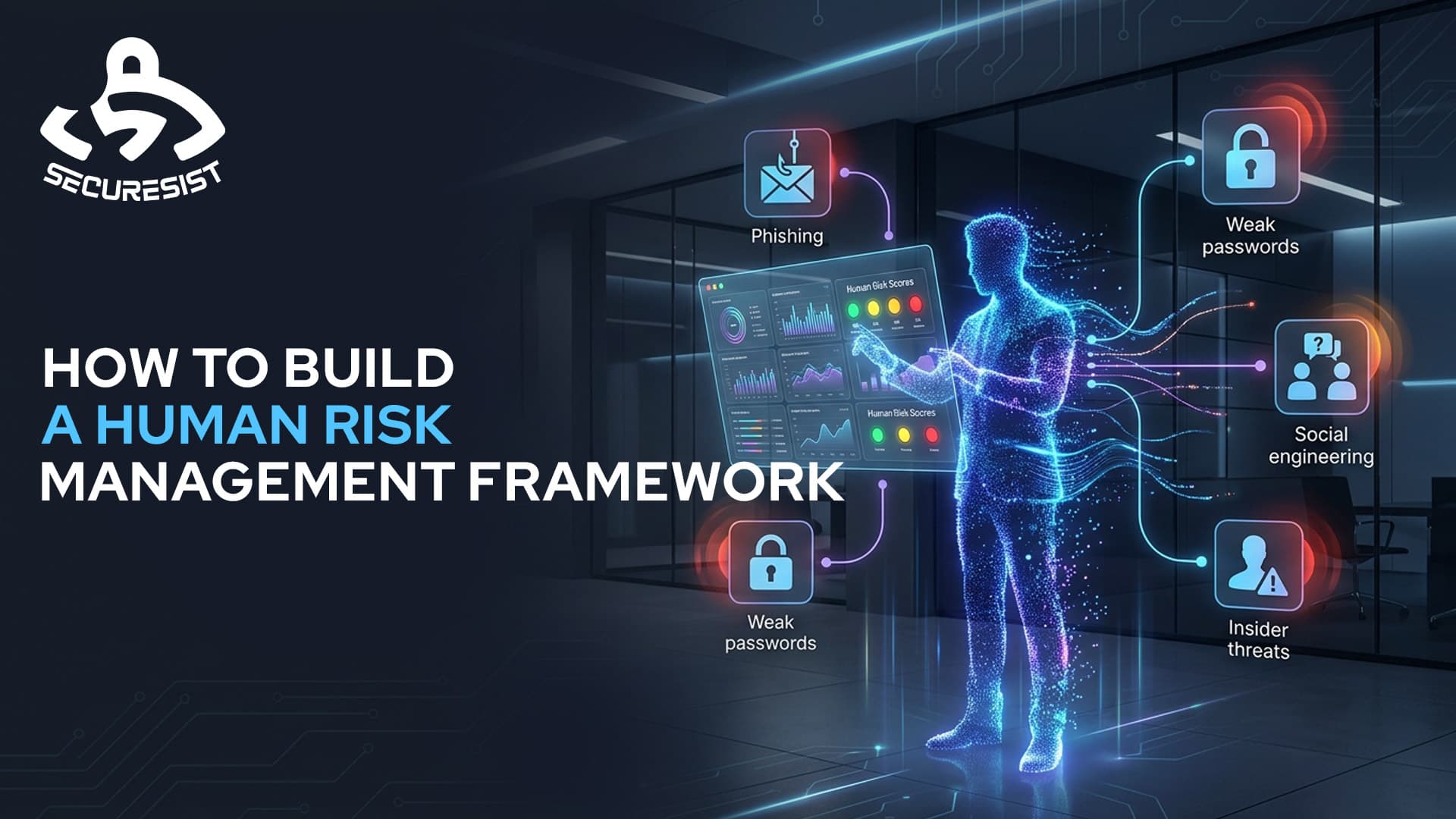
Ask most business leaders about cybersecurity, and the conversation usually starts with technology. Firewalls, endpoint protection, email security, and monitoring tools often get most of the attention.
Yet many security incidents don't begin with a technical failure. They start with an everyday decision made by a person.
Someone clicks a convincing phishing email. An employee shares information with the wrong contact. A team member uses an unapproved application because it helps them finish work faster. None of these actions are usually intentional, but they can still create serious security problems.
That is one of the main reasons a Human Risk Strategy is becoming a bigger priority for organizations. Companies are beginning to realize that security is not only about protecting systems. It is also about understanding how people work, where mistakes are most likely to happen, and how those risks can be reduced without slowing the business down.
This is particularly relevant in the UAE, where many organizations operate with multicultural teams, remote workers, contractors, and employees spread across different locations. Managing technology is only one part of the challenge. Managing human risk is equally important.
What Is a Human Risk Strategy?
A Human Risk Strategy is a practical plan that helps organizations reduce security risks linked to human behavior.
That may sound straightforward, but the idea is often misunderstood.
Many companies think human risk management is simply security awareness training. Employees complete a course once or twice a year, answer a few questions, and move on. The training box gets ticked, but very little changes in day-to-day behavior.
A proper Human Risk Strategy goes much further than that. To see why this shift is happening globally, it helps to understand Human Risk Management: The Missing Layer in Cybersecurity.
Instead of focusing only on training, it looks at how people interact with company systems, data, applications, and business processes. The goal is to understand where mistakes are likely to happen and then take steps to reduce the chances of those mistakes leading to an incident.
For example, different teams face different types of risks.
Department
Common Human Risks
Finance
Invoice fraud, payment scams, business email compromise
HR
Exposure of employee records, social engineering attempts
Sales
Credential theft, unsafe file sharing
IT
Privileged account misuse, configuration errors
A finance employee and an HR employee do not face the same threats every day. Treating them exactly the same rarely delivers good results.
The strongest human risk programs recognize these differences and adapt their approach accordingly.
At its core, a Human Risk Strategy focuses on three key areas:
- Understanding where human-related risks exist.
- Reducing risky behaviors through education and support.
- Measuring whether those efforts are actually working.
The objective is not to blame employees when something goes wrong. People will always make mistakes. What matters is building an environment where those mistakes become less frequent and less damaging.

Why Human Risk Matters More Than Ever
Work has changed dramatically over the last few years.
Employees no longer spend all their time inside a corporate office using company-owned devices. Many switch between office networks, home Wi-Fi connections, mobile phones, cloud applications, and collaboration platforms throughout the day.
While this flexibility brings clear business benefits, it also creates more opportunities for attackers.
Cybercriminals understand something many organizations are still learning: targeting people is often easier than targeting technology.
Rather than spending weeks trying to break through technical defenses, attackers frequently focus on convincing someone to open a malicious attachment, approve a payment request, or reveal sensitive information.
A common example can be seen in finance departments across the UAE. An employee receives an email that appears to come from a trusted supplier. The request looks legitimate. The branding is familiar. The timing seems normal.
Under pressure to process payments quickly, the employee approves the transaction.
Only later does the company discover the supplier account details had been changed by a criminal.
Situations like this happen because attackers understand human behavior. They know how to exploit everyday workflows, using tactics like malicious text links or QR scams. Understanding What Is Link Manipulation? Common Tactics, UAE Threats & Prevention Tips is crucial to recognizing how easily these traps are laid.Human risk today extends well beyond phishing emails. Organizations are also dealing with challenges such as:
- Insider threats
- Credential theft
- Unauthorized AI tool usage
- Data handling mistakes
- Social engineering attacks
- Messaging app scams
- Shadow IT
Many of these risks are difficult to address through technology alone. This is why organizations are moving away from a compliance-focused mindset and toward a broader Human Risk Strategy. The focus is shifting from simply delivering generic training to implementing a structured Security Awareness Training Program: Building a Strong Human Defense that genuinely changes daily habits.This is why organizations are moving away from a compliance-focused mindset and toward a broader Human Risk Strategy. The focus is shifting from simply delivering training to understanding behavior, identifying patterns, and helping employees make safer decisions in their daily work.
For businesses looking ahead, human risk is no longer just an IT concern. It has become an important part of overall business resilience and cybersecurity planning.
Establish Clear Ownership and Accountability
One of the biggest reasons human risk initiatives struggle is surprisingly simple: nobody is fully responsible for them.
Security teams often assume HR will handle employee awareness. HR teams assume cybersecurity belongs to IT. Meanwhile, leadership expects the issue to be managed somewhere in the background.
The result is usually the same. Training gets delivered occasionally, policies are updated once in a while, but nobody is actively measuring whether employee-related risks are improving or getting worse.
A Human Risk Strategy needs clear ownership from the beginning.
That does not mean responsibility should sit with one department alone. Human risk affects the entire organization, so multiple teams need to work together.
A practical approach looks something like this:
Team
Responsibility
Leadership
Set expectations and support the strategy
IT & Security
Identify risks and monitor security events
HR
Support awareness, onboarding, and employee engagement
Department Managers
Reinforce secure behaviors within teams
When leadership is involved, employees are more likely to take security seriously. People notice when security becomes part of everyday business conversations rather than an annual training exercise.
For example, a Dubai-based financial services company may have strong technical controls in place, but if managers never discuss security risks with their teams, employees may still overlook warning signs that could lead to fraud or data exposure.
Accountability works best when everyone understands their role in reducing risk.
Identify and Assess Human Risk
Before reducing human risk, organizations need to understand where it exists.
Many businesses make the mistake of treating all employees the same. In reality, different roles face very different threats.
A finance employee approving payments faces different risks than a customer service representative. An IT administrator has access to systems that most employees never touch. Senior executives are often targeted by highly personalized phishing and social engineering attacks.
This is why risk assessments should focus on roles, responsibilities, and access levels. To establish an accurate baseline, businesses frequently launch a Phishing Test: How to Assess Your Employees' Security Awareness before finalizing their broader risk priorities.A useful starting point is asking questions such as:
- Which employees have access to sensitive information?
- Which departments handle financial transactions?
- Who has administrative privileges?
- Which teams regularly communicate with external vendors or customers?
- What business processes depend heavily on human decision-making?
The answers often reveal areas where additional controls, awareness, or monitoring may be needed.
In the UAE, many organizations also work with contractors, third-party vendors, and distributed teams across multiple locations. These business models create additional human risk considerations that should be included in assessments.
It is also important to look beyond phishing.
Modern human risks may include:
- Sharing files through unauthorized platforms
- Weak password practices
- Unsafe use of AI tools
- Insider threats
- Data handling errors
- Social engineering through messaging apps
The goal is not to identify every possible risk. The goal is to identify the risks most likely to affect your organization and focus resources where they will have the greatest impact.
Build a Human Risk Management Framework
Once risks have been identified, the next step is creating a framework that turns findings into action.
Many organizations collect risk data but never build a structured plan around it. As a result, the same issues continue to appear year after year.
A Human Risk Management Framework provides consistency. It helps organizations move from reacting to incidents toward preventing them.
A simple framework usually includes five key stages:
- Identify high-risk users, departments, and business processes.
- Assess the likelihood and potential impact of human-related incidents.
- Implement targeted controls, awareness programs, and security measures.
- Monitor employee behavior and risk indicators.
- Review and improve the strategy regularly.
The most effective frameworks are not overly complicated.
In fact, simpler frameworks often perform better because employees and managers understand how they fit into the process.
Consider a logistics company operating across Dubai and Abu Dhabi. Drivers, warehouse staff, office employees, and managers all interact with technology differently. Delivering the same security awareness program to every employee may not address their actual risks.
A stronger approach would tailor guidance based on each group's daily activities, access levels, and exposure to potential threats. For instance, the back-office and remote environments require defensive training specific to common local trends, making it essential to understand Phishing Attacks: How Businesses in Dubai and the UAE Can Stay Protected. This is where human risk management becomes more practical and more effective. Rather than focusing on generic awareness campaigns, organizations can direct their efforts toward the behaviors that matter most.
Over time, this approach helps create a security culture that feels relevant to employees instead of something they are simply required to complete.
Set Measurable KPIs and Track Effectiveness
A Human Risk Strategy should deliver measurable results. Without clear metrics, it becomes difficult to understand whether security awareness efforts are actually reducing risk or simply increasing training completion numbers.
Many organizations focus heavily on participation rates. While it is useful to know whether employees completed training, that metric alone does not show whether behaviors are changing.
Instead, businesses should track indicators that provide a clearer picture of human-related risk.
KPI
Why It Matters
Phishing Simulation Results
Shows how employees respond to potential threats
Incident Reporting Rate
Indicates employee awareness and engagement
Training Completion Rate
Measures participation levels
Repeat Risk Behaviors
Helps identify users who may need additional support
Security Incident Trends
Shows whether risks are increasing or decreasing over time
For example, if phishing simulation failures drop over several months while incident reporting increases, that often indicates employees are becoming more aware of suspicious activity.
Organizations across Dubai and the wider UAE are increasingly looking beyond compliance-driven reporting and focusing on measurable improvements in employee behavior. This helps security teams demonstrate real value to leadership and justify future investments in human risk management initiatives.
Common Challenges Organizations Face
Building a strategy is one thing. Maintaining it is another.
One challenge many businesses face is treating human risk as a one-time project. Security awareness campaigns may launch with enthusiasm but gradually lose momentum after a few months.
Another common issue is relying on generic training for every employee regardless of their role. A finance team member, HR professional, and warehouse supervisor are unlikely to face the same risks during their daily work.
Organizations may also struggle with balancing security requirements and employee experience. If security processes become overly complicated, employees often look for shortcuts that create new risks.
The most successful organizations understand that reducing human risk is an ongoing process rather than a yearly activity.
The Future of Human Risk Management
The way organizations manage human risk is changing.
Rather than focusing only on annual training programs, businesses are increasingly using behavioral insights, risk-based assessments, and continuous monitoring to understand how employees interact with technology.
Artificial intelligence is also playing a growing role. Security teams can now identify patterns that may indicate risky behavior and provide support before a security incident occurs.
For UAE organizations investing heavily in digital transformation, this shift is particularly important. As businesses adopt cloud platforms, AI tools, and hybrid work models, understanding human behavior will become just as important as protecting technical infrastructure.
The organizations that succeed will be those that treat human risk as an ongoing business priority rather than a compliance requirement.
FAQs
What is a human risk strategy?
A human risk strategy is a structured approach to identifying, assessing, and reducing risks caused by human behavior. It combines awareness, risk assessment, governance, and measurement to improve an organization's overall security posture.
What is human risk management?
Human risk management focuses on understanding how employee actions can affect cybersecurity and business operations. The goal is to reduce risk through targeted interventions, training, and continuous improvement.
What are the five risk management strategies?
The five commonly used risk management strategies are risk avoidance, risk reduction, risk transfer, risk acceptance, and risk mitigation through controls and monitoring.
How do organizations measure human risk?
Organizations typically use metrics such as phishing simulation results, incident reporting rates, security awareness participation, and overall incident trends to evaluate human-related risk.
Who should own a human risk strategy?
While cybersecurity teams often lead the initiative, successful strategies involve leadership, HR, IT, department managers, and employees across the organization.
Contact the SECURESIST Team Today
Conclusion
Technology remains an essential part of cybersecurity, but technology alone cannot eliminate every risk. Employees make decisions every day that can either strengthen security or create vulnerabilities.
A strong Human Risk Strategy helps organizations understand those risks, address them proactively, and build a culture where security becomes part of everyday business operations. For companies across the UAE, this approach can improve resilience, support compliance efforts, and reduce the likelihood of costly incidents in an increasingly digital business environment.