
What Is a Human Risk Management Platform and How Is It Different From Security Awareness Training Software?
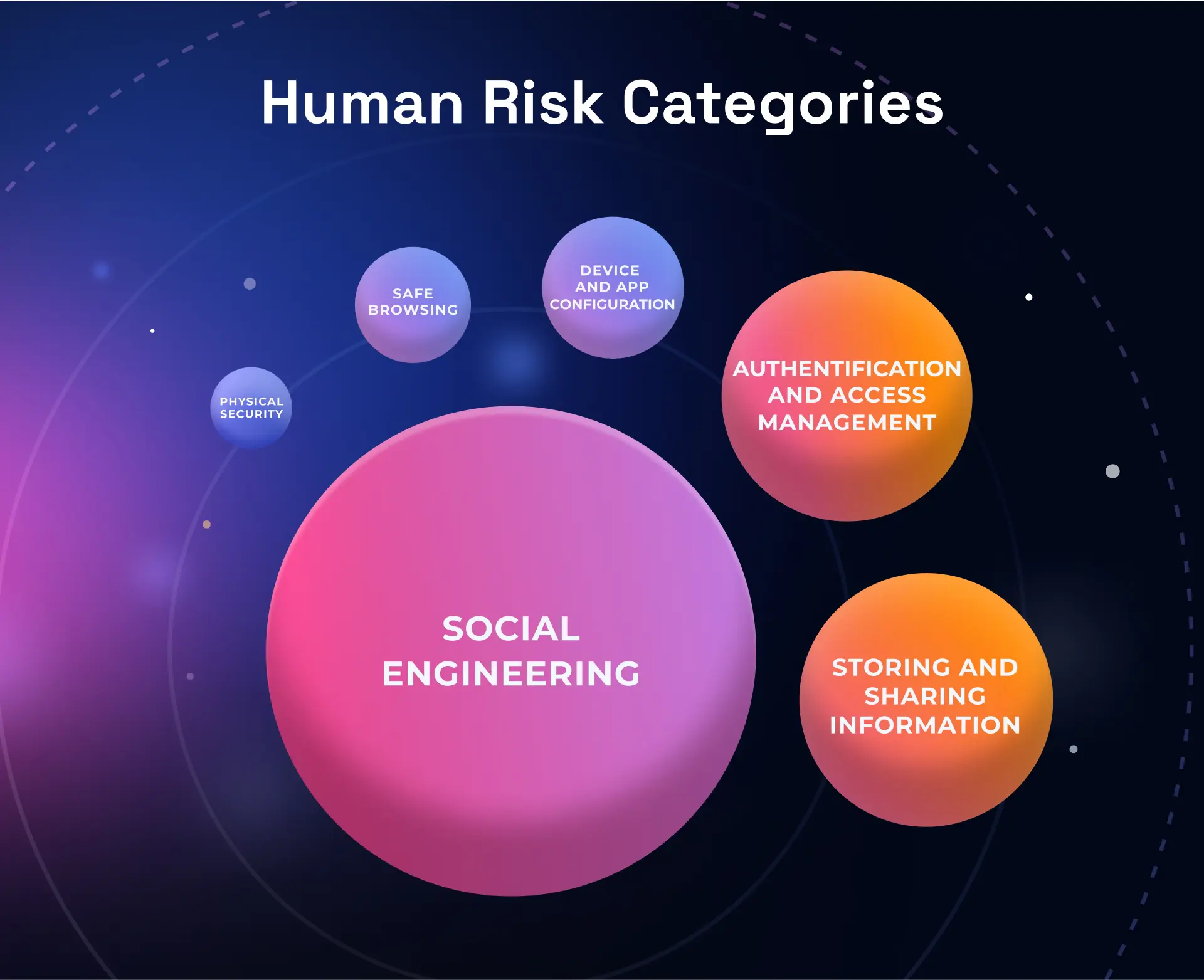
A human risk management platform helps security teams understand how employees behave around cyber threats, identify where risky behaviour exists, and use that information to improve security outcomes.
That is different from simply asking whether employees completed their security training.
An employee can complete every assigned course and still click a convincing phishing email, share sensitive information with the wrong person, or ignore a suspicious login request. The real question is not only what employees know. It is whether that knowledge changes what they do.
This is why human risk management is becoming a broader approach to security awareness. NIST’s current guidance on cybersecurity and privacy learning programs also emphasizes behaviour change, measurable outcomes, and continuous improvement rather than treating training as a one-time activity.
Human Risk Management vs Security Awareness Training: What Actually Changed
Traditional security awareness programs often begin with a simple requirement: employees must complete their assigned training. That is useful, but completion is only a participation metric.
Consider an employee who completes a phishing awareness course on Monday. On Friday, they receive a realistic message that appears to come from their finance team. The message creates urgency and asks them to open an attachment.
Did the training change their behaviour?
A completion report cannot answer that. Human risk management looks further. It can combine training with controlled testing, reporting behaviour, repeated actions, and trends over time. The goal is to understand where employees are still vulnerable and what should happen next.
This does not mean security awareness training is no longer useful. Training remains one part of the process. The change is in what happens around it.
Instead of:
Training → Completion report
The approach becomes:
Training → Test → Measure → Improve → Test again
That makes the program more closely connected to actual security risk.
Core Features a Human Risk Management Platform Should Include
Not every platform uses the same features or calculates risk in the same way. That is why buyers should look at what a platform can actually help them understand rather than counting the number of features on a product page.
A useful human risk management platform should typically support several areas.
Behavioural testing Phishing simulations and other controlled exercises can show how employees respond when they face a realistic threat.
The purpose is not to catch people making mistakes. It is to identify patterns that training needs to address.
Risk measurement The platform should help security teams understand which behaviours indicate greater risk and how those behaviours change over time.
A single score is not enough. Buyers should understand which signals contribute to the score and how the platform interprets them.
Targeted training If one department struggles with suspicious attachments while another has difficulty identifying credential theft attempts, sending the same training to everyone may not be the most useful response.
Targeted learning can address the behaviour that actually needs attention.
Reporting and analytics Security teams need more than a list of employees who completed a course.
Useful reporting can show campaign results, reporting behaviour, repeat risky actions, team-level trends, and changes over time.
Continuous improvement Human risk is not a one-time assessment.
Employees change roles. Attack techniques change. New tools introduce new risks. A platform should support an ongoing cycle of assessment, intervention, measurement, and improvement.
How Does a Cybersecurity Awareness Platform Measure Human Risk?
There is no single metric that can explain employee cyber risk.
Click rate is often the first number people look at during a phishing simulation. It matters, but it does not tell the entire story.
Imagine two departments both record a 10% phishing click rate. In Department A, most employees who receive suspicious messages report them quickly. In Department B, very few employees report anything.
The click rate is identical.
The security behaviour is not.
That is why a more useful assessment can combine several signals.
| Metric | What it can tell you |
| Phishing click rate | How often employees interacted with a simulated threat |
| Reporting rate | Whether employees recognized and reported suspicious activity |
| Repeat behaviour | Whether risky actions continue across multiple exercises |
| Training performance | Whether employees understood the learning material |
| Team trends | Which departments or groups may need additional support |
| Campaign comparison | Whether behaviour is improving over time |
| Response time | How quickly employees report suspicious activity |
NIST’s guidance specifically includes phishing response tracking, incident reporting, training performance, and longitudinal data showing behaviour change over time among possible measures for evaluating cybersecurity learning programs.
The important point is simple: do not treat one number as the complete picture of human risk.
A good platform should help explain what is happening behind the number.
Security Awareness Training Software vs a Full Human Risk Management Platform
Security awareness training software and human risk management are not opposing approaches. Training is still part of human risk management.
The difference is what the organization does with the information.
| Security awareness training software | Human risk management approach |
| Focuses on delivering training | Connects training with behaviour |
| Often measures completion | Measures behaviour and risk signals |
| Uses courses and assessments | Combines learning, testing, and measurement |
| Can provide training results | Looks for patterns across activities |
| Often evaluates participation | Evaluates change over time |
| Teaches employees what to do | Helps identify where further intervention is needed |
Think about it this way. Training can tell an employee that they should report a suspicious email. Human risk management can help determine whether they actually report one when they receive it. That distinction is becoming more important as security teams are asked to show measurable outcomes rather than simply prove that annual training was completed.
Signs Your Organization Has Outgrown Basic Training Software
You may not need a more advanced platform simply because your company has grown.
There are better indicators. One is a high training completion rate with little improvement in phishing results. If almost everyone completes training but employees continue repeating the same risky actions, completion is not telling you enough.
Another sign is that you cannot identify where the risk is concentrated.
A company-wide average can hide important differences. Finance, HR, IT, executives, and customer-facing employees may face different types of threats and have different levels of exposure.
Manual reporting is another warning sign. If your team has to export information from several systems, combine spreadsheets, and manually compare campaigns to understand whether behaviour has improved, the process may have become harder to manage than it needs to be.
There is also a problem when every employee receives the same training regardless of their behaviour.
A person who repeatedly clicks simulated credential theft emails may need a different intervention from someone who understands phishing but fails to report suspicious messages. The strongest signal is usually the question from leadership:
“Has employee cyber risk actually gone down?”
If the only answer available is a training completion percentage, the organization may need better measurement.
How to Evaluate a Human Risk Management Platform Before You Buy
Do not start with the size of the course library or the number of phishing templates.
Start with the questions the platform needs to answer.
Can it measure behaviour? Find out whether the platform measures actions beyond course completion.
Can it identify repeated risky behaviour? One mistake does not necessarily indicate a persistent problem. Repeated behaviour provides more useful context.
Can it measure reporting as well as clicking? A lower click rate is useful, but employees who actively report suspicious messages can provide another important signal of security awareness.
Can it compare results over time? You should be able to see whether behaviour is improving rather than reviewing every campaign as an isolated event.
Can it support targeted interventions? If a specific group has a recurring weakness, the platform should help your team decide what to do about it.
Can security leaders understand the results? A useful platform should turn detailed employee activity into reporting that security teams and business leaders can understand.
What goes into the risk score? Ask the vendor which signals contribute to its risk calculation. There is no universal human risk score, so two platforms may calculate risk differently.
How is employee data handled? Human risk management involves information about employee behaviour. Before deployment, ask what data is collected, why it is needed, who can access it, how long it is retained, and how privacy is handled.
That conversation should happen before procurement, not after implementation.
Human Risk Management Is About Closing the Behaviour Gap
Security awareness training gives employees knowledge.
Human risk management adds the measurement needed to understand whether that knowledge is influencing behaviour.
That does not make traditional training obsolete. It makes the training more useful when it is connected to testing, measurement, and targeted improvement.
For example, a phishing simulation may show that a particular group is repeatedly interacting with suspicious messages. Instead of assigning another generic course to the entire organization, the security team can investigate the pattern and design a more relevant intervention.
That is the real shift.
The goal is not to produce more training records.
It is to understand where human behaviour creates security risk and use that information to reduce it over time.
FAQs
What is human risk management in cybersecurity?
Human risk management is an approach to identifying, measuring, and reducing security risks associated with employee behaviour. It can combine security awareness training, phishing simulations, behavioural data, reporting, risk indicators, and targeted interventions.
How is a human risk management platform different from traditional security awareness training software?
Traditional training software primarily focuses on delivering learning and tracking participation. A human risk management platform connects training with behavioural testing and risk measurement, helping security teams understand whether employee behaviour is improving.
What features should a cybersecurity awareness platform include beyond training modules?
Useful capabilities can include phishing simulations, behavioural measurement, reporting, risk scoring, campaign analysis, targeted training, trend analysis, and integrations with relevant security or business systems. The right features depend on the organization’s security requirements.
How is human risk actually measured or scored?
Human risk can be assessed using several signals, such as phishing responses, reporting behaviour, repeated risky actions, training performance, and changes over time. There is no single industry-wide formula for calculating one universal human risk score.
Is human risk management only relevant for large enterprises?
No. Smaller organizations can also benefit from measuring employee behaviour, particularly when employees handle sensitive information, financial processes, customer data, or privileged systems. The scale of the program should match the organization’s size and risk profile.
The Goal Is Better Decisions, Not More Training
A security awareness program should not end when employees finish their courses.
The more useful question is what happens next.
Which behaviours remain risky? Which teams need additional support? Are employees reporting suspicious activity more often? Are repeated mistakes becoming less common?
A human risk management platform can help answer those questions by connecting awareness activities with measurable behaviour.
That gives security teams something more useful than another completion report: a clearer view of where human risk exists and where their next security action should focus.