
How to Prove Cybersecurity Training ROI to the Board: A Practical Framework for CISOs
Learn how to prove cybersecurity training ROI to the board using practical metrics, financial impact, and executive-ready reporting frameworks.
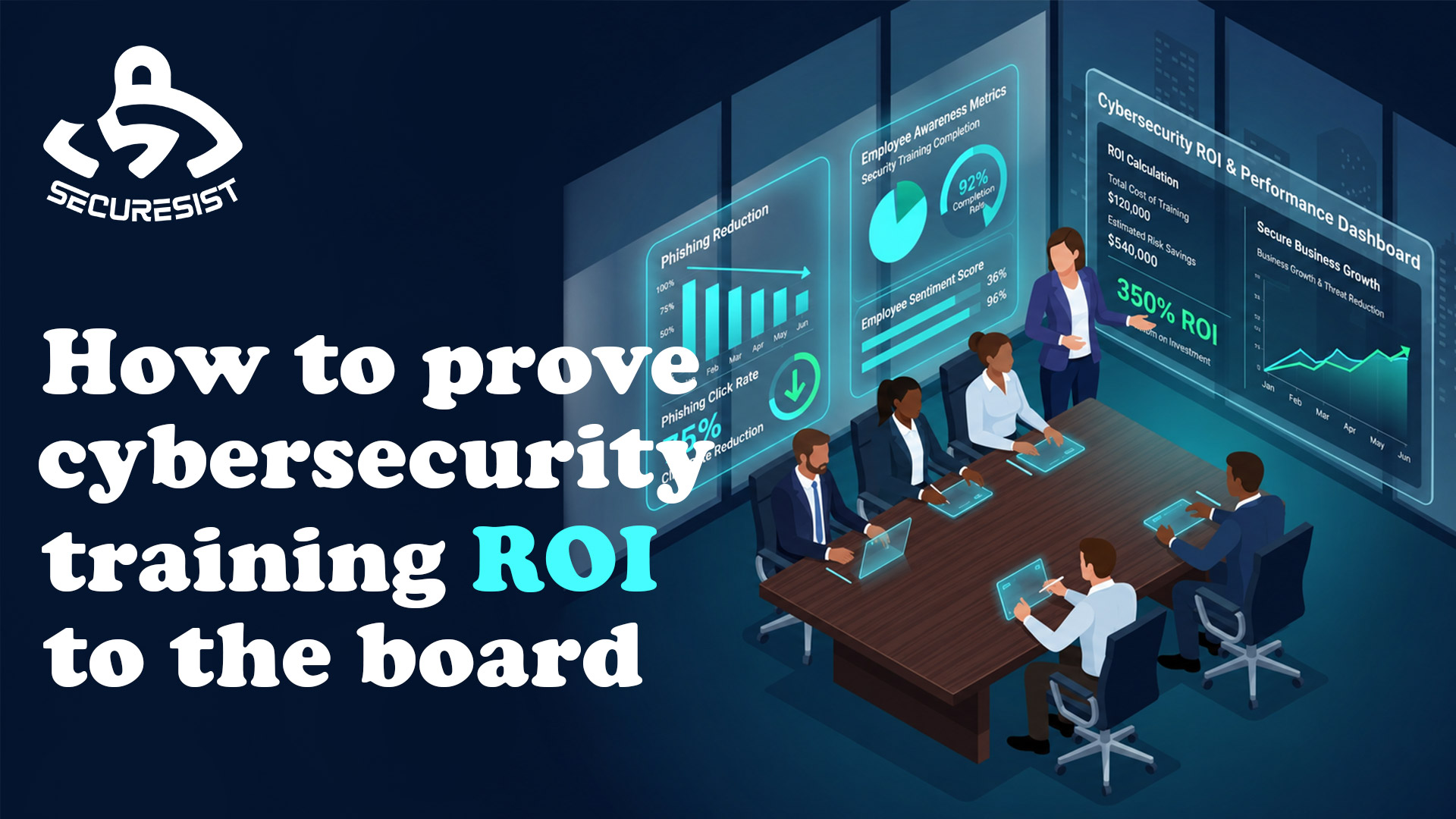
Cybersecurity awareness training is often one of the first items questioned when budgets are reviewed. While most organizations can show high training completion rates, many struggle to prove whether those programs actually reduce business risk. That’s where many CISOs face a challenge. A board isn’t looking for evidence that employees completed another annual training session. It wants to know whether that investment lowered the likelihood of a costly cyberattack and protected the organization from financial losses.
If you’re wondering how to prove cybersecurity training ROI to the board, the answer lies in connecting training outcomes to measurable business results. This is the same challenge explored in our guide to security awareness training metrics that matter — the shift from measuring activity to measuring impact. In this guide, you’ll learn how to build a compelling cybersecurity training business case, identify the metrics executives actually value, and present your security awareness program as a strategic investment rather than a routine compliance exercise.
Key Framework
To prove cybersecurity training ROI to the board, measure business outcomes instead of training completion. Focus on metrics such as phishing simulation click rate reduction, employee reporting rates, avoided incident costs, and overall cyber risk reduction. Present these results in financial terms that demonstrate clear business value and support future cybersecurity budget decisions.
Why Boards Need More Than Training Completion Rates
Imagine presenting your annual security awareness report to the board and proudly saying, “Ninety-five percent of employees completed the mandatory cybersecurity training.”
The response you’ll likely receive is simple.
“That’s good, but what did it actually achieve?”
This is where many cybersecurity presentations fall short. Training completion rates measure participation, not effectiveness. They show that employees attended a course, but they don’t explain whether those employees are less likely to click a phishing email, report suspicious activity faster, or help prevent a security incident. This gap between completion and behavioral change is exactly what our analysis of why security awareness training programs fail identifies as the most consistent weakness in how organizations measure awareness.
Board members evaluate investments differently from security teams. Their priorities revolve around financial performance, operational resilience, regulatory compliance, and long-term business growth. A security awareness program needs to support those priorities by showing how it reduces cyber risk and protects the organization from avoidable losses. This is especially important in regulated sectors such as finance, healthcare, government, and enterprise environments, where ISO 27001 and UAE regulatory frameworks increasingly expect measurable outcomes — not just documented training delivery.
Instead of focusing on activity metrics, shift the conversation toward business outcomes. For example, demonstrating that phishing click rates dropped by 60%, employee reporting increased significantly, or security incidents caused by human error declined over the past year creates a far stronger cybersecurity training business case than reporting completion percentages alone. When CISOs frame cybersecurity training as a risk reduction strategy instead of an IT expense, board reporting becomes more meaningful and budget conversations become far more productive.
A Simple Framework to Calculate Cybersecurity Training ROI
Many security leaders assume calculating cybersecurity training ROI requires complex financial models. In reality, the process can be straightforward when you focus on measurable business outcomes instead of technical activities. The goal is to show how your training investment reduces risk, lowers potential losses, and supports business continuity. The same principles that underpin a strong human risk management strategy apply here — connecting behavioral change to financial exposure.
Step 1: Calculate Your Total Training Investment
Start by identifying the complete cost of your security awareness program. Don’t just include the training platform subscription. Consider every expense involved, including:
- Training platform or vendor costs
- Employee time spent completing training
- Phishing simulation exercises
- Administrative and reporting costs
- Awareness campaigns and learning materials
Having a complete picture of the investment makes your ROI calculation more accurate and credible.
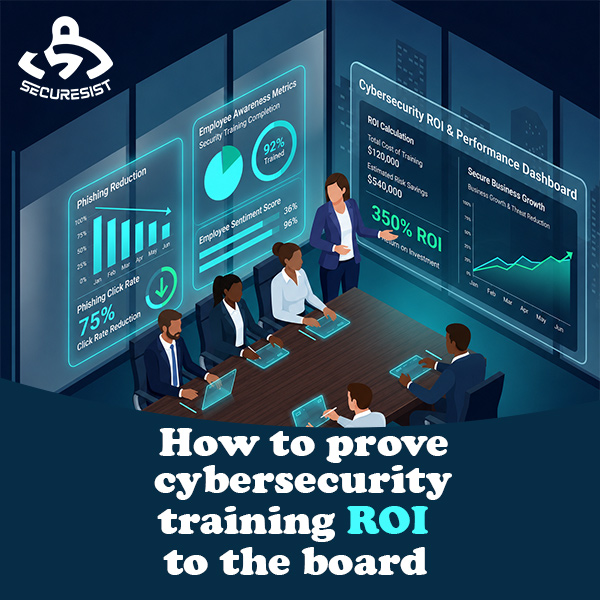
Step 2: Measure Your Baseline Security Risk
Before you can demonstrate improvement, you need to know where your organization started. Review your existing security awareness metrics, such as phishing simulation results, human error-related incidents, or employee incident reporting rates. Understanding your phishing failure rate by industry provides additional context — it helps you position your baseline against sector benchmarks, which makes the improvement narrative more compelling for board audiences.
Step 3: Estimate Avoided Losses
This is where the business value becomes clear. If your security awareness initiatives reduce successful phishing attempts, improve incident reporting, or prevent account compromise, they help avoid expenses associated with investigations, recovery efforts, downtime, legal costs, and regulatory penalties. Rather than claiming that training prevents attacks, focus on how it reduces the likelihood and impact of incidents. Ransomware attacks, for example, frequently begin with a phishing email — quantifying the avoided cost of even one prevented ransomware incident can make a powerful contribution to the ROI calculation.
Step 4: Calculate the ROI
Once you’ve estimated both the investment and the financial benefits, apply a simple ROI formula:
Cybersecurity Training ROI (%) = (Financial Benefits − Training Costs) ÷ Training Costs × 100
For example, if an organization spends $40,000 on cybersecurity training and estimates $160,000 in avoided incident costs over a year, the ROI would be:
ROI = ($160,000 − $40,000) ÷ $40,000 × 100 = 300%
The exact numbers will vary for every organization, but presenting a logical and transparent calculation helps boards understand the financial impact of security investments.
Need Help Building the Business Case for Your Security Budget?
Securesist provides the reporting dashboards, phishing simulation data, and behavioral metrics that make ROI calculations credible and board presentations compelling. Talk to our team to see how we help CISOs translate security awareness results into executive-ready business cases.
Five Security Metrics That Boards Actually Care About
Not every metric deserves a place in the boardroom. Executives want data that demonstrates business impact rather than operational activity. Choosing the right security training ROI metrics makes your reporting more meaningful and supports future cybersecurity budget discussions. The full framework for selecting and tracking these indicators is covered in our guide to security awareness training metrics that matter, but the five most relevant for board reporting are summarized below.
| Metric | Why It Matters to Executives |
| Phishing simulation click rate | Shows whether employees are becoming less vulnerable to phishing attacks over time. |
| Employee reporting rate | Demonstrates that employees actively identify and report suspicious emails, strengthening the organization’s human defense. |
| Mean Time to Report (MTTR) | Faster incident reporting allows security teams to investigate and respond before threats spread. |
| Incident reduction | Highlights whether security awareness efforts are reducing human error-related security incidents across the organization. |
| Estimated cost avoidance | Converts reduced cyber risk into financial terms that boards can easily understand when evaluating security investments. |
When these metrics are presented together through an executive dashboard, they tell a much stronger story than training completion percentages alone. For example, a lower phishing click rate combined with faster incident reporting and fewer employee-driven security incidents demonstrates measurable progress toward breach prevention.
Boards also appreciate trend-based reporting. Instead of showing one month’s performance, compare results across multiple quarters. This makes it easier to see whether the security awareness program is consistently improving employee behavior and reducing organizational risk. An effective board presentation on cybersecurity training should answer one simple question: Is the organization’s investment making it more resilient against cyber threats?
Present Cybersecurity Training ROI in a Way Your Board Understands
Even the most successful security awareness program can fail to gain executive support if its results are presented in technical language. Board members are responsible for protecting the organization’s financial health, managing risk, and ensuring business continuity. They need clear evidence that cybersecurity investments contribute to those goals — the same principle that applies to how annual cybersecurity training isn’t working as a standalone compliance exercise: the format matters as much as the content.
Instead of leading with metrics like phishing emails blocked or training modules completed, explain what those numbers mean for the business. For example, a lower phishing click rate isn’t just a security improvement. It represents fewer compromised accounts, reduced operational disruption, and a lower likelihood of costly security incidents. Similarly, an increase in employee reporting rates means security teams can respond to threats faster — which directly supports the human risk management goal of reducing the time between a threat appearing and the organization becoming aware of it.
Another common mistake is presenting a single snapshot of data. A one-time improvement doesn’t tell the full story. Boards are more interested in consistent progress because it shows that the organization is building a stronger security culture over time. Simple visuals — trend charts, KPI scorecards, and executive summaries — help decision-makers quickly identify improvements without reviewing technical details.
Here’s an example of how a quarterly board report might look:
| Metric | Q1 | Q2 |
| Phishing simulation click rate | 18% | 9% |
| Employee reporting rate | 42% | 71% |
| Human error-related incidents | 14 | 7 |
| Estimated avoided losses | $90,000 | $210,000 |
At a glance, this report tells a clear story. Employee behavior has improved, incident reporting has increased, security incidents have declined, and the organization’s investment is reducing financial risk. This type of reporting helps executives connect cybersecurity training ROI with business outcomes instead of isolated technical metrics. It also demonstrates the kind of security culture that boards increasingly recognize as a governance priority — not just an IT concern.
How Securesist Helps Organizations Measure Training ROI
Measuring cybersecurity training ROI requires more than running annual awareness sessions. Organizations also need reliable data that shows whether employee behavior is improving and whether training is reducing overall cyber risk. This is precisely where the best security awareness training programs differentiate themselves — they combine engagement with measurement, giving CISOs the evidence they need to justify security budgets with confidence.
Securesist supports this process by helping organizations build measurable security awareness programs instead of relying solely on completion statistics. Phishing simulations allow security teams to evaluate how employees respond to realistic attack scenarios — including spear phishing attempts and AI-generated messages that resemble legitimate communications — and identify areas where additional awareness is needed.
The platform also provides reporting dashboards that bring key security awareness metrics together in one place. Rather than manually collecting data from multiple sources, organizations can monitor employee reporting trends, phishing simulation performance, and other behavioral insights through centralized reporting. Security leaders can present clear, business-focused reports that highlight progress over time, demonstrate measurable improvements, and support informed cybersecurity budget decisions.
Most importantly, cybersecurity awareness should never be treated as a one-time initiative. Regular assessments, continuous learning, and ongoing measurement help organizations strengthen their security posture while adapting to new and evolving cyber threats. This continuous approach is also what helps organizations maintain compliance with ISO 27001 and UAE regulatory requirements that expect demonstrable, ongoing security education — not just annual certificates.
Conclusion
Cybersecurity awareness training delivers the greatest value when its impact can be measured and communicated in business terms. By tracking meaningful metrics, reporting consistent improvements, and linking security outcomes to financial value, organizations can build stronger executive confidence. When boards see measurable results instead of activity alone, cybersecurity training becomes a strategic investment rather than another operational expense.
The organizations that make this shift most successfully are those that build a long-term human risk strategy — one that treats security awareness as a continuous business function rather than an annual compliance requirement. ROI reporting is not just a board presentation technique. It is evidence that your security program is working, improving, and worth protecting in every budget cycle.
FAQs
How do you calculate cybersecurity training ROI?
Calculate cybersecurity training ROI by comparing the financial benefits of reduced cyber risk and avoided incident costs against the total cost of the training program. Use the formula: ROI (%) = (Financial Benefits − Training Costs) ÷ Training Costs × 100. Tracking phishing simulation results and human error-related incident trends provides the behavioral data needed to estimate avoided losses credibly.
What metrics should a CISO present to the board?
A CISO should focus on metrics such as phishing simulation click rates, employee reporting rates, Mean Time to Report (MTTR), human error-related incident reduction, and estimated cost avoidance. These security awareness training metrics translate technical performance into financial and governance language that boards understand.
How often should cybersecurity ROI be reported?
Most organizations benefit from quarterly board reporting. Regular updates help executives monitor long-term trends, measure program effectiveness, and make informed budget decisions. Quarterly reporting also demonstrates that security awareness is a continuous business commitment, not an annual compliance exercise.
Can security awareness training reduce cyber insurance costs?
A mature security awareness program may help organizations demonstrate stronger risk management practices, which can support discussions with cyber insurance providers. Premium reductions depend on the insurer’s assessment criteria and overall security posture, but documented behavioral metrics — including phishing simulation performance and incident trends — strengthen that case.
What is the difference between ROI and ROSI?
ROI (Return on Investment) measures the financial return generated from an investment. ROSI (Return on Security Investment) specifically evaluates how security investments reduce financial risk and potential losses by improving an organization’s overall security posture. Both frameworks are valuable when presenting cybersecurity budget decisions to executive leadership.
How does employee behavior connect to cybersecurity ROI?
Employee behavior is the primary driver of cybersecurity ROI because human error remains the leading cause of security incidents. When employees take cybersecurity training seriously and develop secure habits through continuous learning and phishing simulations, the organization experiences fewer incidents, faster threat detection, and lower remediation costs — all of which contribute directly to a measurable return on the training investment.
Turn Security Awareness into Measurable Business Value
Cybersecurity awareness training should do more than meet compliance requirements. It should reduce risk, strengthen employee behavior, and provide measurable outcomes that executives can trust. The challenge most CISOs face isn’t the absence of data — it’s presenting that data in a way that connects security performance to business value.
Securesist helps organizations build effective security awareness programs with phishing simulations, employee behavior insights, reporting dashboards, and executive-ready analytics that make it easier to demonstrate cybersecurity training ROI and support informed budget decisions.
Here is what working with Securesist delivers:
- Behavioral metrics that go beyond completion rates — including phishing simulation performance, reporting rates, and incident trends
- Executive-ready dashboards that translate security data into financial and governance language
- Quarterly reporting frameworks that demonstrate consistent improvement in employee security behavior
- Phishing simulations that reflect today’s AI-assisted attacks, spear phishing, and business email compromise scenarios
- A clear connection between training investment and cyber risk reduction that boards can evaluate and trust
- A dedicated team that understands the regulatory and business context facing UAE organizations
Ready to measure the real impact of your security awareness program? The data already exists — Securesist helps you use it.