
Low Cybersecurity Training Completion Rates: Causes & Fixes
Discover why cybersecurity training completion rates are low and learn strategies to improve employee engagement, completion rates, and security awareness.
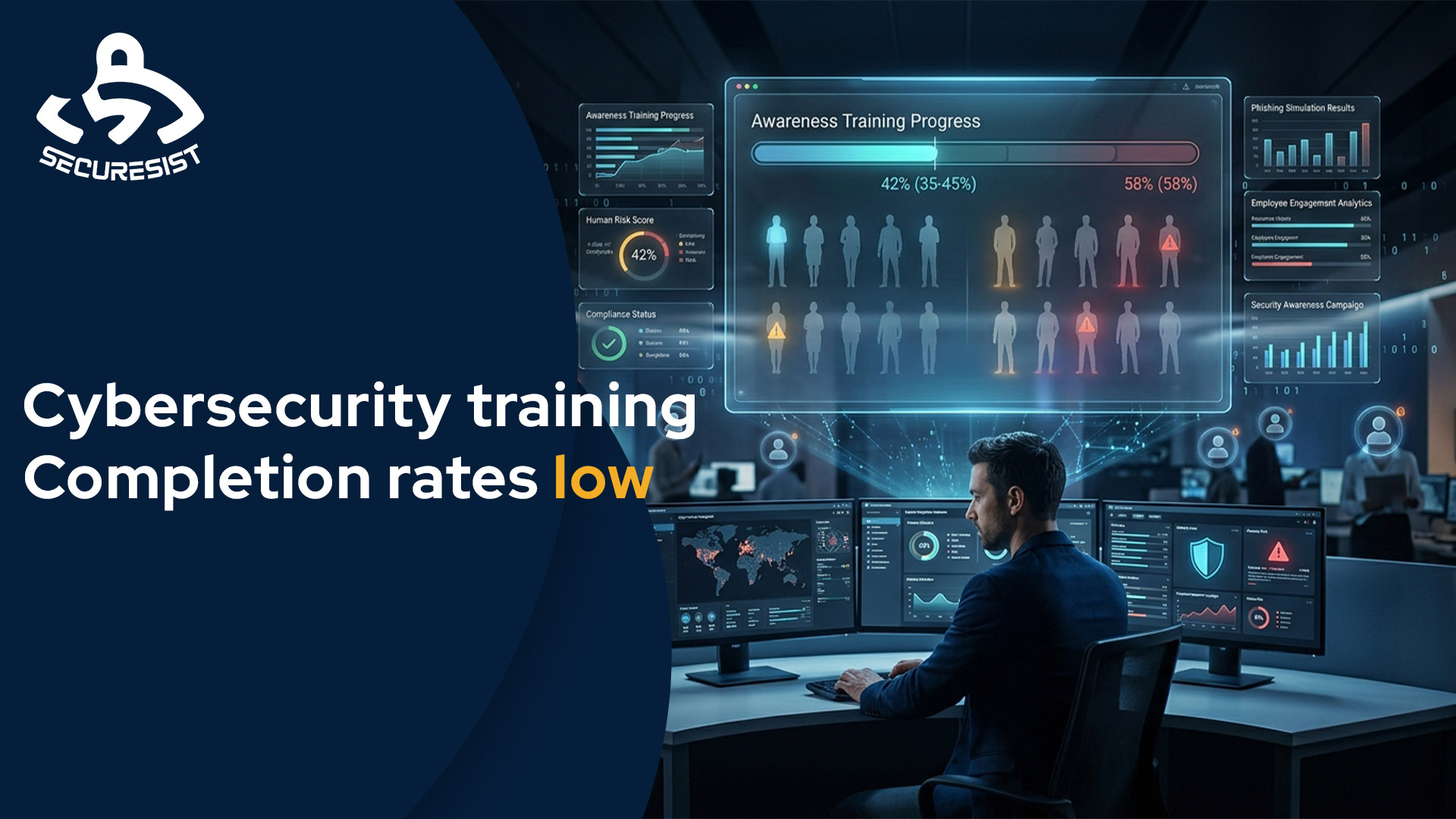
Employee awareness training remains one of the most effective ways to reduce cyber risks, but it only works when employees actually complete it. Many organizations invest in security awareness platforms, assign mandatory courses, and send reminder emails, yet they still struggle with cybersecurity training completion rates low enough to leave gaps in their security posture. A course that sits unfinished in an employee’s dashboard cannot help prevent phishing attacks, credential theft, or social engineering attempts.
A low training completion rate is often a sign of a deeper issue rather than the problem itself. Employees may be overwhelmed with workloads, find the training too long or repetitive, or simply fail to see how it relates to their day-to-day responsibilities. This disconnect is one of the core reasons security awareness training programs fail even when organizations invest significant time and budget into them.
The good news is that improving completion rates does not always require investing in a new training platform. In many cases, small changes in how training is delivered, scheduled, and reinforced can significantly improve participation and long-term knowledge retention. This article explores why completion rates remain low, the business risks they create, and practical strategies for improving security training engagement across the organization.
Key Takeaway
Low cybersecurity training completion rates are usually caused by lengthy courses, generic content, poor timing, limited accountability, and difficult-to-use learning platforms. Organizations can improve participation by delivering short, role-based training modules, simplifying access, sending timely reminders, and making cybersecurity awareness an ongoing part of workplace culture instead of a once-a-year compliance exercise.
Why Low Cybersecurity Training Completion Rates Are a Business Risk
Many organizations measure success by the number of employees assigned cybersecurity training rather than the number who actually complete it. However, assigning courses does not reduce cyber risk. A workforce with incomplete training is more likely to fall victim to phishing emails, malicious attachments, business email compromise, and other social engineering attacks. This is precisely why employees click phishing links even after training — exposure to the material is not the same as completing and absorbing it.
The impact goes beyond cybersecurity. In regulated industries, incomplete awareness training can also create compliance challenges during audits. ISO 27001 employee awareness training requirements in the UAE, for example, expect organizations to demonstrate that employees have received and completed required security awareness programs — not just that courses were assigned.
Another concern is the false sense of security that comes with simply launching a training program. Leadership may assume employees are prepared because courses have been assigned, even though many users have not completed them. This training completion problem leaves security teams with blind spots that technical controls alone cannot eliminate.
Instead of viewing completion rates as just another HR metric, organizations should treat them as an early indicator of employee engagement and security culture. Higher participation creates more opportunities for employees to recognize suspicious activity, report potential threats quickly, and follow secure working practices — the behavioral outcomes that human risk management is designed to improve.
Why Employees Stop Cybersecurity Training Before Completing It
Understanding why employees are not completing cyber training is essential before trying to improve participation. In many organizations, the issue is not a lack of willingness but the way training is designed and delivered. The same patterns appear repeatedly in organizations experiencing a consistently low training completion rate.
Modules Are Too Long and Too Generic
Traditional cybersecurity awareness programs often require employees to sit through 45 to 60-minute presentations filled with technical explanations that may not relate to their daily responsibilities. After a busy workday, lengthy sessions quickly become another task employees postpone. Generic content also reduces motivation. An HR professional, finance executive, and software developer face different cyber risks — for example, spear phishing attacks are particularly common against executives and finance teams — yet many organizations deliver the same training to everyone.
No Perceived Consequence for Not Completing Training
Employees naturally prioritize work that affects their daily responsibilities. If cybersecurity training has no deadlines, follow-up, or manager involvement, it often falls behind project work, customer requests, and meetings. Organizations experiencing a consistently low training completion rate frequently discover that training is treated as optional rather than an important business responsibility. This challenge is explored in detail in our guide to getting employees to take cybersecurity training seriously.
Platform Friction Creates Unnecessary Barriers
Sometimes the biggest obstacle is not the training itself but the learning platform. Employees may experience login issues, forgotten passwords, slow-loading videos, or progress that fails to save correctly. These frustrations can discourage learners from returning to complete their assigned courses. A smooth user experience plays an important role in improving security training engagement.
Training Is Delivered at the Wrong Time
Even well-designed training can struggle if it is assigned during peak workloads, major product launches, month-end reporting, or other busy business periods. Scheduling shorter learning sessions throughout the year instead of assigning a single annual course allows organizations to reduce disruption while gradually boosting security course completion. Continuous learning also helps reinforce important security habits rather than expecting employees to remember everything from one long training session months later — a challenge discussed in depth in our analysis of why security awareness training programs fail.
What Cybersecurity Training Completion Rate Should You Aim For?
There is no universal benchmark that works for every organization, but most security experts agree that consistently low completion rates should be treated as a warning sign. Instead of chasing 100% completion, organizations should focus on steady improvement while measuring how training influences employee behavior — which is why reviewing security awareness training metrics that matter is just as important as tracking the completion rate itself.
The table below provides a practical benchmark that many organizations can use to evaluate their training performance.
| Completion Rate | What It Indicates | Recommended Action |
| Below 60% | Serious engagement issues and high security risk | Review training design, timing, and accessibility immediately. |
| 60% to 75% | Moderate participation but room for improvement | Improve communication, reminders, and course relevance. |
| 75% to 85% | Healthy completion rate | Continue optimizing content and monitor employee behavior. |
| Above 85% | Strong employee participation | Focus on measuring behavioral outcomes alongside completion. |
Remember that completion should never be the only success metric. An employee who completes a course but still clicks on phishing simulation emails represents a different challenge than someone who actively applies what they learned. The goal is to combine strong participation with meaningful improvements in security awareness. Understanding your organization’s phishing failure rate by industry provides useful context for benchmarking where you stand.
Not Sure Where Your Completion Gaps Are?
Securesist helps organizations identify exactly where participation drops, which departments are falling behind, and what’s driving low completion rates. Talk to our team to get a clear picture of your training program’s performance — and a practical plan to improve it.
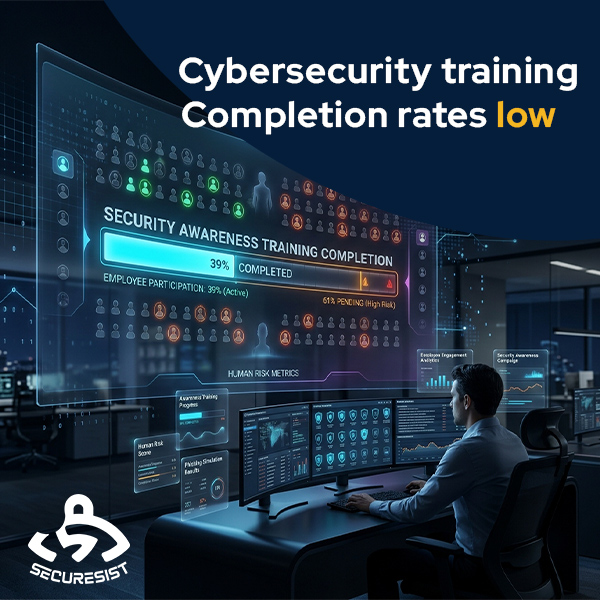
Platform Design Features That Drive Completion Above 85%
Even the best cybersecurity content can struggle if employees find the learning platform difficult to use. Many organizations assume low participation reflects employee disinterest, but in reality, technical barriers often discourage people from finishing assigned courses. Reviewing the best security awareness training platforms against these criteria can help organizations make informed decisions about which solution best supports their workforce.
Easy and Secure Access
Employees should be able to access training without remembering multiple usernames or passwords. Features such as Single Sign-On (SSO) reduce login issues and encourage learners to start courses quickly.
Mobile-Friendly Learning
Many employees work remotely, travel frequently, or spend little time at a desk. Mobile-compatible training allows them to complete short lessons whenever they have a few free minutes, making participation much more convenient.
Progress Saving
One of the biggest frustrations employees experience is losing progress after closing a browser or switching devices. Automatic progress tracking allows learners to continue exactly where they stopped, encouraging them to finish courses instead of starting over.
Smart Reminders
Automated reminders sent before deadlines help employees stay on track without requiring managers to manually follow up. Friendly notifications are often more effective than repeated emails sent only after deadlines have passed.
Clear Dashboards
Employees should immediately see what courses are assigned, how much they have completed, and when deadlines are approaching. A simple dashboard removes confusion and makes training easier to manage. These platform features, combined with the right content strategy, are what separate high-performing programs from those perpetually struggling with low completion.
How to Increase Cybersecurity Training Completion Rates
Improving participation is not about forcing employees to sit through longer courses. It is about making training relevant, manageable, and easy to complete. Organizations that successfully overcome the training completion problem usually focus on changing how training is delivered rather than simply increasing the number of reminders. The foundation of this approach is a well-structured security awareness training program that integrates learning into everyday work rather than treating it as a separate compliance exercise.
Use Microlearning Instead of Long Courses
Employees are far more likely to complete a five or ten-minute lesson than a one-hour presentation. Short modules fit more easily into busy work schedules and improve knowledge retention by reinforcing concepts regularly throughout the year. Microlearning also reduces fatigue and helps employees focus on one topic at a time, such as identifying phishing emails, recognizing link manipulation, or safely handling sensitive data.
Deliver Role-Based Training
Not every employee faces the same cyber risks. Finance teams deal with invoice fraud, HR departments manage sensitive employee information, and executives are frequent targets of spear phishing attacks. When cybersecurity training for employees reflects the challenges employees actually face, it feels more relevant and encourages higher participation. Role-based content also makes it easier to address sector-specific threats — for example, ransomware training for UAE employees that explains how ransomware typically begins with a phishing email targeting a specific role.
Add Gamification Carefully
Simple features such as completion badges, progress tracking, quizzes, or friendly team competitions can motivate employees without making cybersecurity feel like a mandatory compliance exercise. The goal is not competition for its own sake but encouraging employees to stay engaged throughout the learning process.
Send Timely Reminders
Employees often miss deadlines because they forget rather than intentionally avoid training. Automated reminders sent a few days before deadlines or after incomplete modules help maintain momentum without overwhelming users with notifications.
Encourage Leadership Participation
Employees pay attention to leadership behavior. When managers and executives complete training on time, discuss cybersecurity during meetings, and follow the same security policies as everyone else, participation naturally improves. Security awareness becomes part of the organization’s culture instead of another task employees feel pressured to complete. This is a core principle of building a strong cybersecurity culture in your company — one where security behaviors are modeled from the top down.
Hold Managers Accountable
Department managers play an important role in maintaining participation. Regularly reviewing completion reports with team leaders helps identify departments that may need additional support or scheduling adjustments. Instead of treating non-completion as a disciplinary issue, managers should focus on understanding obstacles and helping employees overcome them. This supportive approach often leads to better long-term results while boosting security course completion. Working with the right security awareness training provider can give managers the reporting tools they need to have these conversations without making employees feel penalized.
How to Report Completion Data Meaningfully to Leadership
Many organizations proudly report that 90% of employees completed cybersecurity training. While that number is useful, it only tells part of the story. Leadership needs insights that show whether training is actually reducing cyber risk, not just whether employees clicked through a course. When reporting results, security teams should combine completion rates with behavioral metrics to provide a clearer picture of how well employees are applying what they have learned.
Here is a simple dashboard that can help executives understand the effectiveness of their security awareness program:
| KPI | Why It Matters |
| Training Completion Rate | Measures employee participation in assigned courses. |
| Overdue Learners | Identifies departments or teams falling behind. |
| Department-wise Completion | Highlights areas that need additional support. |
| Average Time to Complete | Reveals whether courses are too long or difficult to finish. |
| Phishing Simulation Click Rate | Shows how employees respond to real-world threats. |
| Suspicious Email Reporting Rate | Measures whether employees actively report potential attacks. |
If your organization continues to experience cybersecurity training completion rates low, these metrics can help uncover the underlying causes. Understanding these patterns allows organizations to make targeted improvements instead of applying the same solution to everyone. For a deeper look at which numbers to prioritize, our guide to security awareness training metrics that matter walks through each indicator and explains how to use it in context.
The objective is not to create more reports. It is to give leadership meaningful information that supports better security decisions.
Common Mistakes Organizations Make
Even organizations with dedicated cybersecurity budgets sometimes struggle to improve employee participation because they repeat the same mistakes year after year. Recognizing these challenges is the first step toward building a more effective training program — and avoiding the patterns documented in why security awareness training programs fail.
Treating Training as an Annual Event
Cyber threats evolve constantly, but many organizations still rely on a single annual awareness session. Employees may complete the course, but much of the information is forgotten long before the next training cycle begins. Replacing yearly sessions with shorter, continuous learning opportunities helps employees stay familiar with current threats throughout the year. This is especially important as phishing attacks targeting UAE businesses become more sophisticated and harder to recognize without regular practice.
Delivering the Same Content to Everyone
A one-size-fits-all approach rarely keeps employees engaged. Finance teams, HR professionals, developers, and executives all face different cyber risks. Generic content often leads to a low training completion rate because employees struggle to connect the material with their daily responsibilities. Data security awareness training for employees handling sensitive records, for example, requires a different focus than training aimed at general staff.
Measuring Completion Instead of Behavior
Completing a course is important, but it does not automatically mean employees can recognize phishing emails or respond correctly during a security incident. Organizations should measure improvements in employee behavior alongside course completion to gain a more accurate understanding of training effectiveness. Running regular phishing tests to assess employee security awareness alongside completion tracking provides a much more complete picture of organizational readiness.
Ignoring Employee Feedback
Employees often provide valuable suggestions about why training feels repetitive, difficult to access, or poorly timed. Ignoring this feedback can lead to employees not completing cyber training and lower engagement over time. Simple surveys after each training session can help organizations improve future courses based on real employee experiences.
Expecting Technology Alone to Solve the Problem
Security awareness platforms are valuable tools, but they cannot create a strong security culture on their own. Without leadership support, regular communication, and manager involvement, even the best learning platform may struggle to maintain employee participation. Building a genuine long-term human risk strategy means treating the platform as one component of a broader program, not the entire solution.
Best Practices for Long-Term Success
Improving completion rates is not about sending more reminder emails or making training mandatory. Sustainable success comes from building a workplace where cybersecurity becomes part of everyday decision-making. Organizations looking to achieve this should evaluate what the best security awareness training programs have in common and adapt those principles to their own workforce and risk profile.
Organizations looking to improve participation should focus on these best practices:
- Deliver short, engaging training sessions throughout the year instead of one lengthy annual course
- Customize learning content for different roles and departments using role-based cybersecurity training
- Make training accessible across desktop and mobile devices
- Use phishing simulations to reinforce learning with practical experience
- Track behavioral metrics alongside course completion
- Encourage leaders and managers to actively participate in awareness initiatives
- Regularly update training content to reflect emerging cyber threats
- Recognize and celebrate employees who demonstrate good security practices
These practices help organizations move beyond simply boosting security course completion. They create a workforce that understands why cybersecurity matters and feels confident applying secure behaviors in daily work — which is the ultimate goal of any security awareness training program.
Conclusion
A completed training course is only the beginning of a stronger cybersecurity program. The real objective is to create lasting behavioral change that helps employees identify threats, report suspicious activity, and make safer decisions every day.
Organizations experiencing cybersecurity training completion rates low should look beyond reminders and compliance deadlines. Improving participation starts with delivering relevant, easy-to-access training that fits naturally into employees’ work routines. When combined with leadership support, continuous learning, and meaningful performance metrics, higher completion rates become a natural outcome rather than a constant challenge.
Building a security-aware workforce takes time, but organizations that invest in employee engagement instead of one-time compliance efforts are better prepared to reduce cyber risks and strengthen their overall security posture. The same principles that drive completion also drive the cultural shift described in our guide to building a cybersecurity culture in a company — and the two goals reinforce each other over time.
Frequently Asked Questions
What is a good cybersecurity training completion rate?
While there is no universal standard, most organizations should aim for a completion rate above 85%. More importantly, they should also measure behavioral outcomes such as phishing simulation performance and suspicious email reporting.
Should cybersecurity training be mandatory?
Yes. Mandatory cybersecurity training helps ensure every employee understands their role in protecting organizational data. However, mandatory participation should be supported by engaging, relevant, and easy-to-complete learning experiences rather than relying solely on compliance requirements.
How do microlearning modules improve completion rates?
Microlearning delivers information in short lessons that are easier to complete during a busy workday. Smaller modules reduce learning fatigue, improve knowledge retention, and encourage employees to finish their assigned training.
Why do employees stop cybersecurity training before finishing it?
Common reasons include lengthy courses, generic content, technical issues with learning platforms, competing work priorities, and limited management support. Addressing these barriers is covered in detail in our guide on getting employees to take cybersecurity training seriously.
How often should cybersecurity awareness training be delivered?
Instead of relying on annual training alone, organizations should provide continuous cybersecurity awareness throughout the year using short monthly or quarterly sessions, phishing simulations, and timely security reminders.
Which metrics matter more than training completion rates?
Completion rates should be combined with metrics such as phishing simulation click rates, suspicious email reporting, overdue learners, average completion time, and department-wise participation. Our full guide to security awareness training metrics explains how to use each indicator to measure the real effectiveness of your program.
Low Completion Rates Are a Risk You Can Fix — Starting Today
Low cybersecurity training completion rates don’t just hurt compliance scores — they leave real gaps in your organization’s defenses. Every employee who hasn’t finished their training is a potential entry point for phishing attacks, credential theft, and business email compromise.
At Securesist, we help businesses build engaging security awareness programs that employees actually complete — and that produce measurable improvements in security behavior, not just better dashboard numbers.
Here is what working with Securesist delivers:
- A full audit of your current training completion gaps by department and role
- Short, role-based training modules that fit into any work schedule
- Phishing simulations that reinforce learning with real-world practice
- Automated reminders and progress tracking that keep employees on track without manager micromanagement
- Behavioral metrics that show leadership exactly how training is reducing organizational risk
- A clear roadmap to move from compliance training to a security culture that lasts
Your employees don’t need more reminders. They need training that’s worth completing.