What to Look for in a Cybersecurity Awareness Platform: 8 Key Features to Evaluate
Learn what to look for in a cybersecurity awareness platform, including automation, phishing simulations, behavioral analytics, and role-based training
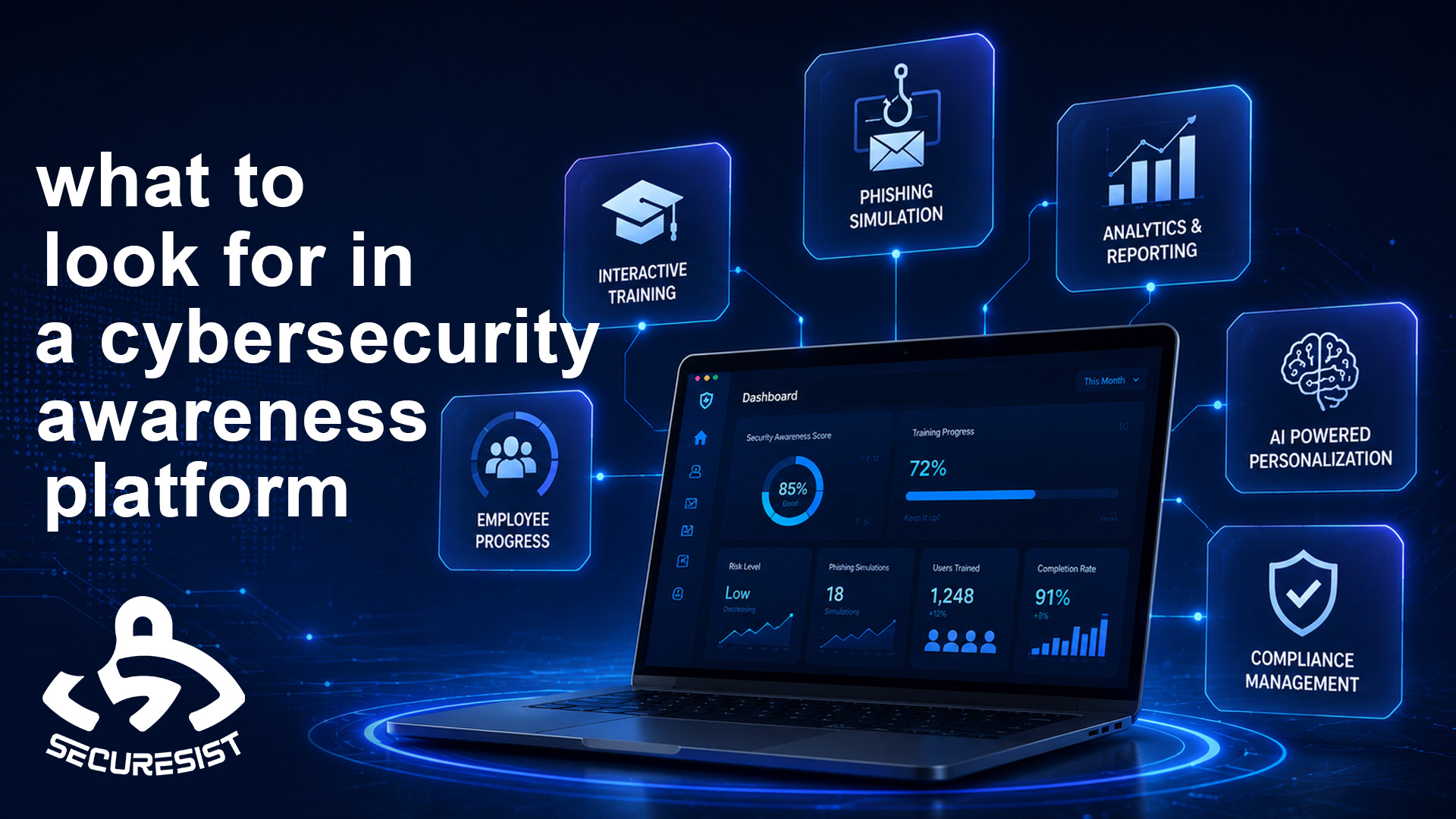
Cyberattacks are becoming more sophisticated, but attackers still rely on one of the oldest tactics: exploiting human error. Employees can unintentionally click phishing links, share sensitive information, or approve fraudulent requests — making people one of the most targeted entry points into an organization’s network. A cybersecurity awareness platform helps address this challenge by training employees to recognize, report, and respond to evolving cyber threats before they become costly incidents. This is the core challenge that human risk management addresses — and the right platform is one of the most important tools for making it work in practice.
However, choosing a platform isn’t as simple as selecting the one with the largest content library or the longest feature list. Many vendors advertise AI-powered training, phishing simulations, and compliance support, but those capabilities vary significantly in quality and effectiveness. A platform packed with features won’t necessarily reduce risky behavior if it lacks realistic simulations, meaningful analytics, or automation. This is the same core problem documented in our analysis of why security awareness training programs fail — the gap between what platforms promise and what they actually change about employee behavior.
Modern threats have also changed the way organizations approach security awareness. Attackers now use AI-generated phishing emails, deepfake voice calls, QR code phishing, and other social engineering techniques that traditional annual training often fails to address. The right platform should prepare employees for these real-world attack methods while giving security teams measurable insights into human risk.
This guide explains the most important factors to evaluate before investing in a cybersecurity awareness platform, helping you choose a solution that supports long-term security awareness rather than simply meeting compliance requirements.
Key Evaluation Framework
When evaluating a cybersecurity awareness platform, prioritize features that improve security behavior rather than just delivering training. Look for automated training campaigns, realistic phishing and social engineering simulations, role-based learning content, behavioral analytics, compliance reporting, and seamless integrations with your existing technology stack. A well-designed platform should help employees recognize modern cyber threats while giving security teams clear visibility into organizational risk.
Why Choosing the Right Cybersecurity Awareness Platform Matters
Security awareness training has evolved from annual compliance courses into continuous programs focused on reducing human risk. As phishing attacks become more targeted and AI enables attackers to create convincing emails, voice messages, and deepfake content, organizations need training that reflects the threats employees actually face. This evolution is exactly why annual cybersecurity training isn’t working as a standalone approach — the threat landscape changes faster than yearly training cycles allow.
Selecting the right cybersecurity awareness platform directly impacts how effectively employees identify suspicious activity and respond to potential attacks. A strong platform doesn’t simply assign training modules — it reinforces good security habits through ongoing education, realistic attack simulations, and actionable reporting. At the same time, it reduces the administrative burden on IT and security teams by automating campaigns, tracking progress, and providing insights into employee behavior. The result should be demonstrable improvement in security awareness training metrics that boards and leadership can actually use to evaluate the investment.
Instead of asking which platform has the most features, organizations should ask which platform can deliver measurable improvements in security awareness and support a long-term security culture. That shift in question is what separates organizations that invest strategically in human risk reduction from those that simply check a compliance box each year.
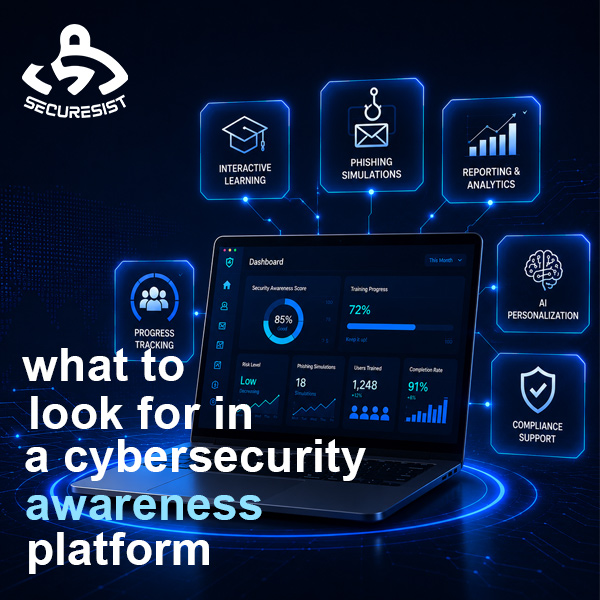
8 Things to Look for in a Cybersecurity Awareness Platform
1. Automation
Managing security awareness across dozens, hundreds, or even thousands of employees manually is both time-consuming and inefficient. Automation allows organizations to deliver consistent training while reducing the workload for IT and security teams — one of the key reasons low cybersecurity training completion rates persist in organizations that rely on manual administration.
Look for a platform that can automatically:
- Schedule recurring awareness campaigns
- Assign training to new employees
- Send reminders for incomplete courses
- Launch phishing simulations on a recurring basis
- Trigger follow-up training when users fail simulations
Automated workflows help ensure employees receive timely training without requiring administrators to manually manage every campaign. As organizations grow, automation becomes essential for maintaining a consistent and scalable awareness program.
2. Realistic Threat Simulations
The most effective cybersecurity awareness platforms go beyond traditional phishing emails. Today’s attackers use multiple communication channels and increasingly rely on AI to make social engineering attacks more convincing. Understanding how link manipulation works — how attackers disguise malicious URLs as legitimate ones — is a good example of the kind of nuanced threat awareness that only realistic simulations can build.
Choose a platform that supports realistic simulations such as:
- Email phishing
- Smishing (SMS phishing)
- Vishing (voice phishing)
- QR code phishing
- Business Email Compromise (BEC)
- AI-generated phishing scenarios
- Deepfake voice or video awareness exercises
Realistic simulations give employees hands-on experience recognizing suspicious messages before they encounter similar attacks in real life. They also help security teams identify high-risk users and measure improvements over time — which connects directly to understanding your organization’s phishing failure rate and how it compares to industry benchmarks.
3. Role-Based and Up-to-Date Training Content
Not every employee faces the same cybersecurity risks. Finance teams are more likely to encounter invoice fraud and Business Email Compromise, while HR departments often handle sensitive personal information that attracts attackers. IT administrators face entirely different threats involving privileged access and credentials. This is why employees find generic security awareness training boring — when the content doesn’t reflect their actual work, the lessons don’t stick.
A strong cybersecurity awareness platform should deliver role-based cybersecurity training for employees tailored to each department instead of assigning identical content to every employee. Content should also be updated regularly to address emerging threats, including AI-powered phishing, ransomware, deepfake impersonation, QR code scams, and safe use of generative AI tools. Frequent updates help ensure employees are learning about current attack techniques rather than outdated examples.
4. Behavioral Analytics
Course completion rates alone don’t tell you whether security awareness training is working. This is the central argument in our guide to security awareness training metrics that matter — the difference between a program that satisfies auditors and one that genuinely reduces human risk lies entirely in whether you’re measuring behavior, not just participation.
Look for reporting features such as:
- Human Risk Scores
- Phishing simulation click rates
- Reporting rates for suspicious emails
- Time taken to report potential threats
- Repeat offenders and improvement trends
- Department or team-level risk insights
These metrics provide a clearer picture of your organization’s security posture and help identify areas where additional training may be needed. Instead of relying on assumptions, behavioral analytics allow security leaders to make data-driven decisions that continuously strengthen human defenses. They also provide the foundation for proving cybersecurity training ROI to the board — translating security performance into the financial and governance language executives understand.
5. Compliance Reporting
For many organizations, cybersecurity awareness training is more than a security initiative — it’s also a compliance requirement. Whether you’re preparing for an audit or meeting industry regulations, your awareness platform should make it easier to demonstrate that employees are receiving consistent, effective training. Organizations operating in the UAE face specific obligations under ISO 27001 employee awareness training requirements that go well beyond annual completion certificates.
When evaluating a platform, look for support for compliance frameworks relevant to your business, such as:
- ISO 27001
- SOC 2
- HIPAA
- GDPR
- PCI DSS
- UAE Personal Data Protection Law (PDPL), where applicable
Beyond satisfying auditors, compliance reporting helps security teams monitor ongoing participation and identify departments that may need additional training. This creates a more proactive approach to managing security awareness instead of treating compliance as a once-a-year exercise.
Not Sure Which Platform Is Right for Your Organization?
Securesist helps organizations evaluate their current security awareness tools and identify gaps before they become incidents. Talk to our team to get an honest assessment of what your program is — and isn’t — delivering, and how the right platform can change that.
6. Integrations with Your Existing Security Stack
Even the most feature-rich cybersecurity awareness platform can become difficult to manage if it doesn’t integrate with your existing systems. Seamless integrations reduce manual work, improve accuracy, and help administrators manage users more efficiently. This is especially relevant for organizations using the top cybersecurity tools of 2026 that expect their awareness platform to fit into an existing security stack rather than operate as a standalone system.
Before making a decision, check whether the platform integrates with the tools your organization already uses. Common integrations include:
- Microsoft 365
- Google Workspace
- Microsoft Entra ID (Azure AD)
- Okta or other Single Sign-On (SSO) providers
- Human Resource Information Systems (HRIS)
- Microsoft Teams or Slack
- Learning Management Systems (LMS)
For example, integrating with your HR system allows new employees to be automatically enrolled in onboarding security training, while departing employees can be removed without manual intervention. SSO integration also simplifies the login process, encouraging higher participation rates — one of the most practical ways to address low cybersecurity training completion rates without changing the content itself.
7. Multilingual and Regional Support
Organizations with employees across different regions need security awareness training that everyone can understand. Delivering training only in English may reduce engagement and comprehension for employees who are more comfortable learning in another language. For organizations operating in Dubai and across the UAE, look for platforms that support Arabic-language content, regional compliance requirements, and local customer support. Vendors with experience serving your region are often better equipped to understand local regulations, cultural considerations, and deployment challenges.
Security awareness is most effective when employees can relate to the content and understand how cyber threats affect their day-to-day responsibilities. Regional relevance is not a secondary feature — it is a core driver of engagement and knowledge retention.
8. Vendor Support and Customer Success
Buying a cybersecurity awareness platform is only the beginning. Long-term success depends on how well the vendor supports your team after implementation. This is one of the key differentiators identified in our guide to security awareness training providers — the difference between a vendor that sells you a platform and one that partners with you to build a program that actually reduces risk.
When evaluating vendors, consider questions such as:
- Is implementation assistance included?
- Will the vendor help design awareness campaigns?
- How frequently is training content updated?
- What support channels are available?
- Is technical support available during your business hours?
- Does the vendor provide product training for administrators?
A responsive vendor can help your organization maximize the platform’s value and adapt your awareness program as new cyber threats emerge.
Questions to Ask Before Buying a Cybersecurity Awareness Platform
Before committing to any solution, request a product demonstration and ask questions that focus on real-world performance rather than marketing claims. A practical evaluation helps you determine whether the platform aligns with your organization’s security goals and operational needs. The same principle applies here as in evaluating the best security awareness training programs — the quality of the answer reveals more than the feature list on a vendor’s website.
| Evaluation Area | Questions to Ask the Vendor |
| Automation | Can training campaigns and reminders be fully automated? |
| Threat Simulations | Does the platform support phishing, smishing, vishing, QR code phishing, and AI-powered attack simulations? |
| Training Content | How often is training content updated to reflect emerging cyber threats? |
| Behavioral Analytics | Which metrics are available beyond course completion, such as Human Risk Scores or reporting rates? |
| Compliance | Which compliance frameworks are supported, and can reports be customized for audits? |
| Integrations | Does the platform integrate with Microsoft 365, Google Workspace, SSO providers, and HR systems? |
| Deployment | How long does implementation typically take, and what onboarding assistance is included? |
| Support | What level of customer success and technical support is provided after deployment? |
Vendors that clearly explain how their platform delivers measurable improvements in employee security behavior are generally more transparent than those relying on broad marketing claims. Ask specifically how the platform measures behavioral outcomes — not just completion rates — and whether it can demonstrate improvement in phishing simulation performance over time.
Red Flags During a Vendor Demo
A polished demonstration doesn’t always reflect how a cybersecurity awareness platform performs in day-to-day operations. Looking beyond the sales presentation can help you avoid investing in a solution that fails to deliver measurable results. Many of the same warning signs that indicate a weak training program — identified in our analysis of why security awareness training programs fail — also appear during vendor evaluations.
Be cautious if you notice any of these warning signs:
- Generic product demonstrations: The demo focuses on dashboards and marketing slides instead of showing realistic phishing simulations, reporting, or administrative workflows.
- Outdated phishing templates: Training scenarios don’t reflect modern threats such as AI-generated phishing, QR code scams, deepfake impersonation, or spear phishing attacks targeting specific roles.
- Weak reporting capabilities: The platform only tracks course completion and lacks meaningful behavioral metrics like reporting rates or Human Risk Scores. This gap makes it impossible to prove cybersecurity training ROI to the board.
- No measurable outcomes: The vendor cannot explain how organizations use the platform to reduce human risk or improve employee security behavior over time.
- Hidden implementation costs: Essential features, onboarding, integrations, or customer support require additional fees that aren’t clearly disclosed during the evaluation process.
Choosing a cybersecurity awareness platform is a long-term investment. Taking the time to evaluate vendors carefully helps ensure the solution supports your organization’s security objectives today while remaining effective as cyber threats continue to evolve.
Final Thoughts
Choosing a cybersecurity awareness platform is about more than checking boxes on a feature list. The right solution should help your organization build a stronger security culture by changing employee behavior, reducing human risk, and preparing users to recognize modern cyber threats before they lead to security incidents.
While many vendors promote extensive content libraries, AI-powered capabilities, and advanced dashboards, those features only deliver value when they contribute to measurable outcomes. A platform should make it easier for employees to identify phishing attempts, report suspicious activity promptly, and develop safer security habits over time. At the same time, it should reduce administrative effort through automation, integrate seamlessly with your existing technology stack, and provide reporting that supports both security initiatives and compliance requirements.
When evaluating cybersecurity awareness platforms, focus on these eight key areas:
- Automation that simplifies training management and addresses low completion rates
- Realistic threat simulations covering today’s attack methods
- Role-based and regularly updated cybersecurity training content
- Behavioral analytics that measure security improvements over time
- Compliance reporting aligned with ISO 27001 and UAE regulatory requirements
- Integrations with existing business and security tools
- Multilingual and regional support for diverse workforces
- Responsive vendor support — the quality that separates the best security awareness training providers from the rest
Rather than asking ‘Which platform has the most features?’, ask ‘Which platform can demonstrate measurable reductions in human risk?’ That shift in perspective helps organizations invest in a solution that delivers long-term value instead of simply satisfying annual training requirements. The data needed to answer that question — phishing simulation results, reporting rates, repeat failure trends — is what the right security awareness training program makes visible and actionable.
FAQs
What is the most important feature in a cybersecurity awareness platform?
There isn’t a single feature that determines the best platform. Instead, organizations should look for a combination of automation, realistic threat simulations, behavioral analytics, compliance reporting, and seamless integrations. Together, these capabilities help reduce human risk while making security awareness programs easier to manage and measure. Our guide to security awareness training metrics that matter explains which behavioral indicators reveal whether a platform is actually working.
How do phishing simulations improve employee security?
Phishing simulations provide employees with safe, realistic opportunities to recognize and respond to common cyberattacks. Instead of relying only on theoretical training, employees learn through practical experience — which is why employees who have experienced realistic phishing simulations are significantly better at identifying suspicious emails than those who have only completed awareness courses. These exercises also help security teams measure reporting rates, identify high-risk users, and target additional training where needed.
How often should cybersecurity awareness training be updated?
Cybersecurity awareness training should be an ongoing process rather than an annual event. As attackers continuously develop new techniques — including AI-generated phishing emails, deepfake impersonation, and QR code phishing — training content should be updated regularly to reflect current threats. This is the core argument in our analysis of why annual cybersecurity training isn’t working as a standalone approach.
What compliance standards should a cybersecurity awareness platform support?
The required compliance standards depend on your industry and geographic location. Many organizations look for platforms that support reporting aligned with frameworks such as ISO 27001, SOC 2, HIPAA, GDPR, PCI DSS, or regional regulations like the UAE Personal Data Protection Law (PDPL). Built-in compliance reporting can simplify audits and demonstrate that employees have completed required security awareness activities.
How do you evaluate a cybersecurity awareness platform before buying?
Start by identifying your organization’s security objectives, workforce size, compliance requirements, and existing technology stack. During vendor evaluations, assess how well each platform performs across the eight key areas covered in this guide. Request a live demonstration, ask practical implementation questions, and evaluate whether the platform can provide measurable improvements in employee security behavior instead of simply offering a long list of features. The evaluation framework in our guide to proving cybersecurity training ROI to the board provides a useful structure for making this case internally once you’ve selected a platform.
Find the Right Cybersecurity Awareness Platform for Your Organization
Not every cybersecurity awareness platform delivers what it promises. Feature lists look similar from a distance — the differences that matter emerge in realistic simulations, behavioral analytics, and whether the vendor’s support helps you build a program that actually changes employee behavior.
Securesist’s cybersecurity awareness platform is built around the eight criteria covered in this guide. From automated training campaigns and realistic phishing simulations to role-based content, behavioral metrics, and compliance reporting aligned with ISO 27001 requirements in the UAE, we provide everything organizations need to move beyond compliance and build genuine security resilience.
Here is what working with Securesist delivers:
- Automated training campaigns that eliminate manual administration and improve completion rates
- Realistic phishing simulations covering email, SMS, voice, QR code, and AI-assisted attack scenarios
- Role-based content tailored to the threats each department actually faces
- Behavioral analytics — including Human Risk Scores, reporting rates, and phishing simulation performance — that demonstrate measurable improvement
- Compliance reporting aligned with ISO 27001, UAE PDPL, and other relevant frameworks
- Seamless integrations with Microsoft 365, Google Workspace, SSO providers, and your existing security stack
- Arabic-language content and regional support for UAE and GCC organizations
- Dedicated customer success support from implementation through ongoing program optimization
The best cybersecurity awareness platform isn’t the one with the most features. It’s the one that demonstrably reduces your human risk.