
Annual Cybersecurity Training Isn’t Working: What the Data Says and What to Do Instead
In this article, we'll look at why traditional annual training no longer delivers the results many businesses expect, what recent research reveals about its effectiveness, and how continuous learning can help build stronger security habits over time.
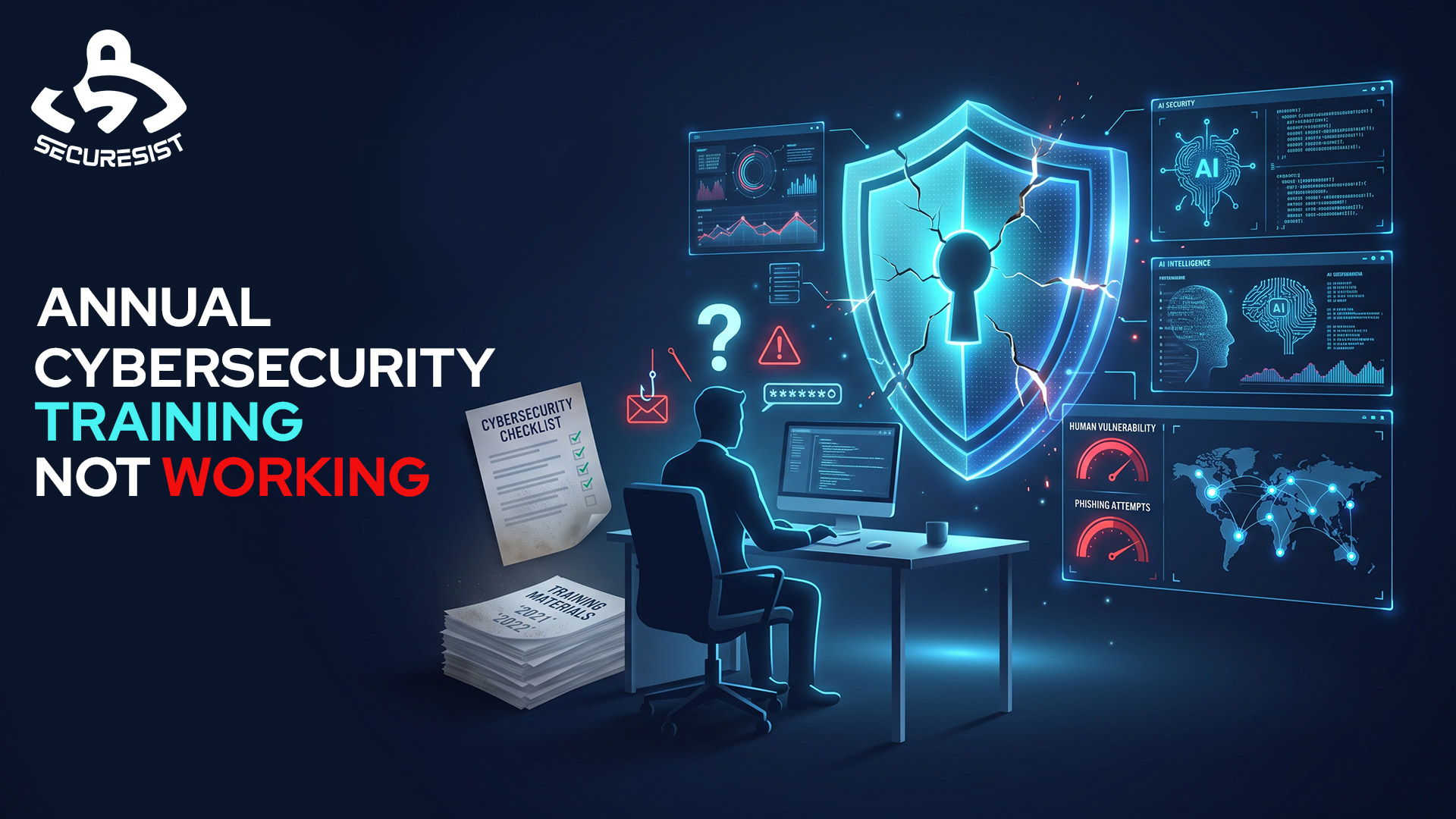
Every January, employees across countless businesses complete their mandatory cybersecurity training. They watch a few videos, answer a short quiz, and receive a certificate confirming they’ve finished the course. For a while, secure practices are fresh in their minds.
Months pass.
By the time September or October arrives, many are focused on deadlines, customer requests, and dozens of emails arriving every hour. Then an urgent message appears, seemingly from Microsoft 365, asking them to verify their account before access is suspended. It looks legitimate. In a rushed moment, someone clicks the link. Understanding why employees click phishing links even after training is essential context for every organization still relying on once-a-year awareness sessions.
The answer isn’t that employees don’t care about security. The bigger issue is that annual cybersecurity training isn’t working as a standalone approach. A single session each year may satisfy compliance requirements, but it rarely prepares people for the constantly changing tactics attackers use today. From AI-generated phishing emails to business email compromise and deepfake scams, the threat landscape evolves much faster than most training programs. This is a core theme in why security awareness training programs fail — the gap between what training measures and what it actually changes.
Human error continues to play a significant role in security incidents, not because people are careless, but because they’re busy, distracted, and often forced to make quick decisions under pressure. This is at the heart of human risk management — the discipline that looks beyond training completion to address the behavioral and organizational factors that determine whether attacks succeed.
This doesn’t mean annual training has no value. It helps establish a baseline understanding of company policies, introduces common cyber risks, and supports regulatory requirements. The challenge begins when that yearly session becomes the only security education employees receive.
In this article, we’ll look at why traditional annual training no longer delivers the results many businesses expect, what recent research reveals about its effectiveness, and how continuous learning can help build stronger security habits over time.
Why Once-a-Year Cybersecurity Training No Longer Delivers the Results Businesses Expect
For years, annual cybersecurity training made perfect sense. Most companies needed a practical way to educate staff about password hygiene, phishing emails, removable media, and acceptable use policies. A yearly training session also helped meet regulatory and industry requirements, making it easier to demonstrate compliance during audits.
The problem is that cyber threats no longer evolve on an annual schedule.
Attackers constantly refine their techniques, often using current events, trusted brands, and increasingly sophisticated AI tools to make scams look convincing. Employees who learned how to spot phishing emails at the beginning of the year may encounter entirely different tactics just a few months later — including spear phishing attacks that are personalized using information from LinkedIn, company websites, and social media profiles. Without regular reinforcement, it’s easy for even well-intentioned people to miss subtle warning signs.
There’s also a difference between meeting compliance requirements and building genuine preparedness. Compliance confirms that training was delivered. It doesn’t prove that employees can recognize a modern phishing attempt, question an unusual payment request, or respond appropriately when faced with a suspicious login page.
Think of it like a fire drill. Attending one session every year doesn’t automatically prepare someone to react calmly during a real emergency months later. The same principle applies to cybersecurity. Knowledge fades without practice — a challenge documented in our analysis of low cybersecurity training completion rates and the behavioral gaps they leave behind.
That’s why many businesses are beginning to rethink the traditional once-a-year approach. Instead of relying on a single learning event, they’re exploring ways to reinforce good security habits throughout the year, making awareness part of everyday work rather than an annual obligation. For UAE businesses, this shift also connects to ISO 27001 employee awareness training requirements, which expect demonstrable, ongoing security education — not just annual completion certificates.
What the Research Says About Annual Security Training
Recent research paints a consistent picture. Annual training can improve awareness, but awareness alone doesn’t always translate into safer decisions when employees face real-world attacks.
One of the largest studies on this topic came from researchers at the University of California San Diego, who examined phishing training across more than 19,000 employees over an eight-month period. The findings challenged a long-held assumption. Employees who had recently completed annual awareness training were no less likely to fall for simulated phishing emails than those who hadn’t received the training recently. Even immediate training delivered after someone clicked a simulated phishing email resulted in only modest improvements when engagement was low.
Industry reports tell a similar story. Verizon’s 2025 Data Breach Investigations Report continues to show that the human element remains involved in a large share of security breaches, while phishing is still one of the most common ways attackers gain initial access. Understanding your organization’s phishing failure rate by industry puts these statistics in context and helps leaders benchmark how well their current program is actually performing.
These findings don’t suggest that training should be abandoned. Instead, they highlight a more practical reality. Learning delivered once a year isn’t enough to keep pace with rapidly changing attack methods and the way people naturally retain information. The goal shouldn’t simply be getting everyone to complete a mandatory course. It should be helping people recognize threats when they appear unexpectedly in the middle of a busy workday — which requires the behavioral focus described in our guide to security awareness training metrics that matter.
Still Running Once-a-Year Training? Here’s What You’re Missing.
Most businesses assume their employees are prepared because they completed the annual course. Securesist’s phishing simulation programs show what employees actually do when a convincing attack arrives — and give you the data to fix the gaps. Find out how it works →
Why People Still Fall for Phishing After Completing Training
Most people don’t click on phishing emails because they lack intelligence or haven’t completed cybersecurity training. They click because they’re human. The full psychology behind this is explored in our guide to why employees click phishing links even after training, but the core dynamics are worth understanding here.
Think about a typical workday. Your inbox is full, meetings are running back to back, messages keep popping up, and you’re trying to finish several tasks before the end of the day. In that environment, every decision is made quickly. Cybercriminals know this, and they design their attacks to take advantage of those moments.
One reason annual training loses its impact is something psychologists call the Forgetting Curve. People naturally forget information over time unless they revisit or apply it. A lesson completed months earlier may be difficult to recall when an unexpected email demands immediate action.
There’s also the challenge of cognitive overload. Employees aren’t thinking about cybersecurity every minute of the day. They’re focused on serving customers, processing invoices, writing reports, or meeting deadlines. When the brain is juggling multiple priorities, it’s more likely to rely on instinct than careful analysis. This is the human dimension that human risk management addresses — recognizing that context and cognitive load are as important as knowledge when it comes to security decisions.
Attackers also understand how emotions influence decision-making. Many phishing emails create a false sense of urgency, telling recipients that an account will be suspended, a payment has failed, or an invoice must be approved immediately. Others use authority bias — people are naturally inclined to trust messages that appear to come from a manager, the finance department, Microsoft, or another familiar brand. These are the same social engineering techniques that make phishing so effective regardless of how much training employees have received.
The biggest challenge is that knowing what to do isn’t always the same as doing it. Most employees understand that they shouldn’t click suspicious links. Yet under pressure, many still do. That’s because secure behavior isn’t built through information alone. Like any habit, it develops through repetition, practice, and reinforcement.
What Continuous Security Awareness Looks Like in Practice
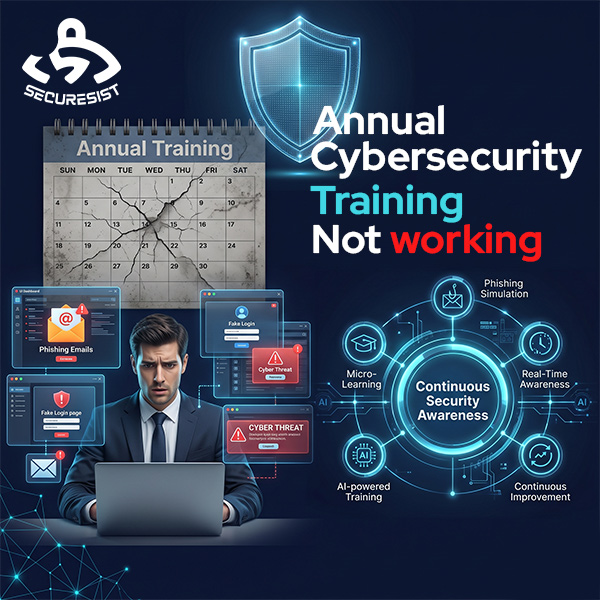
Moving beyond annual training doesn’t mean asking employees to spend hours every month in another classroom session. The goal is quite the opposite. Instead of overwhelming people with a large amount of information once a year, continuous security awareness breaks learning into smaller, practical moments that are easier to remember and apply. This is the approach that distinguishes the best security awareness training programs from those that simply satisfy compliance auditors.
Monthly Microlearning
Rather than delivering a two-hour course every year, many businesses now provide short lessons that take only a few minutes to complete. Each session focuses on a single topic, such as identifying phishing emails, recognizing link manipulation tactics, or safely using AI tools at work. Because these lessons are brief and focused, they’re easier to fit into a busy schedule and keep security fresh in people’s minds throughout the year.
Context-Based Phishing Simulations
Reading about phishing and experiencing it are two very different things. That’s why many businesses run simulated phishing campaigns throughout the year. These exercises recreate realistic attacks using fake emails that resemble the kinds of messages employees encounter every day. The purpose isn’t to embarrass anyone or catch people making mistakes. It’s to help employees recognize warning signs in a safe environment, where a wrong click becomes a learning opportunity. Regular phishing tests to assess employee security awareness also give security teams the behavioral data they need to identify which departments need the most support.
Just-in-Time Coaching After Mistakes
Learning is often most effective when it happens immediately after an action. If someone clicks a simulated phishing email, they shouldn’t simply receive a failing score. Instead, they’re shown why the email was suspicious and what clues they missed. This immediate feedback connects the lesson directly to the decision they just made — making it far more memorable than revisiting the same topic months later. Rather than treating mistakes as failures, businesses can use them as opportunities to strengthen secure habits, which is a core principle of getting employees to take cybersecurity training seriously.
Role-Based Learning for Different Teams
Not every employee faces the same cyber risks. Someone working in finance deals with payment requests and invoices every day, while HR teams regularly handle resumes and employee records. IT staff encounter technical threats that marketing or sales teams may never see. Cybersecurity training for employees that reflects these differences produces much stronger engagement and retention than generic content delivered to everyone. When examples reflect real tasks and familiar workflows, employees are more likely to pay attention and remember what they’ve learned — which is why role-based ransomware training for finance and operations teams has become a standard component of mature awareness programs.
The table below summarizes the difference between the traditional approach and a continuous one:
| Traditional Approach | Continuous Approach |
| One annual session | Short learning throughout the year |
| Generic content | Role-specific content |
| Completion-focused | Behavior-focused |
| Fixed schedule | Updated as threats evolve |
| Limited reinforcement | Ongoing reminders and coaching |
Continuous security awareness isn’t about increasing the amount of training people receive. It’s about making learning timely, relevant, and easier to apply when real threats appear. Small improvements repeated throughout the year often have a much greater impact than one long session that’s quickly forgotten. Building this into your organization also contributes directly to the cybersecurity culture that determines how employees respond when a genuine attack arrives.
How to Move Beyond Annual Cybersecurity Training Without Overwhelming Employees
Shifting away from annual-only training doesn’t require a complete overhaul of your existing program. In fact, many businesses already have the foundation in place. The goal is to build on that foundation with smaller, consistent learning opportunities that fit naturally into the workday. A well-structured security awareness training program makes this transition manageable by providing the content, scheduling, and reporting infrastructure that security teams need without adding significant overhead.
A practical approach could include:
- Continue annual compliance training to cover company policies, regulatory requirements, and core security practices
- Add short monthly refreshers that focus on one topic at a time, such as phishing, password security, QR code scams, or safe AI usage
- Run realistic phishing simulations throughout the year to help employees recognize suspicious emails in a safe environment
- Provide immediate feedback when someone makes a mistake so they understand what happened and how to avoid it next time
- Review training content regularly to ensure it reflects current threats instead of examples that are years old
- Encourage employees to report suspicious activity without worrying about blame — a culture where people speak up early is far more valuable than one where mistakes are hidden. This is one of the defining characteristics of organizations with strong cybersecurity culture
Working with the right security awareness training provider can make this transition significantly easier, providing ready-made content, automated scheduling, and behavioral reporting that would otherwise require substantial internal resources to build.
How to Measure Whether Your Security Awareness Program Is Working
One of the biggest mistakes businesses make is judging success by completion rates alone. A certificate only confirms that someone finished the course. It doesn’t show whether they’ll recognize a convincing phishing email during a busy workday. A stronger awareness program measures changes in behavior, not just participation. The full framework for this is laid out in our guide to security awareness training metrics that matter, but the key indicators are worth highlighting here.
Some of the most meaningful indicators include:
- Reporting rate: How many employees report suspicious emails instead of ignoring or interacting with them?
- Time to report: How quickly are potential threats flagged after arriving in someone’s inbox?
- Repeat click rate: Are the same individuals making the same mistakes, or are they improving over time?
- Simulation performance: Are phishing simulation results improving across different departments and job roles?
- Reduction in real security incidents: Are phishing-related compromises, credential theft, or business email compromise attempts becoming less frequent?
These metrics provide a much clearer picture of whether awareness efforts are making a real difference. Understanding your organization’s phishing failure rate over time — and how it compares to industry benchmarks — is one of the most direct ways to demonstrate program improvement to leadership.
Signs your program is moving in the right direction include:
- Employees report suspicious emails more quickly
- Repeat phishing failures become less common
- Staff actively participate in awareness activities instead of simply rushing through them
- Teams become more confident identifying unfamiliar threats
- Security conversations become part of everyday work rather than something discussed only during annual training — a clear sign that cybersecurity awareness is becoming embedded in culture
Annual Training Still Matters, But It Shouldn’t Stand Alone
Annual cybersecurity training isn’t the problem. Relying on it as the only form of security awareness is.
A yearly session still plays an important role. It introduces new employees to company policies, reinforces essential security practices, and helps businesses meet industry and regulatory requirements. It provides the starting point for a stronger awareness program.
But cyber threats don’t pause for the rest of the year, and neither should learning. Employees are constantly exposed to new phishing techniques, AI-generated scams, and social engineering tactics that didn’t exist when they completed their last training session. Without regular reminders and opportunities to practice, even well-trained people can forget what they’ve learned — which is directly connected to the cyber risk exposure that incomplete training creates.
Building a stronger security culture isn’t about asking employees to spend more time in training. It’s about making security awareness relevant, timely, and part of everyday decision-making. Businesses that combine annual compliance training with continuous learning, practical phishing simulations, and regular reinforcement are better positioned to reduce human risk and respond to emerging threats with greater confidence. This is the foundation of a long-term human risk strategy that scales as the organization and threat landscape both evolve.
For organizations looking to strengthen their security awareness strategy, Securesist helps businesses move beyond compliance-focused training through security awareness programs, phishing simulation programs, and practical cybersecurity services designed to support long-term resilience.
FAQs
Is annual cybersecurity training enough?
Not on its own. Annual training provides a useful foundation and supports compliance requirements, but ongoing learning and regular reinforcement are needed to help employees recognize evolving cyber threats throughout the year. The research on why security awareness training programs fail consistently points to the gap between once-a-year delivery and the continuous reinforcement that behavioral change actually requires.
Why do employees forget security training?
People naturally forget information that isn’t used regularly. Busy workloads, changing priorities, and long gaps between training sessions make it difficult to remember security guidance when real threats appear. This is explored in depth in our guide to why employees click phishing links even after training, which examines the psychological factors that make annual training particularly vulnerable to memory decay.
How often should cybersecurity awareness training be delivered?
While annual training remains important for compliance, many security professionals recommend supplementing it with short monthly or quarterly learning sessions, phishing simulations, and timely security updates. The most effective programs treat cybersecurity awareness as a continuous habit rather than a scheduled event.
Do phishing simulations actually work?
Yes, when they’re used as learning opportunities rather than tests. Regular phishing simulations help employees recognize suspicious emails, reinforce good habits, and provide immediate feedback that improves long-term awareness. Organizations that run simulations consistently see measurable improvements in reporting rates and a reduction in repeat failures over time.
How can businesses measure training effectiveness?
Instead of focusing only on course completion, businesses should track reporting rates, time to report suspicious emails, repeat phishing failures, simulation results, and the reduction of real phishing-related security incidents over time. Our full guide to security awareness training metrics explains how to use each indicator to demonstrate real improvement rather than just better compliance scores.
Ready to Strengthen Your Security Awareness Program?
Annual training is an important first step, but lasting security comes from continuous learning and real-world practice. A single yearly session can satisfy auditors — it can’t prepare your employees for the AI-generated phishing emails, business email compromise attempts, and social engineering tactics they’ll face the rest of the year.
Securesist helps businesses build stronger cyber resilience through security awareness strategies, phishing simulations, penetration testing, and tailored cybersecurity services. We help you move beyond compliance and create a program that genuinely reduces human cyber risk across your organization.
Here is what working with Securesist delivers:
- A gap analysis of your current awareness program against today’s threat landscape
- Phishing simulations that reflect AI-assisted attacks, spear phishing, and business email compromise — not just last year’s templates
- Short, role-based training modules that employees actually complete and remember
- Behavioral metrics that show real risk reduction, not just completion rates
- A continuous learning roadmap that keeps security awareness active throughout the year
- A dedicated team that understands the cybersecurity challenges facing UAE businesses
Annual training checks the box. A continuous program changes behavior.