
Why Employees Ignore Security Policies, And How to Actually Fix It
Learn why employees ignore security policies, the risks of poor compliance, and practical strategies to improve policy enforcement and security awareness.
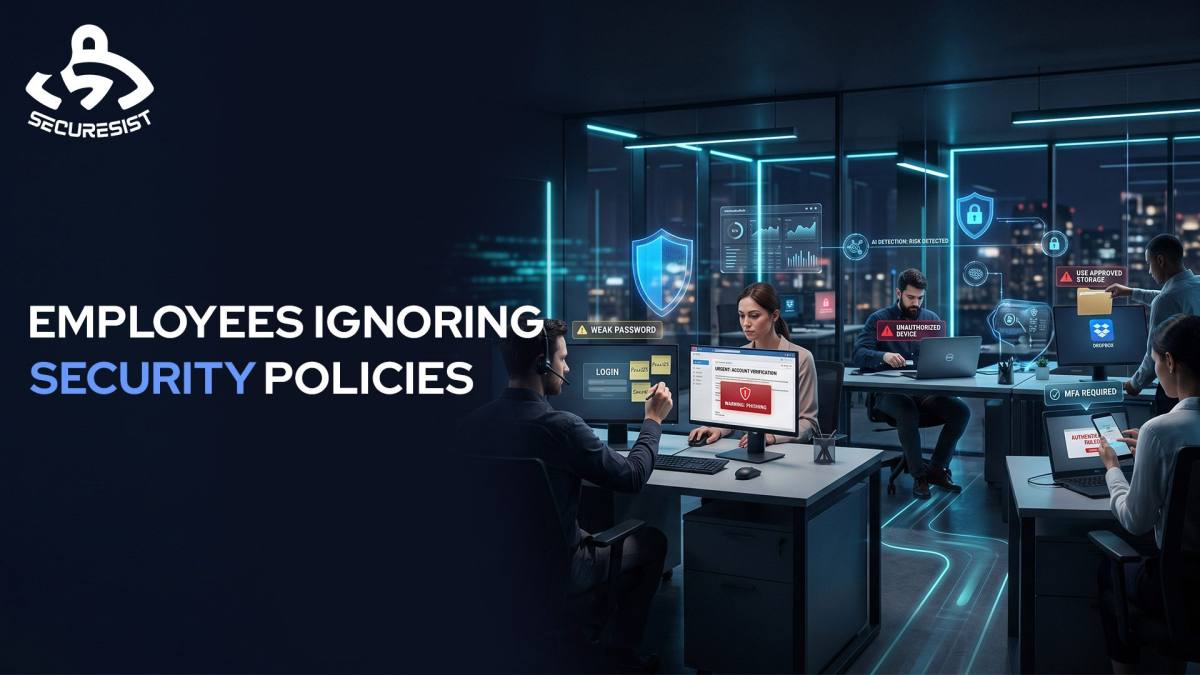
Every organization invests time in creating security policies to protect sensitive data, reduce cyber risks, and meet compliance requirements. Yet security incidents still happen because policies alone do not influence employee behavior. Many employees sign an information security policy during onboarding, complete a mandatory training session, and rarely think about it again.
The challenge is not always a lack of awareness. In many cases, policies are difficult to understand, disrupt daily work, or fail to reflect how employees actually perform their jobs. When this happens, staff may unintentionally develop shortcuts that increase organizational risk. Addressing employees ignoring security policies requires more than stricter rules. It calls for clear communication, practical guidance, and continuous reinforcement — the same principles that determine whether security awareness training programs succeed or fail.
Why Signed Security Policies Don’t Always Change Employee Behavior
Collecting signatures confirms that employees have received a policy, but it does not guarantee they understand or follow it. Many organizations focus on documenting compliance for audits while overlooking whether the policy is practical in everyday situations. This is closely related to the broader challenge of low cybersecurity training completion rates — both reflect a disconnect between what organizations measure and what actually changes employee behavior.
For example, an employee may acknowledge a password policy yet continue reusing passwords because managing multiple credentials feels overwhelming. Another employee might bypass a file-sharing policy to meet a client deadline quickly. These actions are rarely intentional attempts to break the rules. More often, they reflect the same behavioral gaps explored in our guide to why employees click phishing links even after training — the gap between written policies and real workplace behavior under pressure.
Improving employee policy compliance in cybersecurity means moving beyond one-time acknowledgements. Organizations should regularly review policies, explain their purpose, and reinforce them through ongoing communication and relevant training so secure practices become part of daily routines. This is the foundation of what human risk management addresses — recognizing that policy documents alone cannot change the decisions people make in fast-moving, high-pressure work environments.
The Real Reasons Employees Ignore Security Policies
Policies Are Written in Legal Language, Not Plain English
Many security policies are written with compliance or legal requirements in mind rather than employee understanding. Long documents filled with technical terms and formal language discourage employees from reading them carefully. This is one of the most consistent patterns in why security awareness training programs fail — when employees can’t parse the content, they can’t apply it. Policies should use simple language, practical examples, and clear instructions that explain exactly what employees need to do.
Security Controls Slow Down Daily Work
Employees are often under pressure to meet deadlines and respond quickly to customers. If security controls make routine tasks more difficult, people naturally look for faster alternatives. This explains why employees bypass security rules, even when they understand the risks. The same cognitive shortcuts that make people vulnerable to social engineering attacks also make them likely to work around policies that create friction — choosing convenience over compliance because the immediate cost of the workaround feels lower than the abstract risk it creates.
Organizations can reduce this behavior by choosing security solutions that fit naturally into existing workflows. Reviewing the top cybersecurity tools available in 2026 with a focus on usability — not just technical capability — is a practical first step. When secure processes are also the easiest option, employees are less likely to search for workarounds.
No Regular Reminders or Acknowledgement Process
Security policies should not be treated as documents that are signed once and forgotten. As new threats emerge and business processes evolve, employees need regular reminders about their responsibilities. This is directly connected to why annual cybersecurity training isn’t working — the same principle that makes single-session training ineffective also makes one-time policy acknowledgement insufficient.
A structured acknowledgement process, supported by periodic policy reviews and refresher training, helps keep security expectations visible throughout the year. This ongoing approach strengthens accountability, improves awareness, and encourages employees to treat security as a shared responsibility rather than a one-time compliance task.
Nobody Is Held Accountable for Non-Compliance
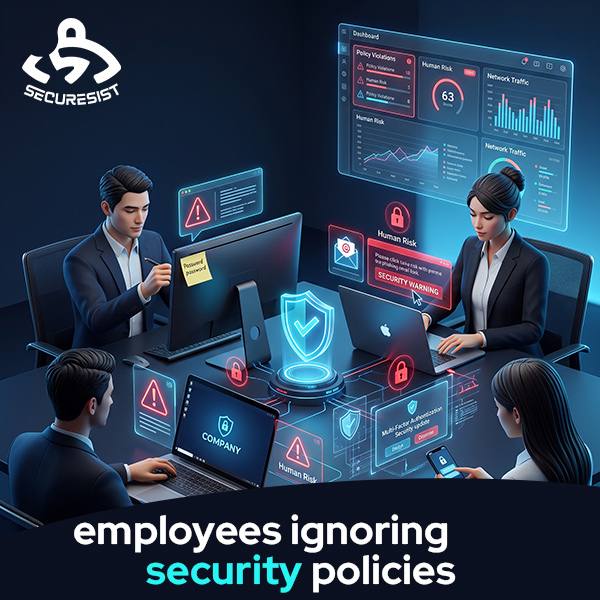
Even well-written security policies lose their value if no one checks whether they are being followed. In many organizations, employees acknowledge a policy during onboarding, but there is little visibility into whether they continue following it months later. Without clear ownership, policies gradually become reference documents instead of everyday practices. This is a cultural problem as much as a process one — and it’s why building a genuine cybersecurity culture is inseparable from effective policy enforcement.
Accountability should not mean creating a culture of blame. Instead, it should help employees understand their responsibilities while giving managers the tools to identify compliance gaps early. A practical approach to security policy enforcement includes:
- Assigning policy owners for each department
- Defining employee responsibilities clearly
- Monitoring policy completion and acknowledgements
- Reviewing compliance during internal audits
- Addressing repeated non-compliance through coaching before disciplinary action
When employees know that security policies are regularly reviewed and consistently applied across the organization, they are more likely to treat them as an important part of their role rather than an administrative requirement. This consistency is also a core expectation of ISO 27001 employee awareness training requirements in the UAE, where demonstrable, ongoing compliance is evaluated — not just documentation that policies exist.
Are Your Policies Being Followed — or Just Signed
Securesist helps organizations identify where policy compliance breaks down, why employees develop workarounds, and how to fix both the process and the culture. Talk to our team to find out where your biggest compliance gaps are — before they become security incidents.
How to Write Security Policies Employees Actually Read
Many organizations expect employees to read lengthy policy documents filled with technical or legal language. In reality, most people are looking for clear answers that help them complete their work securely. A good security policy should be practical, concise, and easy to find when employees need it. The same principles that make cybersecurity training for employees effective — relevance, clarity, and brevity — apply equally to policy writing.
The table below shows how policy language can be rewritten to be more actionable:
| Instead of this | Try this instead |
| Use strong authentication mechanisms where applicable. | Always enable multi-factor authentication (MFA) on company accounts. |
| Sensitive information must not be transmitted through unauthorized channels. | Do not send confidential company files using your personal email account. |
| Password confidentiality shall be maintained at all times. | Never share your password with anyone, including colleagues or managers. |
To improve employee engagement, organizations should:
- Write in plain, everyday language
- Break information into short sections
- Include real workplace examples
- Create role-specific guidance where necessary
- Review and update policies whenever business processes or threats change — particularly as phishing tactics and social engineering methods evolve
Simple and relevant policies reduce confusion and support better employee understanding, which strengthens long-term compliance.
Policy Attestation, Automated Acknowledgement, and Compliance Tracking
Managing policies through email or spreadsheets quickly becomes difficult as organizations grow. It becomes challenging to know which version employees have acknowledged, who still needs to complete a review, or whether updates have reached the right people.
This is where policy attestation and automated policy management improve efficiency. A centralized process helps organizations manage the complete policy lifecycle — from publication to review and retirement — while maintaining accurate records for internal and external audits.
Modern policy management solutions typically include features such as:
- Digital acknowledgement for employees
- Policy acknowledgement tracking across departments
- Version control to ensure employees always access the latest policy
- Automated reminders for overdue acknowledgements
- Audit trails showing who reviewed and accepted each policy
- Compliance reporting for regulatory requirements including ISO 27001 and other frameworks
These capabilities reduce manual administration while giving security and compliance teams better visibility into policy adoption. Organizations that invest in centralized governance platforms can streamline policy management alongside broader security and compliance initiatives. Rather than relying on manual follow-ups, security teams gain a consistent process for maintaining policy records, demonstrating compliance, and improving organizational accountability over time. Choosing the right security awareness training provider that integrates policy management with training delivery can further simplify this process.
Using Training to Reinforce Policy Intent, Not Just Policy Text
Security awareness training should do more than explain company policies. Its purpose is to help employees understand how their everyday decisions can either reduce or increase cybersecurity risks. When training focuses only on reading policies or completing mandatory courses, employees often see it as another compliance task — the same pattern identified in our analysis of why annual cybersecurity training isn’t working.
Effective training is practical, relevant, and continuous. Instead of delivering a single annual session, organizations should reinforce key messages throughout the year using real-world scenarios that employees are likely to encounter. A well-structured security awareness training program creates this continuity by combining policy education with behavioral reinforcement — so employees don’t just know what the policy says, they understand why it matters.
Some effective training approaches include:
- Short, role-based learning sessions tailored to the threats each department actually faces
- Phishing simulations with constructive feedback that show employees exactly how attackers exploit policy gaps
- Interactive workshops instead of lecture-style presentations
- Examples based on recent cyber incidents
- Refresher training whenever policies are updated
Training should also explain why each policy exists. Employees are more likely to follow security procedures when they understand how those actions protect customers, company data, and business operations. This approach strengthens employee policy compliance by making security part of everyday decision-making rather than a separate responsibility. It also connects directly to the security awareness training metrics that matter — because behavioral change, not just course completion, is the real measure of success.
Building a Security-First Culture That Lasts
Strong security cultures are built through consistent leadership, clear communication, and shared responsibility. Employees take security seriously when they see managers and executives following the same rules they are expected to follow. If leaders ignore policies for convenience, others are likely to do the same. This leadership dimension is central to building a cybersecurity culture in a company that holds up under the pressure of real-world work rather than existing only in policy documents.
Organizations should encourage employees to ask questions, report suspicious activity — including phishing emails and social engineering attempts — and provide feedback on policies that are difficult to follow. Listening to employees helps identify unnecessary friction and allows security teams to improve policies before workarounds become common.
Recognition also plays an important role. Acknowledging teams that consistently follow security best practices or report potential threats creates positive reinforcement and encourages long-term engagement. Instead of focusing only on mistakes, organizations should reward secure behaviors that strengthen the overall security culture. This positive approach is one of the key differences between organizations that get employees to take cybersecurity training seriously and those that struggle with persistent compliance gaps.
Ultimately, reducing employees ignoring security policies is not about adding more rules. It is about creating an environment where secure actions become the easiest and most natural choice for everyone. This is the long-term goal of any meaningful human risk strategy — one where policy compliance is a byproduct of culture, not just a consequence of enforcement.
Conclusion
Security policies are only effective when employees understand them, trust them, and apply them consistently in their daily work. Simply asking employees to sign a document does not create lasting compliance. Organizations achieve better results by writing clear policies, providing ongoing training, tracking acknowledgements, and encouraging accountability without relying solely on punishment.
By combining practical guidance with continuous communication and strong leadership support, businesses can reduce staff not following security policies and build a workplace where cybersecurity awareness becomes a shared responsibility across every department. The organizations that achieve this don’t treat policy compliance as a separate workstream — they treat it as one component of a broader security awareness program that continuously reinforces secure behavior throughout the year.
FAQs
How do you enforce security policy compliance without creating a punitive culture
Focus on education, clear communication, and regular feedback instead of punishment alone. Employees are more likely to follow security policies when they understand why they matter, receive practical cybersecurity training, and have access to the right tools. Accountability should encourage improvement rather than create fear. This approach is explored in depth in our guide to getting employees to take cybersecurity training seriously.
What is policy attestation and why is it important for audits
Policy attestation is the process of confirming that employees have read, understood, and agreed to follow organizational policies. It creates a documented record that supports internal audits and helps demonstrate compliance with standards such as ISO 27001, SOC 2, and other regulatory frameworks relevant to UAE businesses.
How often should employees acknowledge security policies
Most organizations require employees to acknowledge security policies at least once a year. However, employees should also review and acknowledge policies whenever significant updates are made, new regulations are introduced, or their job responsibilities change. Regular reminders help keep security expectations current and relevant — and should be integrated into a broader continuous cybersecurity awareness program rather than handled as a standalone annual exercise.
Why do employees develop security workarounds even when they understand the policy
Workarounds typically develop when security controls create friction in daily work. Employees prioritize productivity under pressure and choose the path of least resistance. This behavioral pattern is the same one that explains why employees click phishing links even after training — knowledge doesn’t automatically override habit when someone is under time pressure. Reducing friction in security controls and explaining the purpose behind each policy are the most effective countermeasures.
Strengthen Security Policy Compliance Across Your Organization
Security policies are only effective when employees understand, acknowledge, and follow them consistently. Most organizations discover their compliance gaps during an audit — or worse, after a security incident. The good news is that the gap between a signed policy and genuine behavioral compliance is addressable, and it doesn’t require starting over.
Securesist helps organizations improve policy management, strengthen compliance, and build a security-first culture through practical governance, security awareness programs, and phishing simulations that reinforce policy intent with real-world practice.
Here is what working with Securesist delivers:
- A clear assessment of where your current policy compliance gaps lie
- Plain-language policy rewrites that employees actually read and remember
- Automated acknowledgement tracking and audit-ready compliance records
- Role-based training that explains the purpose behind each policy, not just the rules
- Phishing simulations that show employees exactly how policy gaps are exploited in real attacks
- Leadership engagement tools that make security culture a top-down commitment
Policies without culture are just documents. Culture without policies is just aspiration. Securesist helps you build both.