
Why Employees Find Security Awareness Training Boring, and How to Make It Engaging
In this guide, we'll explore why traditional awareness programs fail to capture attention, what causes low cybersecurity training engagement, and how organizations can redesign training to create a stronger security-first culture.
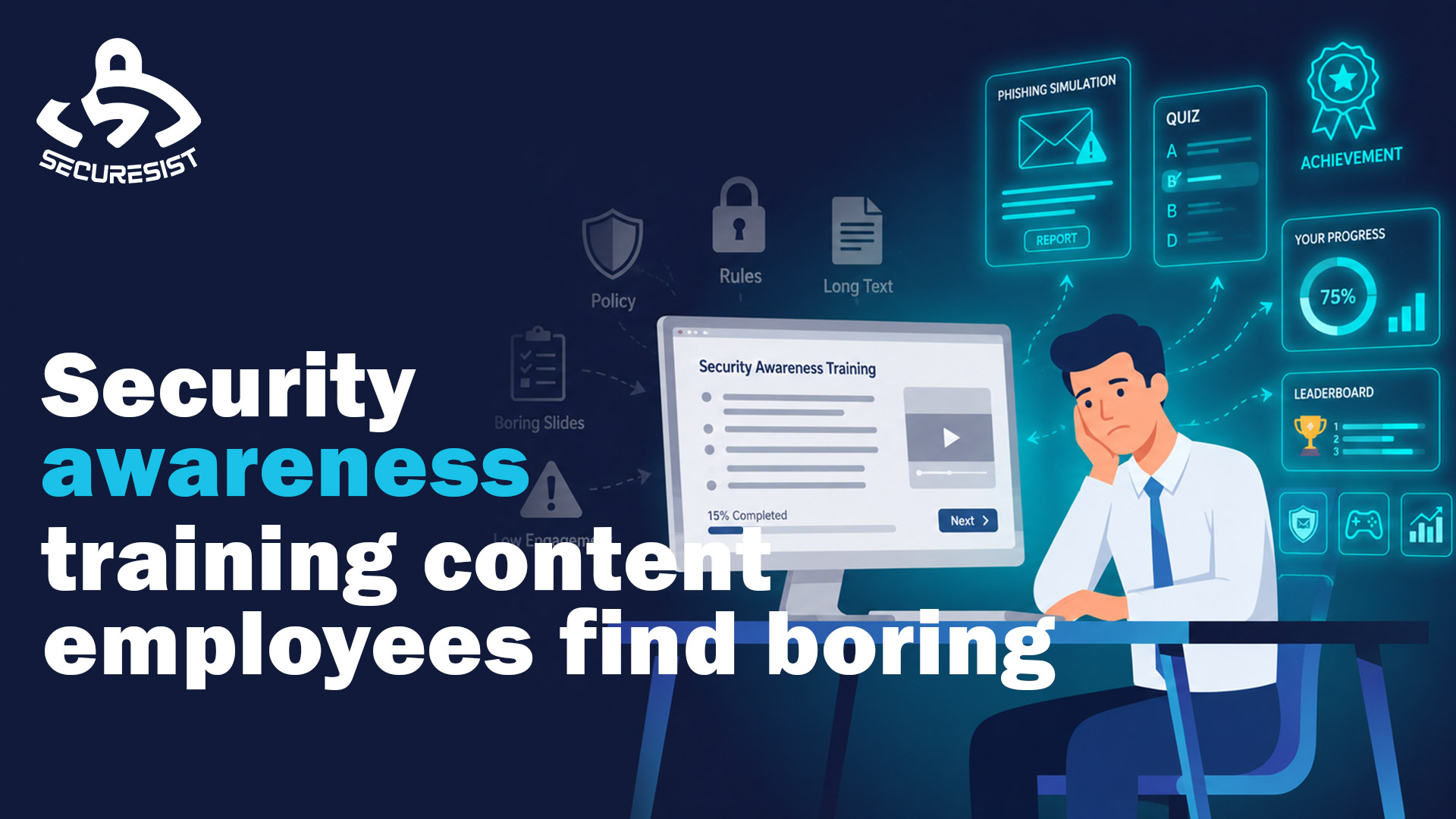
Cybersecurity incidents often begin with a simple human mistake — clicking a phishing link, reusing a weak password, or overlooking a suspicious email. That’s why organizations invest in employee awareness programs. Yet security awareness training content employees find boring remains one of the biggest challenges for IT and security teams. When training feels repetitive, generic, or disconnected from daily work, employees tend to click through it just to meet compliance requirements instead of learning from it.
The problem is rarely a lack of interest in cybersecurity. More often, it’s the way the training is designed. Lengthy presentations, annual compliance sessions, and one-size-fits-all content make it difficult for employees to stay engaged or remember what they’ve learned when a real threat appears. As cyberattacks become more sophisticated, organizations need engaging cybersecurity training content that builds lasting habits instead of simply checking a compliance box. This challenge sits at the heart of why security awareness training programs fail — and why the design of the experience matters as much as the content itself.
In this guide, we’ll explore why traditional awareness programs fail to capture attention, what causes low cybersecurity training engagement, and how organizations can redesign training to create a stronger security-first culture.
Why Do Employees Find Security Awareness Training Boring?
Most employees understand that cybersecurity is important. However, many still view security awareness training as another mandatory task rather than an opportunity to learn practical skills. This disconnect usually comes down to how the content is delivered — not the topic itself. Understanding the root causes is the same starting point recommended in our guide to getting employees to take cybersecurity training seriously.
Generic Content Doesn’t Feel Relevant
Many training programs use the same examples for everyone, regardless of department or job role. An HR professional faces different cyber risks than someone in finance or IT — for example, spear phishing attacks against executives look very different from the invoice fraud attempts that target accounts payable teams — yet they’re often asked to complete identical training modules. When employees don’t see how the lessons relate to their everyday responsibilities, they struggle to understand why the information matters.
Annual Training Creates a ‘Once and Done’ Mindset
Security awareness is often treated as an annual compliance exercise. Employees complete a single training session, pass a quiz, and move on until the following year. This is exactly the pattern examined in our analysis of why annual cybersecurity training isn’t working — cyber threats don’t evolve once a year, and neither should learning. New phishing techniques, AI-generated scams, and social engineering tactics emerge constantly. Without regular reinforcement, employees naturally forget what they’ve learned and fall back into old habits.
Passive Learning Doesn’t Change Behavior
Watching a long presentation or clicking through slides requires very little participation. While employees may complete the course, passive learning rarely translates into better security decisions. This is closely connected to why employees click phishing links even after training — knowledge consumed passively fades quickly under the pressure of a real workday. People remember information more effectively when they’re actively involved through realistic scenarios, interactive exercises, or decision-based challenges.
Too Much Information Leads to Overload
Some awareness programs try to cover every possible cyber threat in a single session. Employees are introduced to phishing, ransomware, password security, insider threats, cloud risks, data privacy, and more — all within an hour. Instead of improving understanding, this often overwhelms learners. When there’s too much information at once, employees retain very little after the session ends.
Fear-Based Messaging Can Reduce Engagement
Some organizations rely heavily on worst-case scenarios to encourage better security habits. While real-world incidents highlight the importance of cybersecurity, constant fear-based messaging can make employees anxious instead of confident. Training should help employees recognize threats and respond effectively — not make them feel that avoiding attacks is impossible. This is one of the cultural dynamics that makes building a genuine cybersecurity culture so difficult when training is designed around fear rather than empowerment.
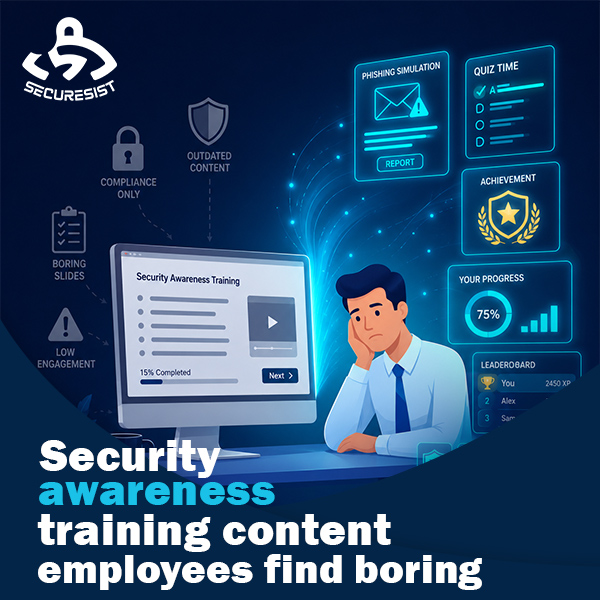
The Real Problem Isn’t Employees, It’s Training Design
When employees lose interest in awareness training, it’s easy to assume they simply don’t care about cybersecurity. In reality, most people want to protect both their organization and their own personal information. The real issue is that many security awareness programs are built around compliance rather than behavior change. This is the central argument in our analysis of why security awareness training programs fail — and it’s supported by research showing that completion rates and quiz scores reveal almost nothing about real-world security behavior.
Traditional training often focuses on completing mandatory courses, tracking completion rates, and meeting audit requirements. While compliance is important — particularly for organizations subject to ISO 27001 requirements in the UAE — it doesn’t automatically create a workforce that’s prepared to recognize and respond to modern cyber threats. Effective security awareness programs focus on building habits through role-specific examples, realistic attack scenarios, interactive learning experiences, and continuous reinforcement throughout the year.
The difference is clear:
| Traditional Training | Modern Awareness Training |
| Annual training sessions | Continuous learning throughout the year |
| Generic content for everyone | Role-based learning tailored to departments |
| Passive videos and presentations | Interactive scenarios and simulations |
| Focus on compliance | Focus on lasting behavior change |
Organizations that shift from compliance-driven training to employee-centered learning are far more likely to create a workforce that actively identifies and reports cyber threats. The goal isn’t simply to complete training — it’s to build confidence, encourage participation, and make secure behavior part of everyday work. This is what the best security awareness training programs have in common: they treat engagement as a design requirement, not an afterthought.
Is Your Training Changing Behavior — or Just Checking a Box?
Securesist helps organizations redesign their awareness programs around behavior change, not compliance metrics. From role-based content to realistic phishing simulations and continuous reinforcement, we build training employees actually remember. See how it works →
What Makes Security Awareness Training Employees Actually Remember?
The most effective security awareness programs don’t rely on longer presentations or more frequent quizzes. They focus on helping employees build habits they can apply in real situations. When training is practical, relevant, and reinforced over time, employees are far more likely to recognize threats and respond appropriately. This is the behavioral foundation described in our guide to security awareness training metrics that matter — measuring habit formation, not just course completion.
Instead of treating awareness as a yearly compliance requirement, organizations should create learning experiences that fit naturally into employees’ daily work. Techniques such as microlearning, storytelling, scenario-based exercises, and real-world examples help transform information into lasting behavior. The goal isn’t just to improve training completion rates — it’s to help employees make better security decisions when it matters most.
Use Microlearning Instead of Long Annual Sessions
One of the biggest reasons traditional awareness programs fail is that they try to teach too much at once. Microlearning takes a different approach — delivering short, focused lessons, typically lasting five to ten minutes, throughout the year. Each session covers one specific topic, making it easier for employees to absorb information and apply it immediately. One week might focus on identifying phishing emails, while the next explains how to recognize link manipulation tactics or suspicious QR codes. Regular reinforcement helps employees remember key concepts long after the training ends.
Organizations looking to create better security awareness content should prioritize quality over quantity. Short, practical lessons that employees can complete without disrupting their work often deliver stronger engagement and better knowledge retention than annual marathon sessions. This is the core principle behind continuous cybersecurity awareness — keeping security top of mind throughout the year, not just during the weeks following an annual training event.
Create Role-Based Training That Feels Relevant
Every employee interacts with technology differently, which means they also face different cybersecurity risks. A generic awareness course rarely addresses the specific threats employees encounter in their day-to-day responsibilities. Role-based cybersecurity training for employees makes security awareness more meaningful by focusing on situations employees are likely to experience in their own departments.
The table below shows how role-based training differs by department:
| Department | Common Security Risks | Training Focus |
| HR | Fake job applications, employee data theft | Social engineering and data protection |
| Finance | Invoice fraud, payment scams, Business Email Compromise | Email verification and payment security |
| IT | Credential theft, privilege abuse, malware | Secure administration and incident response |
| Executives | Targeted spear phishing, deepfake impersonation | Executive fraud awareness and verification procedures |
When employees recognize examples from their own work environment, they’re more likely to pay attention and remember the lessons. For finance teams, this means understanding how phishing attacks target UAE businesses through invoice fraud and payment scams. For executives, it means understanding spear phishing and deepfake impersonation — threats that are specifically designed to bypass the skepticism that general security awareness creates.
Turn Learning Into Practice with Interactive Simulations
Reading about phishing attacks is helpful, but experiencing a realistic phishing attempt in a safe environment is far more effective. Interactive learning encourages employees to think critically instead of passively consuming information. This is why phishing simulations have become a standard component of mature awareness programs — they create the experiential learning that lectures and videos cannot replicate.
Organizations can strengthen awareness by incorporating activities such as:
- Phishing simulations that mirror real email attacks and provide immediate feedback
- Short quizzes that reinforce key security concepts
- Decision-based learning where employees choose how to respond during a simulated cyber incident
- Team-based exercises that challenge participants to solve cybersecurity scenarios together
These hands-on activities provide immediate feedback, helping employees understand both their mistakes and the correct response. Over time, repeated practice develops habits that are much more likely to carry over into real-world situations — which is why organizations that run regular simulations consistently see improvement in their phishing failure rates over time.
Gamification Should Reinforce Learning, Not Distract From It
Gamification is often misunderstood as simply adding points or prizes to training. In reality, it works best when it encourages participation without taking attention away from the learning objectives. Simple elements such as leaderboards, digital badges, achievement milestones, or friendly team challenges can motivate employees to complete training and participate more actively. However, rewards should recognize meaningful behaviors — such as reporting suspicious emails or consistently identifying phishing attempts — rather than simply finishing a course. This positive reinforcement approach is one of the key factors in building a cybersecurity culture where employees engage with security as an ongoing responsibility rather than a periodic obligation.
Keep Content Updated for Modern Threats
Cyber threats evolve quickly, and training content should evolve with them. Employees who only learn about traditional phishing emails may not recognize the sophisticated attacks targeting organizations today. This is the same limitation that makes annual cybersecurity training ineffective as a standalone approach — the threat landscape changes faster than yearly update cycles allow.
Modern security awareness programs should regularly include emerging threats such as:
- AI-generated phishing emails that imitate trusted contacts with convincing language
- Deepfake scams that use synthetic voice or video to impersonate executives or colleagues
- QR phishing (quishing) attacks that direct users to fraudulent websites — a tactic that exploits the same link manipulation principles used in traditional phishing
- Business Email Compromise (BEC) schemes — a variant of social engineering that tricks employees into transferring funds or sharing sensitive information by impersonating business leaders or trusted vendors
Using current attack examples makes training feel relevant and demonstrates that cybersecurity is constantly evolving. Employees who understand today’s threat landscape are better prepared to recognize suspicious activity and respond before an incident becomes a costly breach. For organizations that need to demonstrate this continuous update cycle for compliance purposes, our guide to ISO 27001 employee awareness training requirements in the UAE explains what regulators look for beyond annual completion certificates.
Building a Culture Where Security Training Is Valued, Not Tolerated
Engagement doesn’t begin and end with training design. The culture surrounding security awareness determines whether employees view it as a genuine professional responsibility or another administrative burden. When leadership completes training alongside employees, references security practices in meetings, and actively supports awareness initiatives, participation rates and engagement levels both improve. This leadership dimension is what separates organizations with strong security cultures from those where policies exist on paper but rarely influence daily behavior.
Employees also engage more consistently when they understand the personal relevance of cybersecurity. Training that connects workplace security to personal protection — showing how the same phishing techniques used against businesses also target personal email accounts and banking apps — creates a level of investment that purely organizational framing rarely achieves. This personal relevance dimension is one of the most underused tools in human risk management and one of the most effective ways to reduce the psychological distance between a training module and a real-world security decision.
Measuring the impact of these engagement efforts is equally important. A well-structured security awareness training program tracks behavioral metrics — reporting rates, phishing simulation results, repeat failure trends — not just completion certificates. When organizations can show that engagement is rising and risk is falling, they also build a stronger foundation for proving cybersecurity training ROI to the board, turning awareness into a business investment rather than a compliance cost.
Conclusion
Security awareness training doesn’t have to be boring. The organizations that achieve the strongest results understand that engagement is a design problem, not an employee attitude problem. When training is relevant, interactive, role-specific, and continuously reinforced, employees don’t just complete it — they use it.
Moving beyond annual compliance sessions toward a continuous, behavior-focused approach is the most reliable path to reducing human cyber risk. Organizations that make this shift build workforces that recognize threats earlier, report suspicious activity more consistently, and contribute actively to the security posture of the business — the qualities that define a genuinely resilient long-term human risk strategy.
FAQs
Why do employees find security awareness training boring?
Employees typically find security awareness training boring when it uses generic content, relies on passive learning formats, covers too much in one session, or fails to connect cybersecurity to their specific role. The solution isn’t more training — it’s better-designed training. Our guide to getting employees to take cybersecurity training seriously explores the behavioral and organizational factors behind this disengagement in detail.
How can organizations improve cybersecurity training engagement?
The most effective approaches include microlearning, role-based content, phishing simulations, gamification, and continuous reinforcement throughout the year. Keeping content updated to reflect current threats — including AI-generated phishing and spear phishing attacks — also maintains relevance and captures attention more effectively than examples based on outdated attack patterns.
What is microlearning and why does it work for cybersecurity training?
Microlearning delivers security awareness content in short, focused sessions of five to ten minutes that target one specific topic at a time. It works because it reduces cognitive overload, fits naturally into busy workdays, and reinforces knowledge regularly — countering the memory decay that makes annual cybersecurity training ineffective as a standalone approach.
How do phishing simulations improve training engagement?
Phishing simulations transform passive learning into active experience. Instead of reading about attacks, employees encounter realistic scenarios in a safe environment where mistakes become learning opportunities rather than security incidents. Organizations that run regular phishing tests to assess employee security awareness consistently report higher engagement, faster improvement in click rates, and stronger reporting behavior compared to training-only approaches.
How does training engagement affect cybersecurity ROI?
Higher engagement produces better behavioral outcomes — lower phishing click rates, faster incident reporting, and fewer human error-related security incidents. These outcomes are exactly what boards look for when evaluating security investments. Our guide to proving cybersecurity training ROI to the board shows how to translate engagement metrics into the financial language that executive decision-makers understand.
Build Security Training Your Employees Will Actually Remember
Generic, annual, compliance-driven training doesn’t change behavior. It changes completion statistics. If your employees are clicking through modules just to finish them, your organization is investing in a program that satisfies auditors but leaves your people unprepared for the attacks they’ll actually face.
Securesist designs security awareness programs that employees engage with — because the content is relevant to their role, the format respects their time, and the learning is reinforced continuously throughout the year.
Here is what working with Securesist delivers:
- Role-based training modules tailored to HR, finance, IT, executive, and operations teams — each covering the specific threats their department actually faces
- Phishing simulations that reflect today’s AI-assisted attacks, BEC schemes, and social engineering tactics — not last year’s examples
- Microlearning content delivered in short, focused sessions that fit into any work schedule without disrupting productivity
- Behavioral metrics — including reporting rates, repeat failure trends, and phishing simulation performance — that show real improvement over time
- A continuous learning roadmap that keeps cybersecurity awareness active throughout the year, not just during compliance season
- Leadership engagement tools that build a security culture from the top down
Training that employees find boring doesn’t protect your organization. Training that changes behavior does.